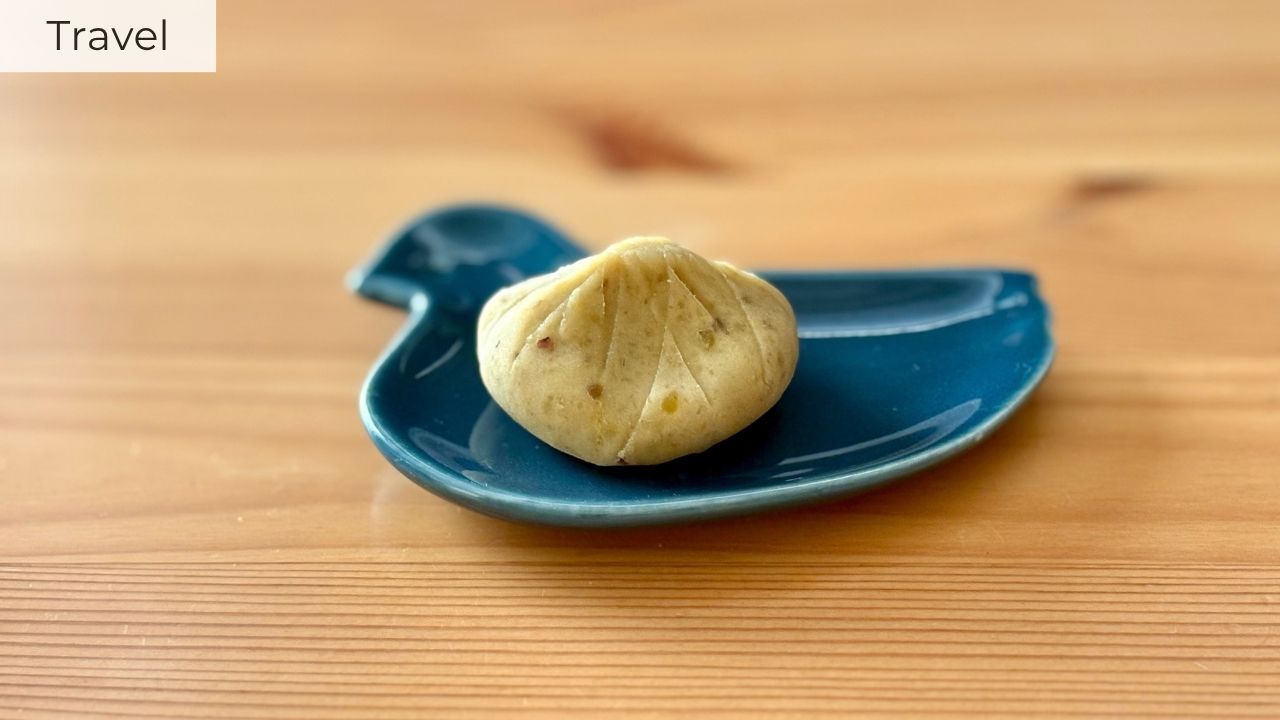
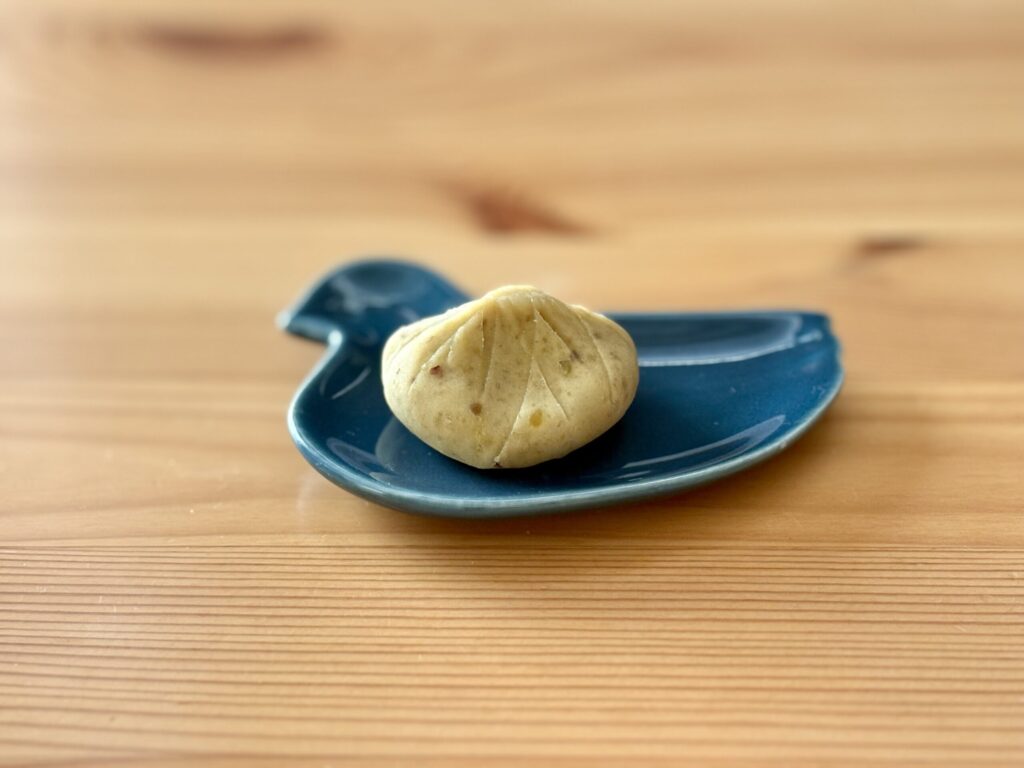
The season for kurikinton is finally here! Kurikinton is my absolute favorite wagashi (traditional Japanese sweet), and I just can’t sit still;)
So, off I went — with my mother — to Nakatsugawa, said to be where kurikinton was born. Nakatsugawa-juku, the 45th of the Nakasendo’s post towns, is an easy walk from the station. We strolled through it as well, so I’ll cover that here too.
Kurikinton is a seasonal sweet, and a local speciality of the Gifu and Aichi area. It’s here for a few months a year, and then it’s gone. Also, it doesn’t keep well, so taking it home as a souvenir is difficult, which makes it something you can only experience by being here.
Whether it’s the whole reason you come, as it was for me, or just a stop on the way to Magome, it’s worth the detour!
What Is Kurikinton?
I’m not sure if you have ever heard of or already know about kurikinton, but did you know there are two completely different sweets called “kurikinton” in Japan?
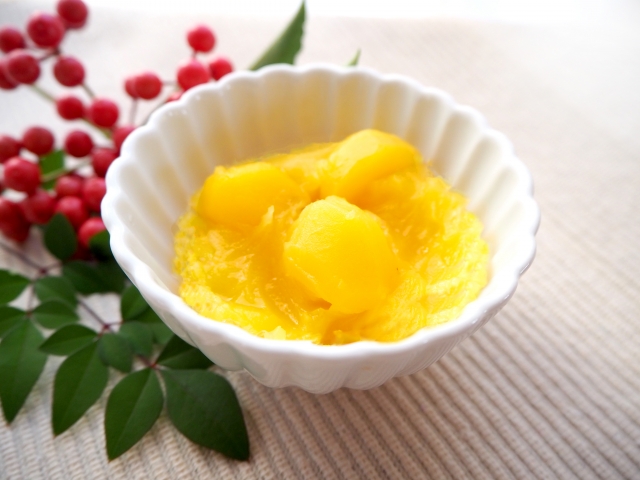
The first, the one you might know, is the New Year version: eaten as part of osechi (おせち), it is a sticky golden paste of mashed sweet potato with whole candied chestnuts in it.
The other is the Nakatsugawa version, the one I will talk about in this post, and the one I love so so so much;)
Which type of kurikinton comes to mind when you hear “kurikinton” depends greatly on where you’re from. In Gifu and Aichi Prefectures, most people think of the Nakatsugawa version kurikinton, while in other parts of Japan, the osechi version is more familiar. Being from Aichi, kurikinton means the Nakatsugawa version to me. When I’m referring to the osechi version, I say “osechi kurikinton”.
But across Japan, many people have never heard of the Nakatsugawa version kurikinton. (In fact, my colleague from Osaka did not know Nakatsugawa style kurikinton until he moved to Nagoya!)
So what is Nakatsugawa kurikinton then? Kurikinton here is made from just two ingredients: chestnuts and sugar. Nothing else.
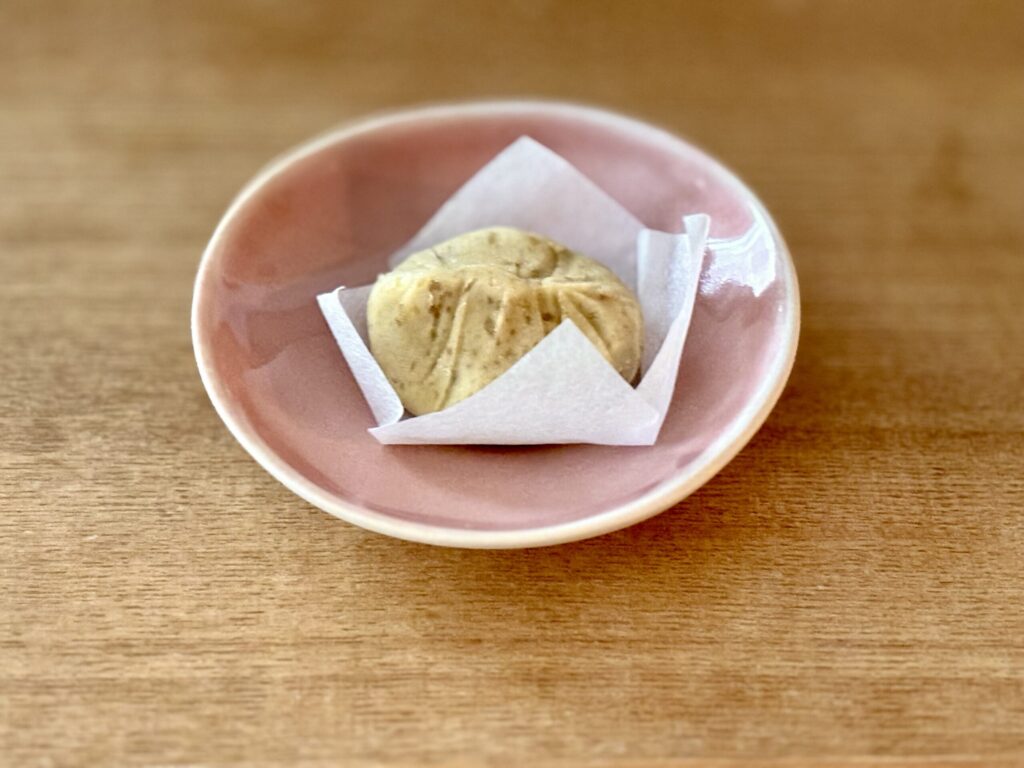
The chestnuts are steamed or boiled, mashed, mixed with a small amount of sugar, cooked in a pot, then twisted one by one in a cloth so that each piece comes out shaped like a chestnut (this technique is called chakin-shibori/茶巾絞り). Because it has no preservatives and uses relatively little sugar by wagashi standards, it does not keep for very long.
Now that you have the basics of kurikinton, let’s roll to a yummy kurikinton day out!
Nakatsugawa and Nakatsugawa-juku
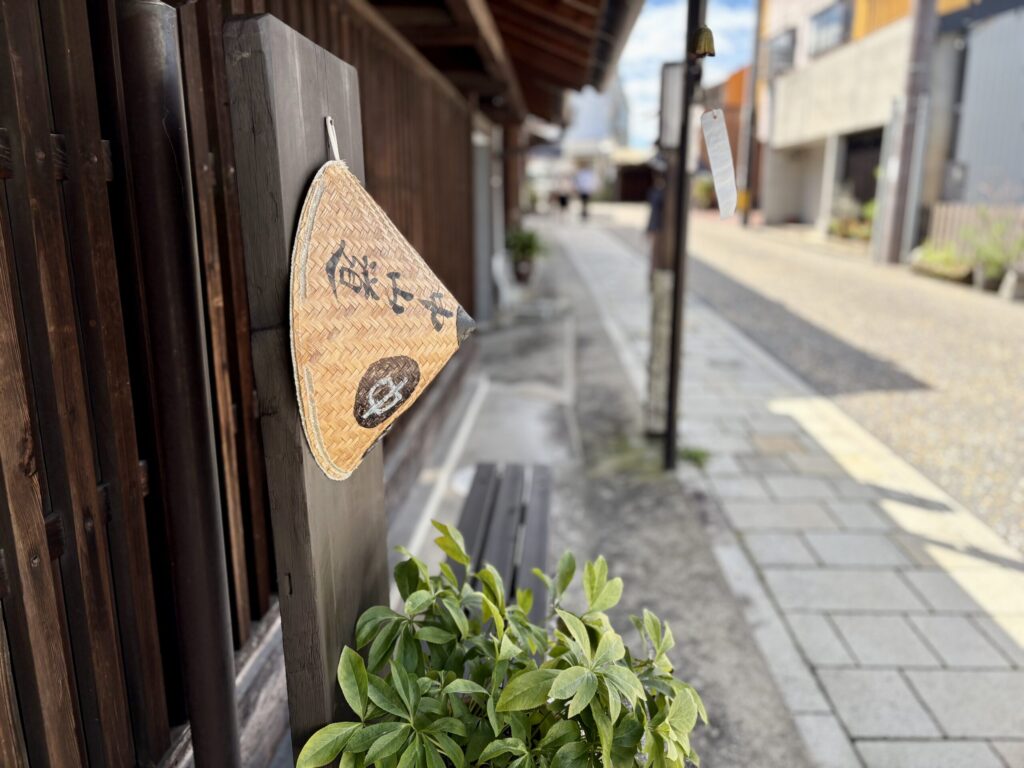
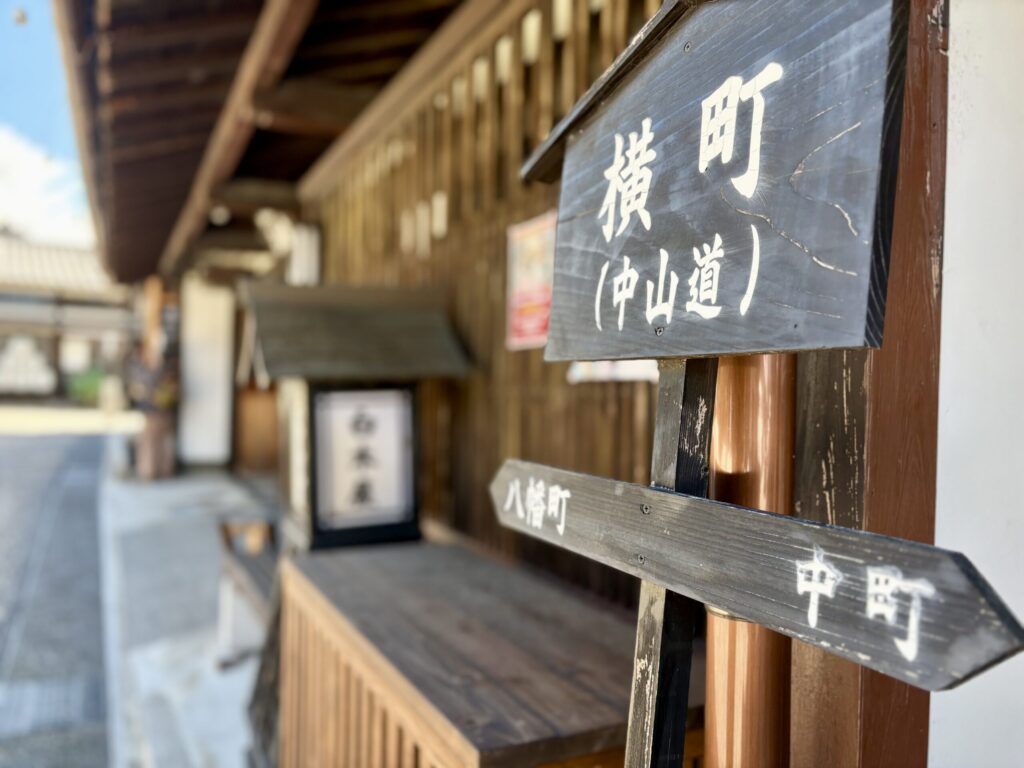
Nakatsugawa (中津川) is a small city in Gifu, about 50 minutes to 1 hour and a half from Nagoya on the JR Chuo Line. Many international visitors pass through it without stopping, because it is the station where you change to the bus for Magome (馬籠), Tsumago (妻籠) and the Nakasendo post towns. But Nakatsugawa also has Nakatsugawa-juku (中津川宿), a post town on the Nakasendo (中山道), and is known as the birthplace of kurikinton.
Our starting point is Nakatsugawa Station. Obviously, kurikinton was what I came for, but first we headed to Nakatsugawa-juku, the old post town. From Nakatsugawa Station, we headed to the Kosatsuba (高札場), the starting point of the walking route. It’s about 10 minutes on foot from the station.
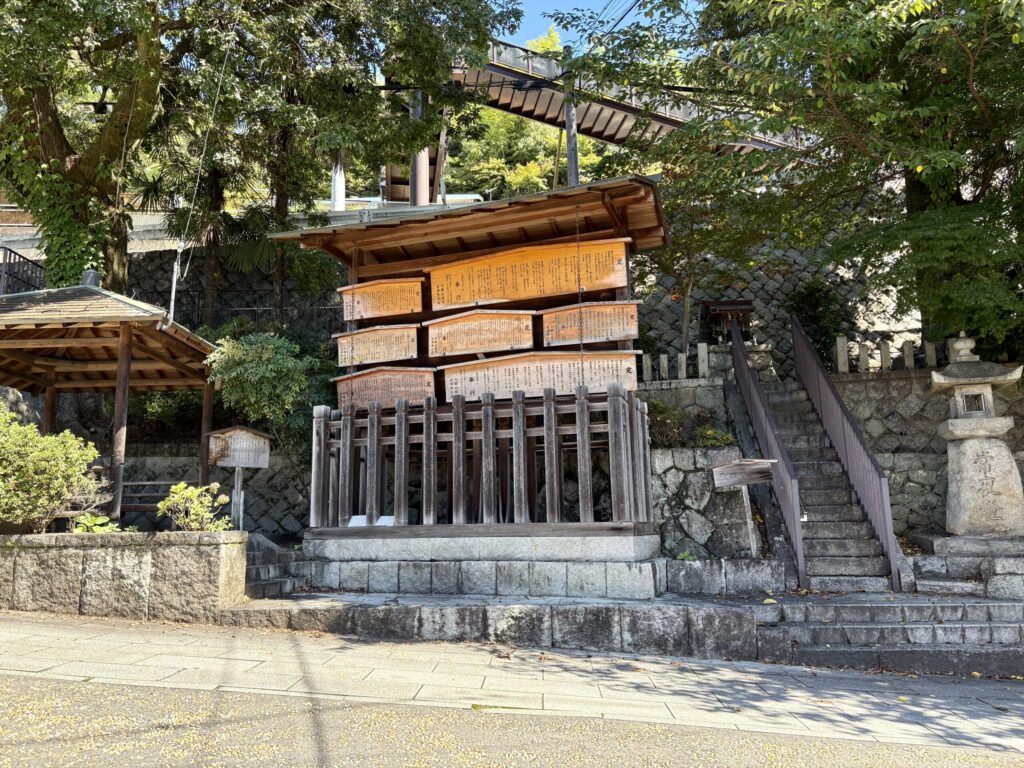
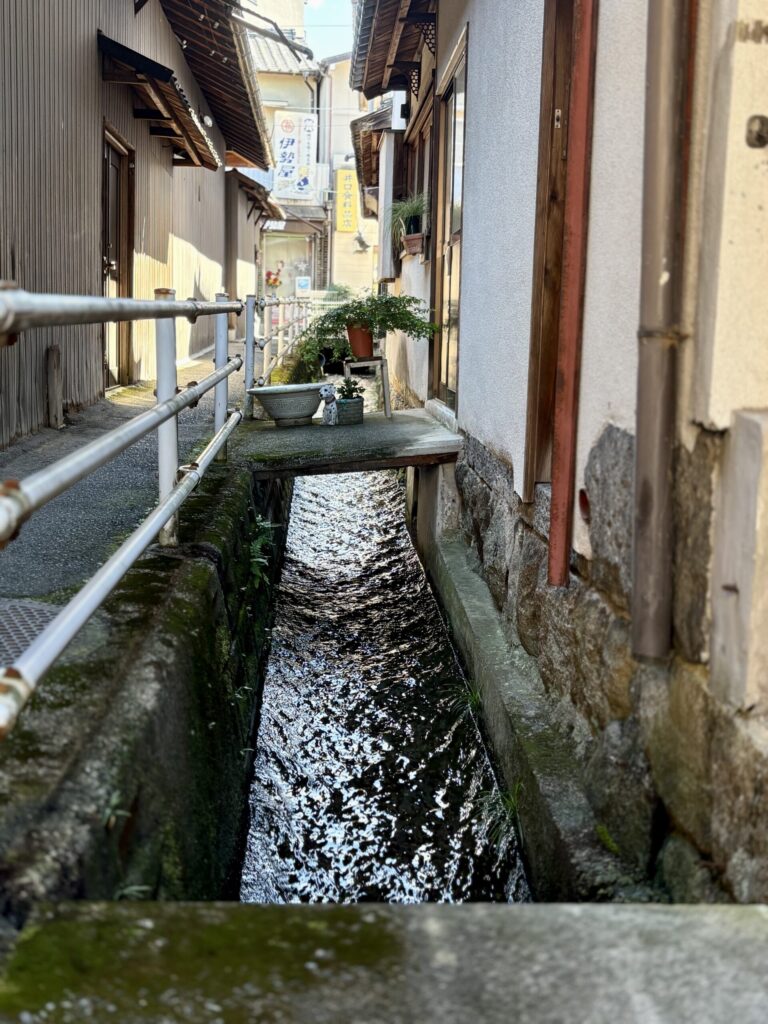
The Nakasendo History Museum (中山道歴史資料館) on the street displays documents and records from the town. Admission is ¥330 for adults, free for junior high school age and under, closed on Mondays. (I totally forgot to take a photo…)
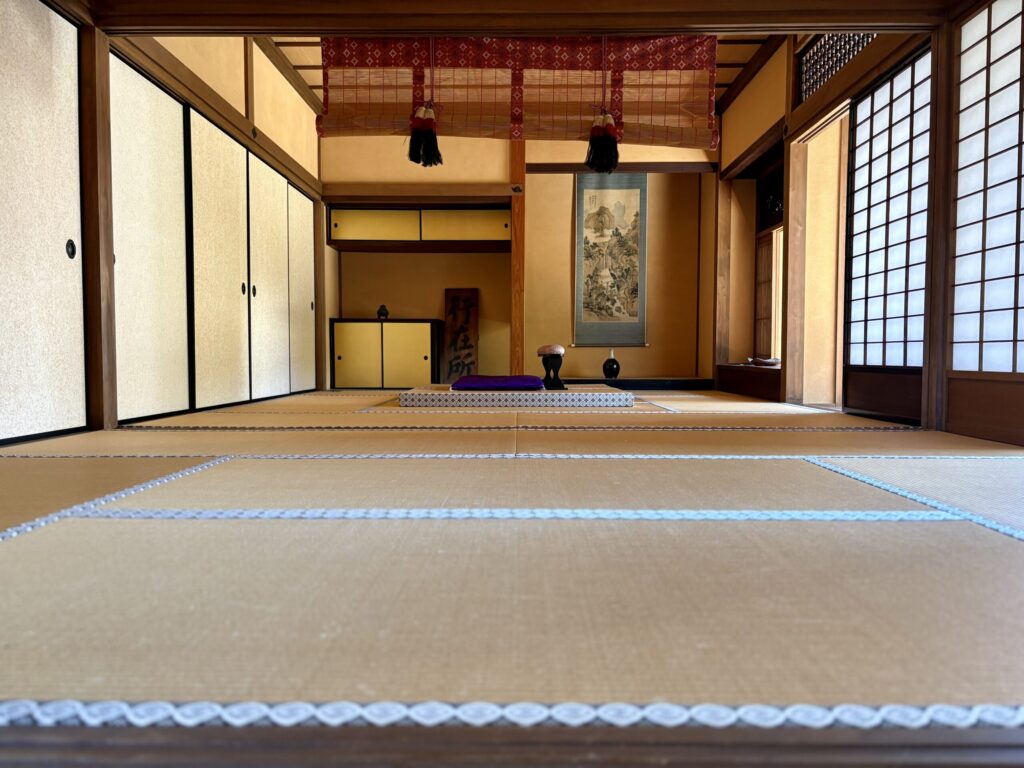
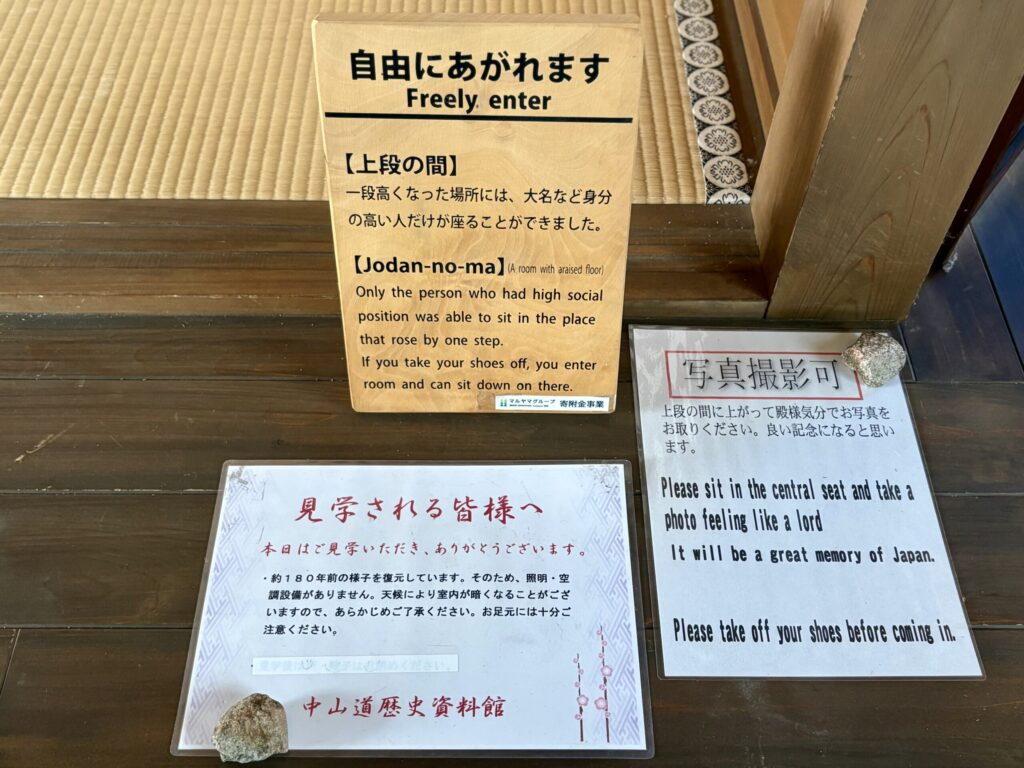
Next to the Nakasendo History Museum, there is “Jodan-no-Ma (上段の間)” — the upper room of the former waki-honjin Mori House. Admission is free, and you can step up onto the raised floor, and take photos. You can get to feel like a feudal lord for a moment;)
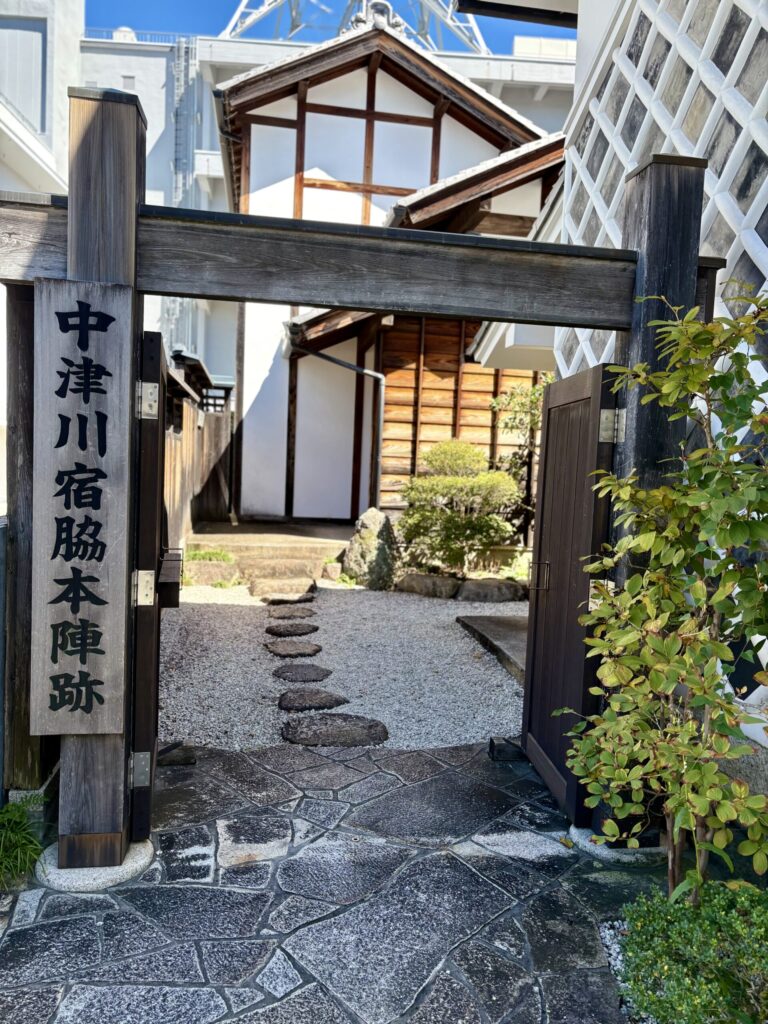
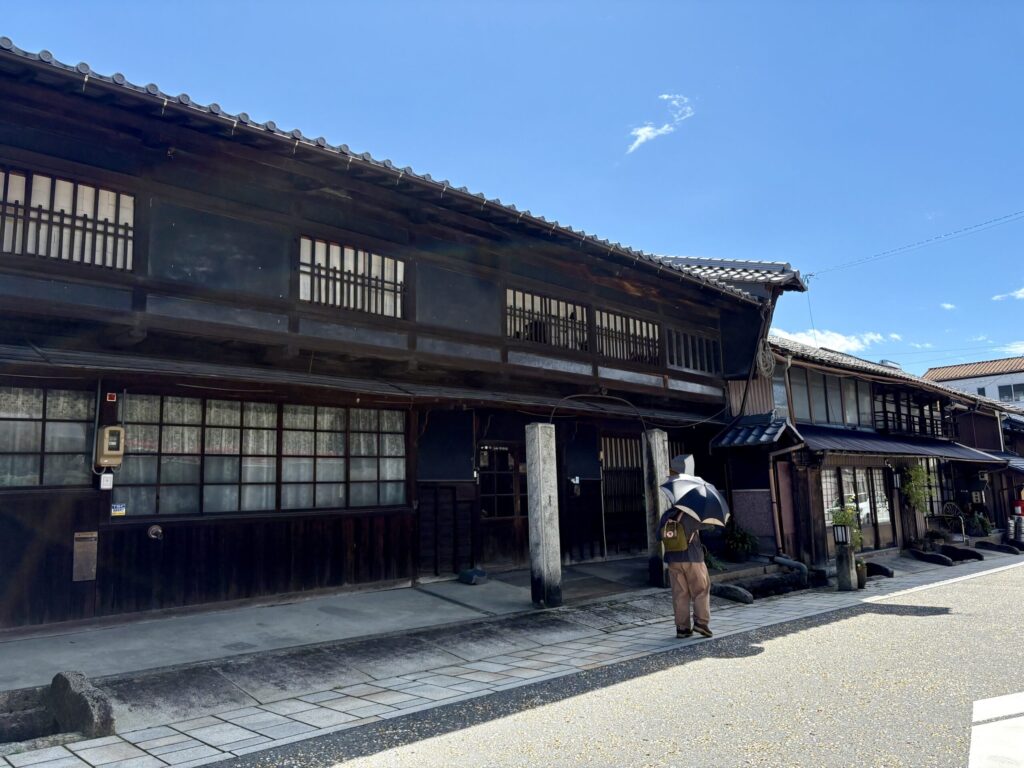
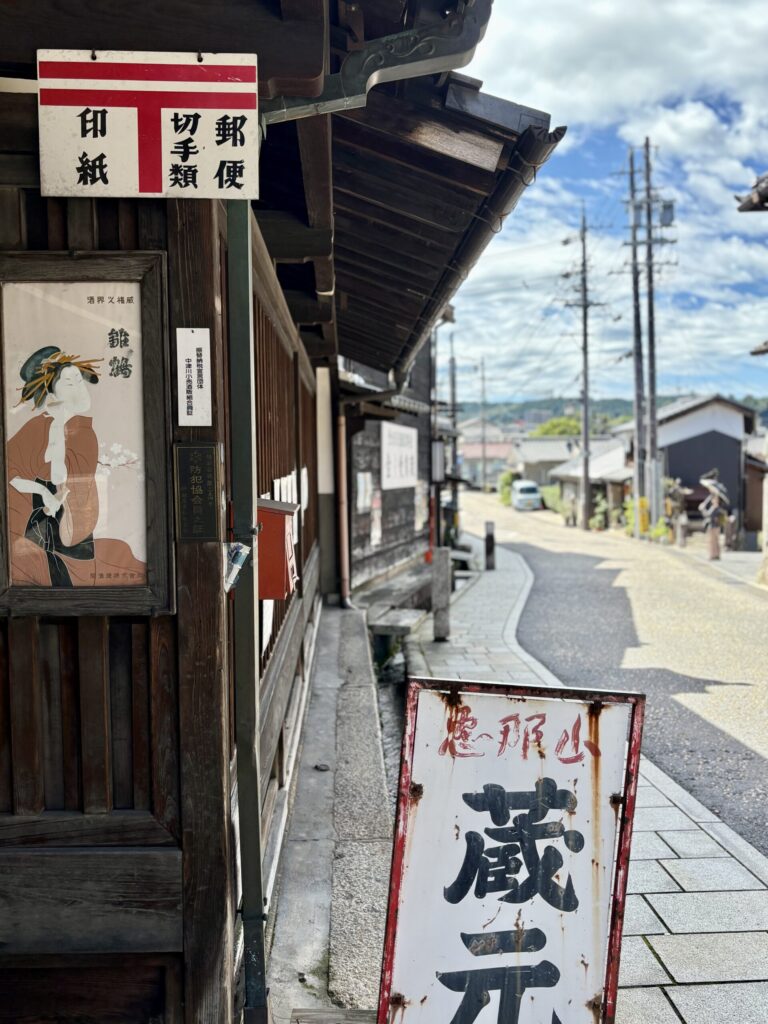
At Nakatsugawa-juku, you can see merchant houses with udatsu (the raised fire walls between roofs), namako plaster walls, and masugata (枡形).
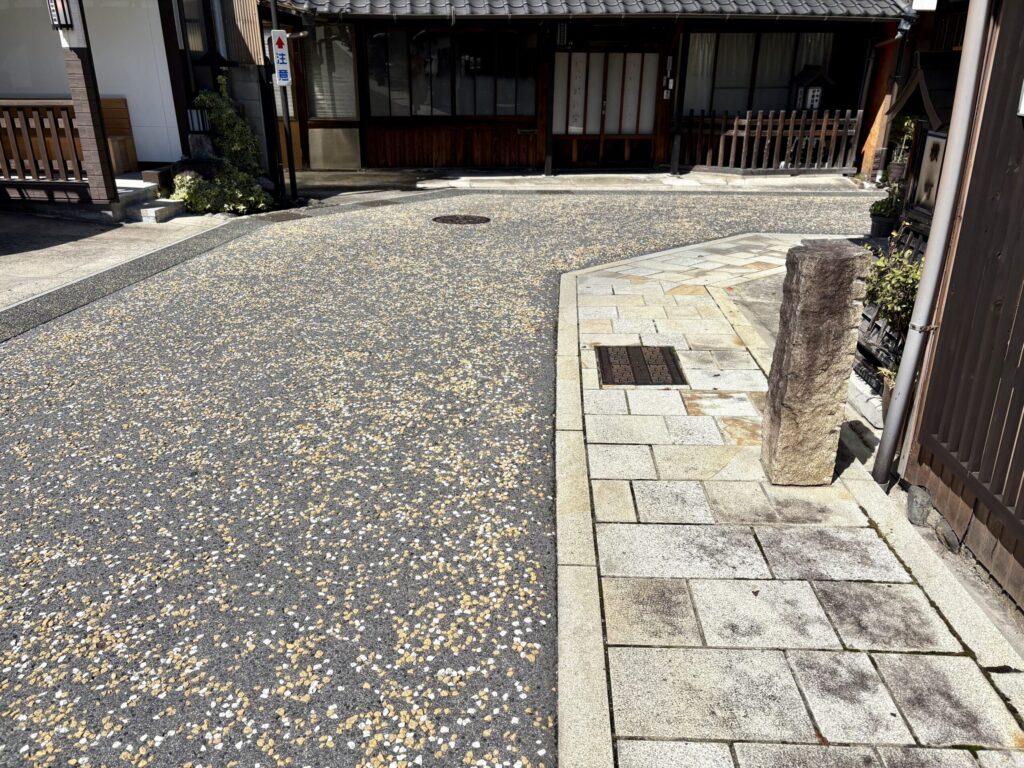
This right-angled corner is part of the masugata, a defensive street layout where the road turns twice at right angles to make it harder for enemies to enter.
If you enjoy old post towns, Arimatsu on the old Tokaido is right inside Nagoya — see my Arimatsu guide.
Nakatsugawa Kurikinton and the Sweet and Savory Loop!
Now for the main event…Kurikinton time!
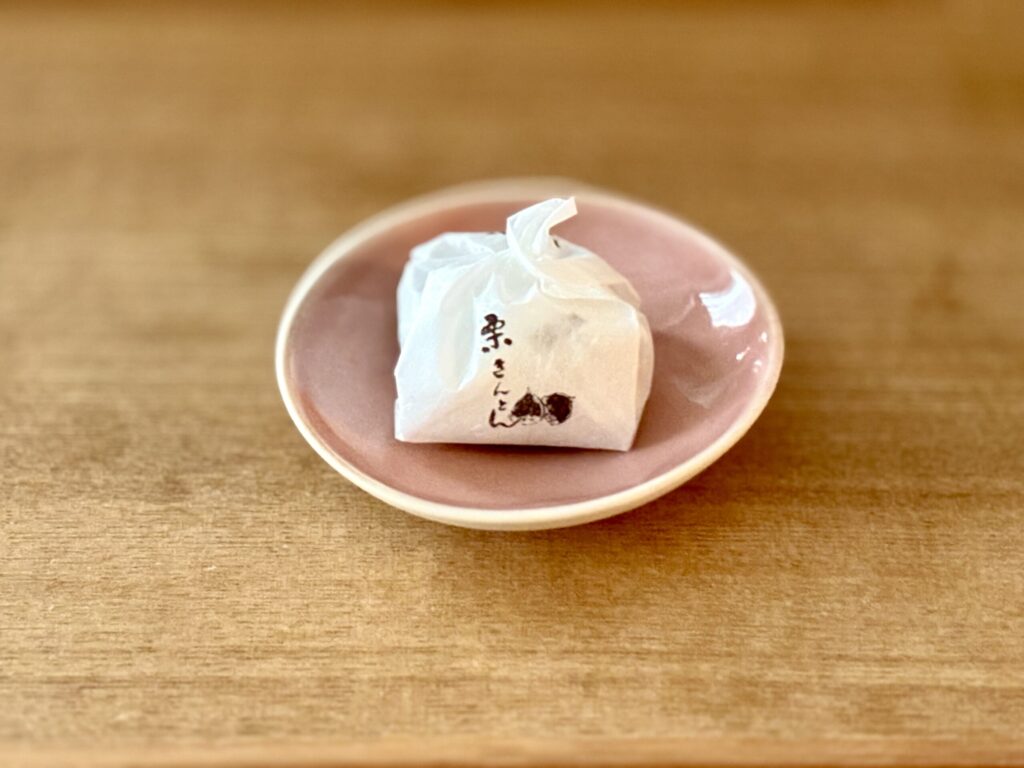
More than a dozen confectioners in Nakatsugawa city make kurikinton, each with its own recipe balance and a loyal following.
The kurikinton season opens on September 1 every year, when the new chestnut crop arrives (peak through October and November). End dates differ by shop — some stop in early December, others continue later.
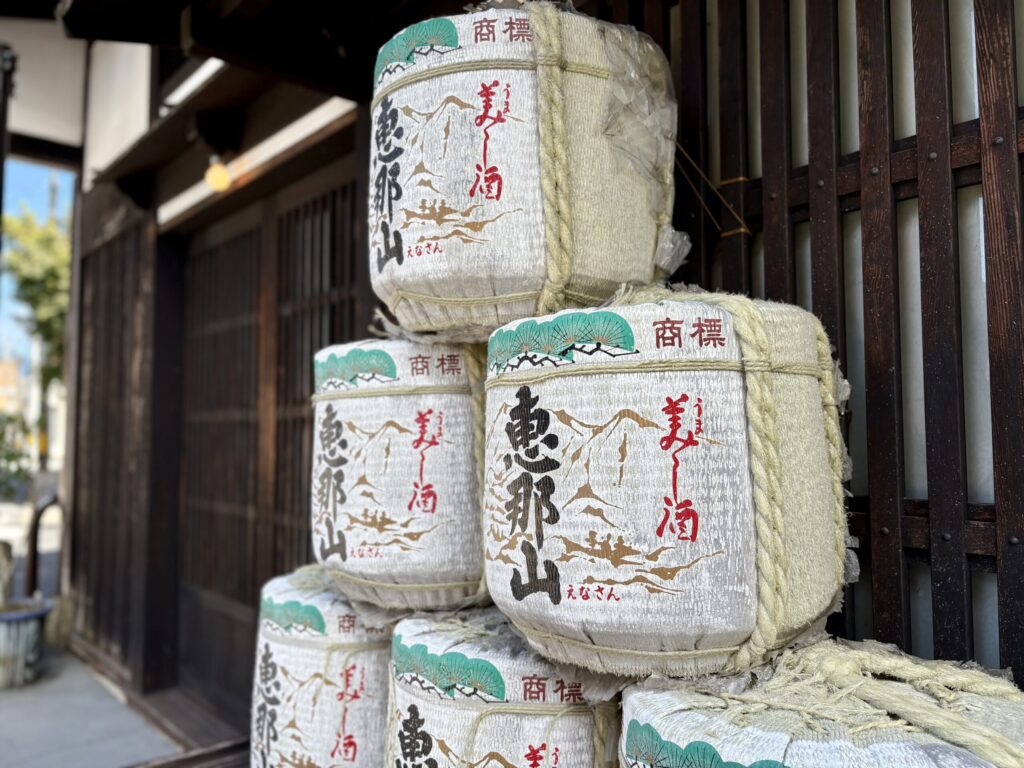
Let me introduce two shops well known for their kurikinton. Both shops are within walking distance of the station and of each other, along or near the old post town street, Nakatsugawa-juku.
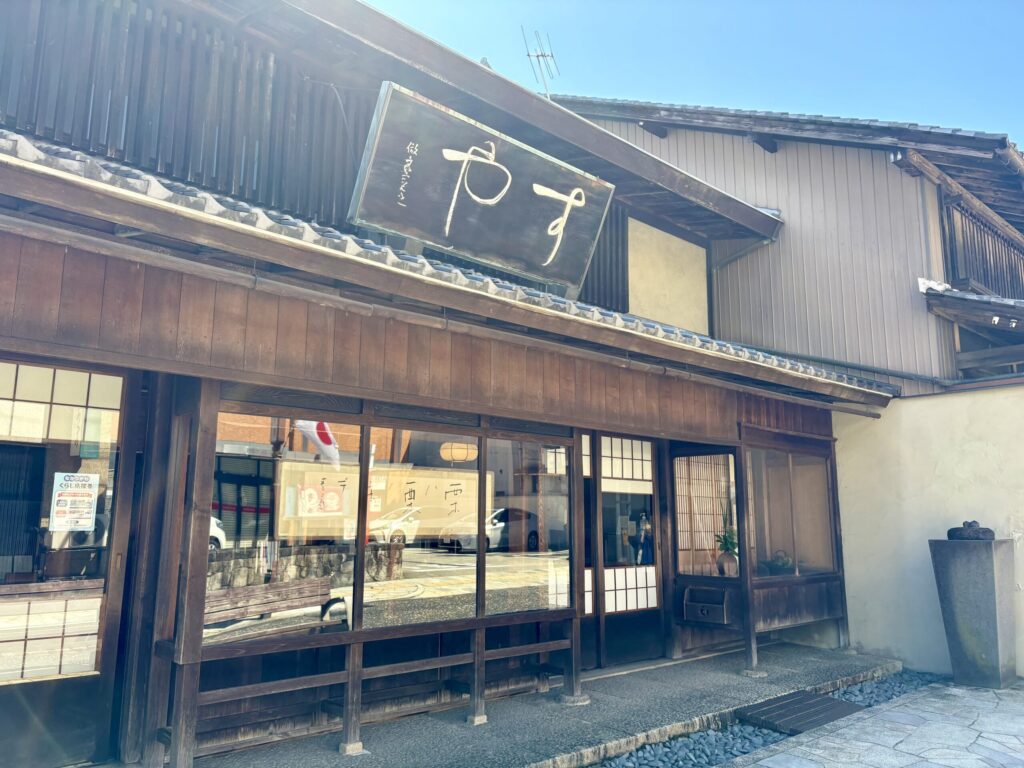
Suya/すや
The shop traces its origin to the Genroku era (1688-1704), when it is said to have opened as a vinegar shop, which is where the name comes from.
Main shop: 9:00-19:00, closed Wednesdays but open every day from September to December.
Kawakamiya/川上屋
Kawakamiya is a historic wagashi shop in Nakatsugawa-juku, founded in 1864 (Genji 1). The station branch, with its early opening hours, is useful if you are catching a morning bus to Magome.
Main shop: 8:00-19:30, closed Wednesdays
Nakatsugawa Station store: 8:00-17:00, open 7 days a week
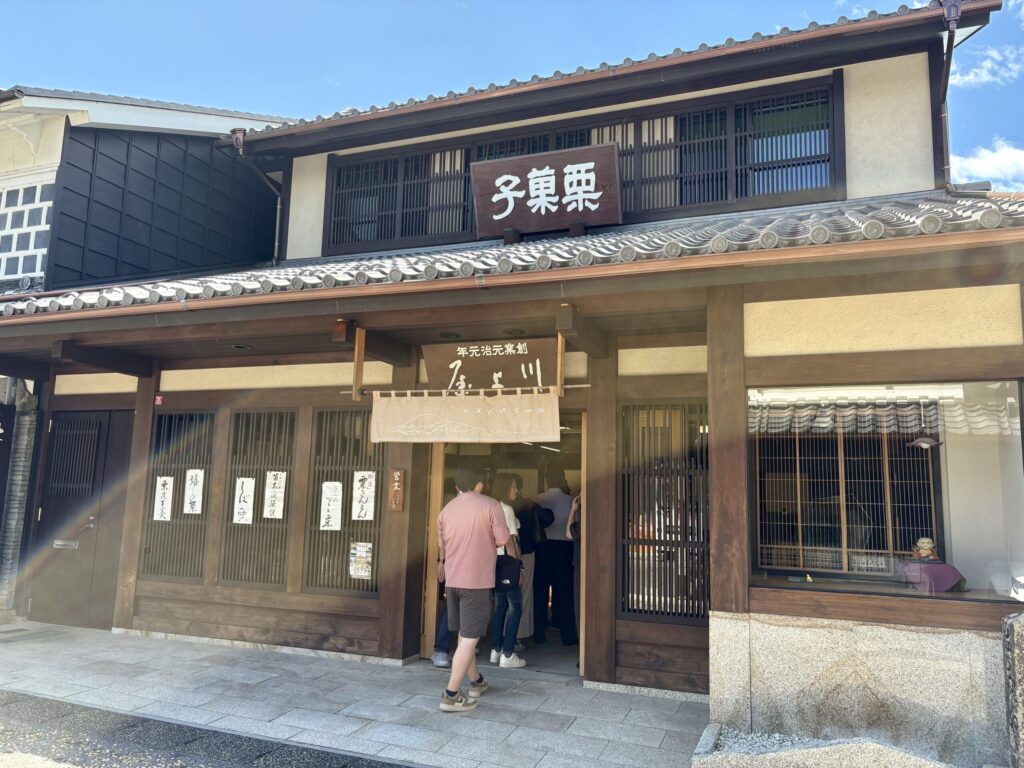
The flavor differs from shop to shop, so if you would like to try several at once, I’d also recommend “Nigiwai Tokusankan (にぎわい特産館)”, right next to Nakatsugawa Station (open 8:30-18:00).
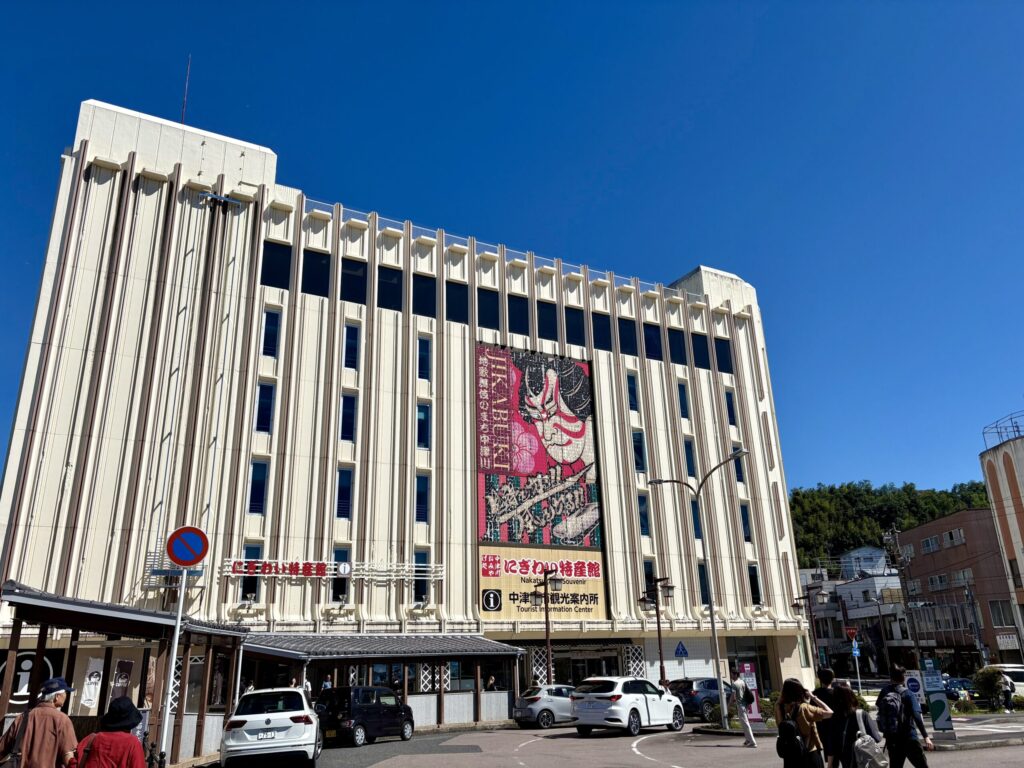
Here, there’s a section selling kurikinton individually, where you can buy single pieces from up to 17 different shops (not all 17 are always in stock, so it depends on when you go). One kurikinton costs around ¥330. Also they sell the assortment box that gathers kurikinton from 7 different confectioners in the city, and comes with local tea.
The individual shops sell single pieces, so you don’t have to commit to a box.
While walking through Nakatsugawa-juku, I picked up a piece at both Suya and Kawakamiya. And at Nigiwai Tokusankan, I picked up three more, each from a different shop;)
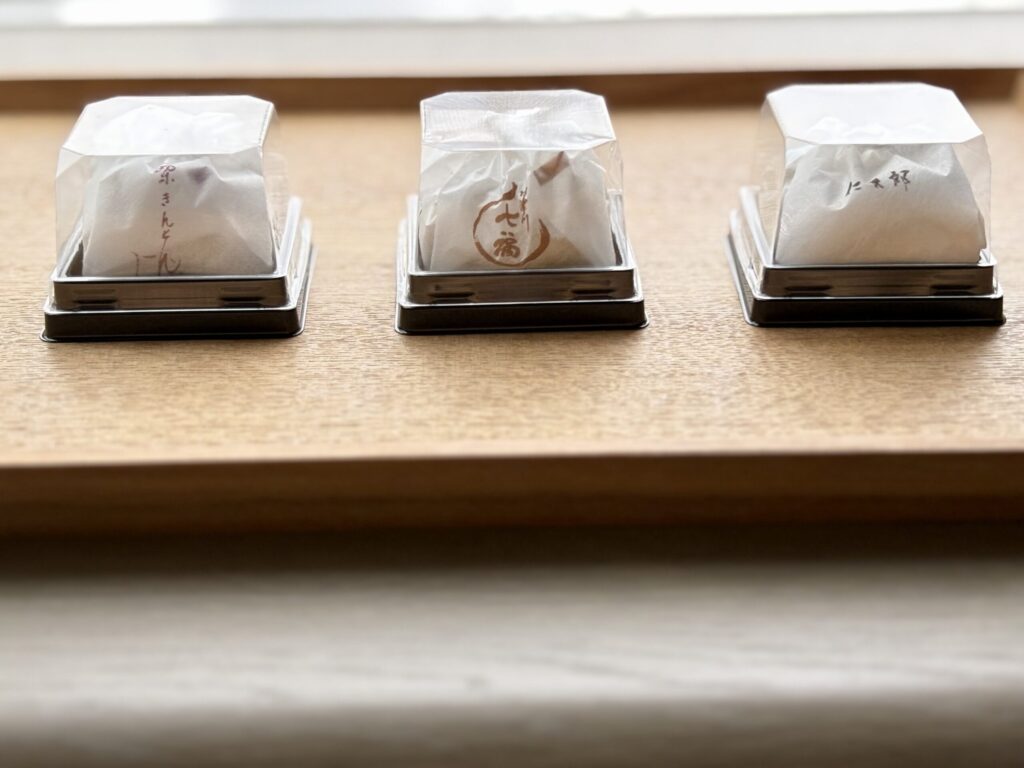
So I tried five kurikinton from different shops. Some kept a bit of texture from the chestnut pieces, others were smooth and moist, and the sweetness and flavor varied from shop to shop; each one had its own character. Every one of them was delicious and I couldn’t possibly pick a single favorite, but of the ones I tried this time, Matsuba (松葉) and Suya (すや) were the two I liked best:)
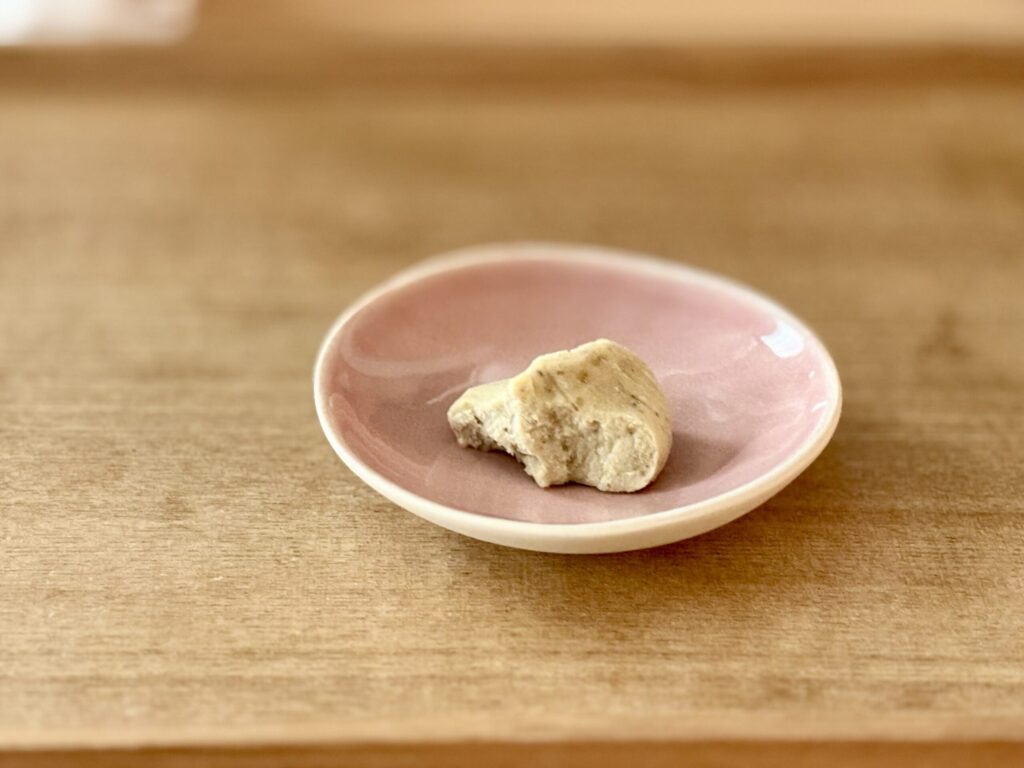
Tasting the flavors of autumn left me feeling completely happy. Hmm…I think I’ll come back for the rest of the shops;p
After something sweet, you want something salty next, right? That’s where gohei mochi (五平餅) comes in.
Gohei mochi is cooked rice mashed onto a skewer, coated with a sweet-savory sauce and grilled over charcoal. It’s from mountainous areas of central Japan, especially popular in Gifu, Nagano, and Aichi.
The Nakatsugawa version gohei mochi is a bit different. Elsewhere it is often a flat sandal shape (waraji-gata); in Nakatsugawa the common form is three small balls on one skewer, with a sauce built on sesame, walnut and peanut.
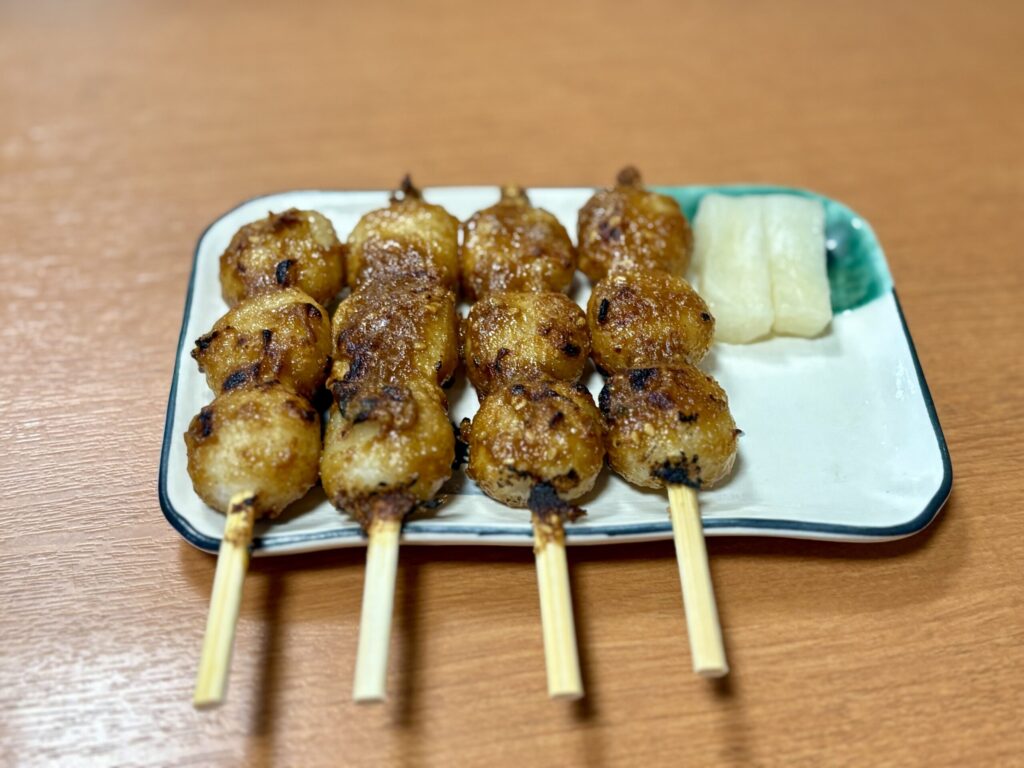
We had gohei mochi at “Ofukuro (おふくろ)”, a 5-minute walk from Nakatsugawa Station. This place serves nothing but gohei mochi — a shop dedicated entirely to it. A set of four skewers per person is ¥600, served with pickles.
It was very very very good! I recommend this place for a gohei mochi break:)
Access from Nagoya
JR Chuo Line, direct from Nagoya Station to Nakatsugawa Station.
- Rapid service (快速): about 1 hour 20 minutes, ¥1,340 (one way); or
- Limited Express Shinano (特急しなの): about 50 minutes, ¥1,340 + limited express fee (one way)
If you have the Japan Rail Pass, both are covered by your pass.
To Magome: about 25 minutes by bus from the bus stop in front of Nakatsugawa Station
Are you planning the rest of your stay? Please check my 2-3 day Nagoya itinerary here!
Nakatsugawa Station is your gateway to Magome, but it would be a real shame to just pass through it without stopping by. Nakatsugawa kurikinton is the taste of autumn, available only for those few months. If you are visiting during this season, don’t let it pass you by!
I hope you experience a hint of Japanese people’s seasonal obsession (passion!) — “shun (旬)” before it’s gone;)
📍 How to get there: About 1 hour 20 minutes from Nagoya Station on the JR Chuo Line rapid train (¥1,340 one way), or about 50 minutes on the Limited Express Shinano. Everything in this post is walkable from Nakatsugawa Station.
⏱ Time needed: Half a day is plenty — or make it a full day by continuing on to Magome by bus.
💰 Budget: Around ¥5,000 per person — mostly the round-trip train, plus five pieces of kurikinton, gohei mochi and the museum.
🗓 Best time to visit: September to December is kurikinton season. If I had to pick, October or November, when the chestnuts are at their best.
Comments