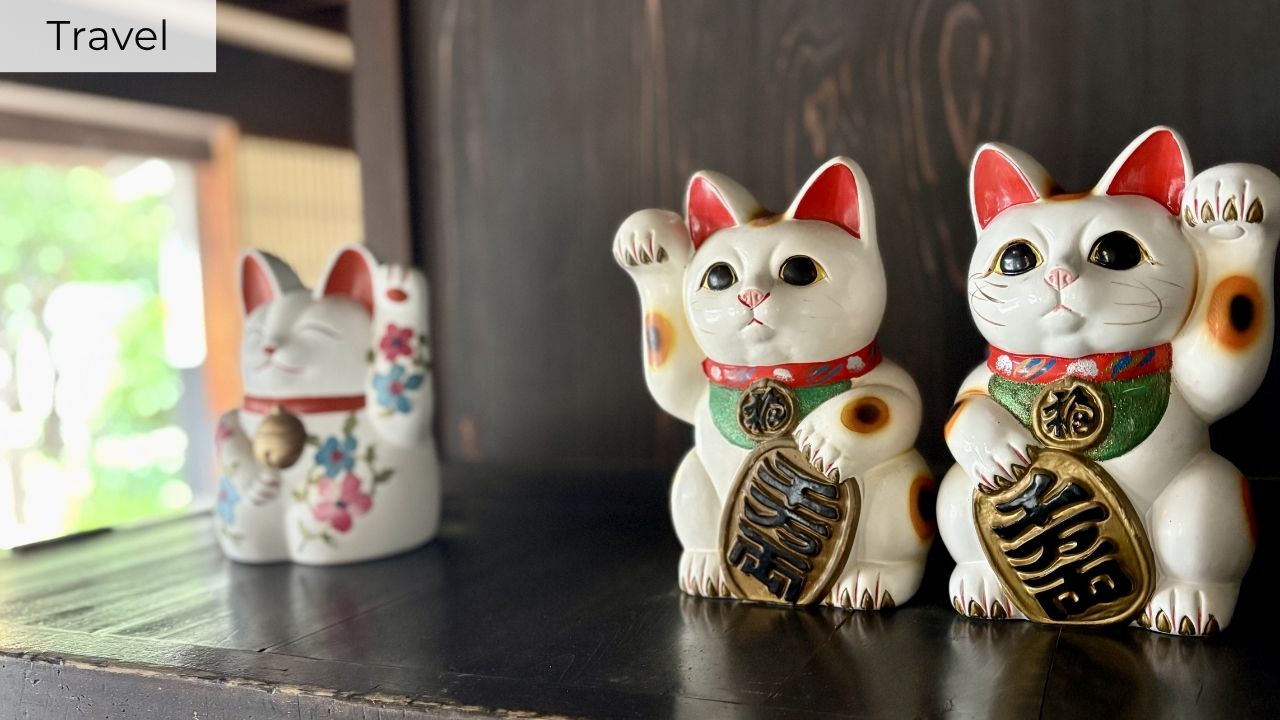
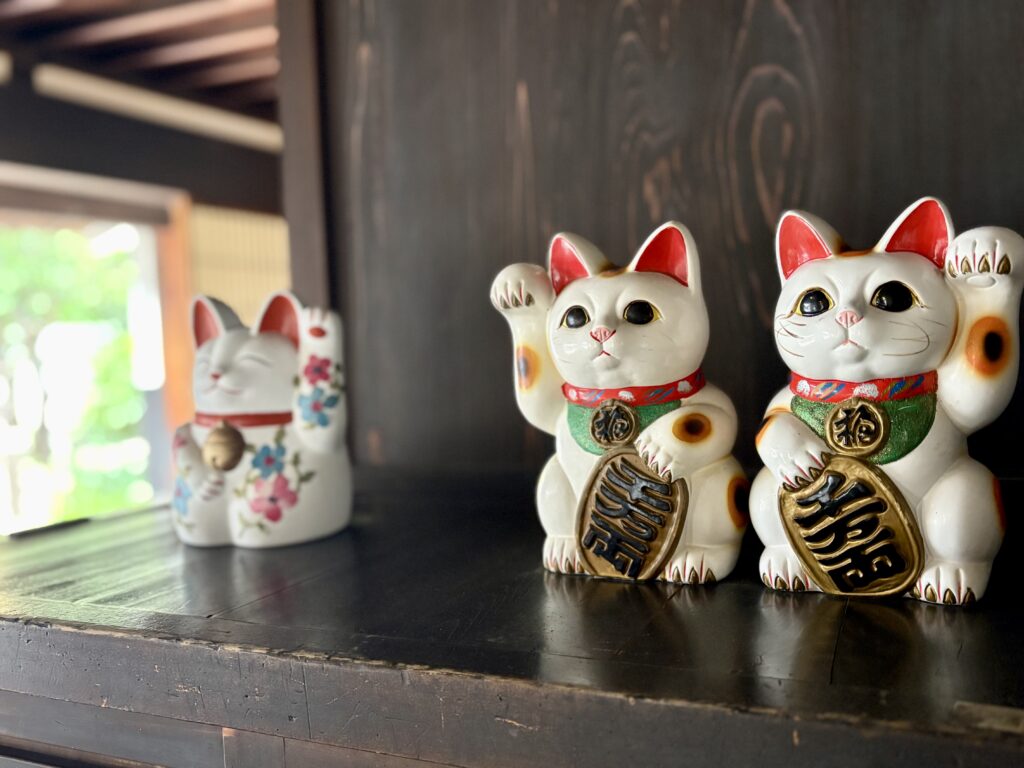
The Tokoname Pottery Footpath is one of my favorite places to visit. There is something truly charming about how the historic streets remain a natural part of the locals’ everyday lives, and when I wander through the maze-like-alleys and find a charming cafe or a Tokoname pottery atelier hidden away, it gives me a warm and happy feeling, as if I found an unexpected gift. I am also deeply drawn to the refined, dignified beauty of the shudei teapots.
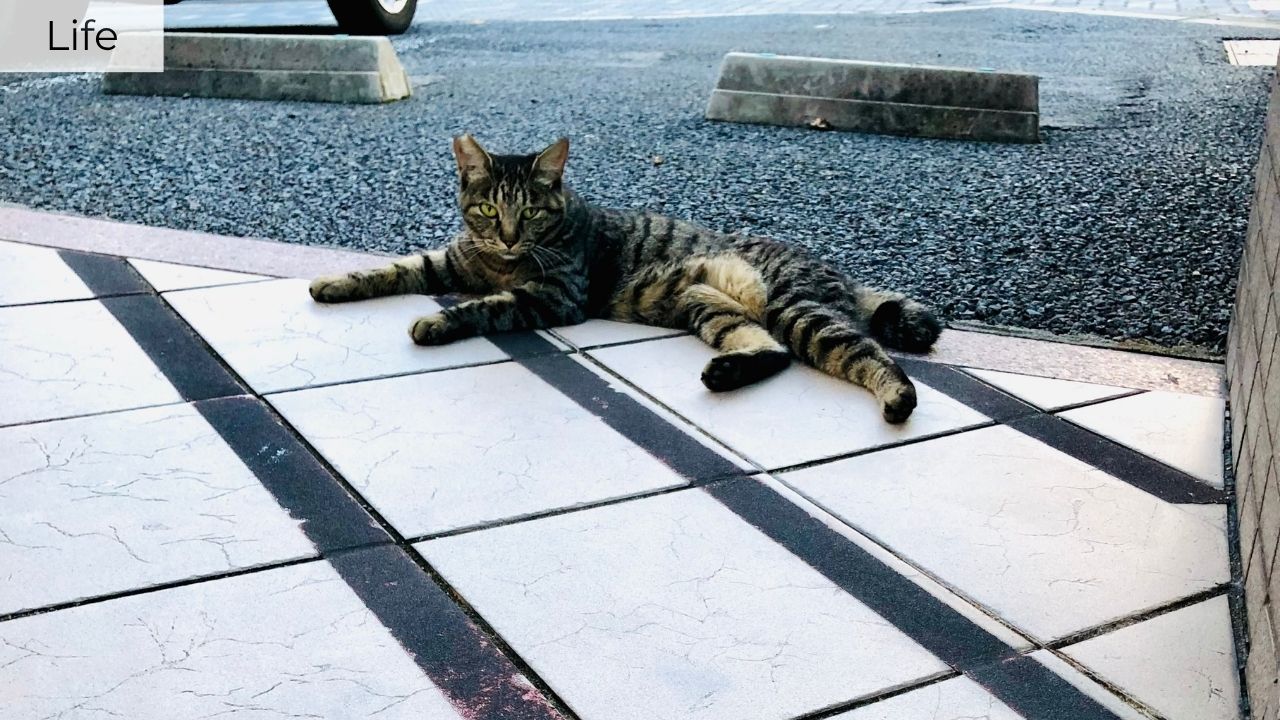
And, of course, I can’t help but fall in love with the cats there, too!
Tokoname Overview
Tucked between Nagoya and the Chubu International Airport, the small city of Tokoname is one of Japan’s most remarkable pottery towns. With over 1,000 years of pottery history (since the late Heian period, around the 12th century), Tokoname is designated as a Japan Heritage Site and is one of the six “Rokkoyo” (Six Ancient Kilns), meaning six representative pottery-producing regions with roots in medieval times that continue to produce ceramics today. The other five are Seto, Echizen, Shigaraki, Tamba, and Bizen.
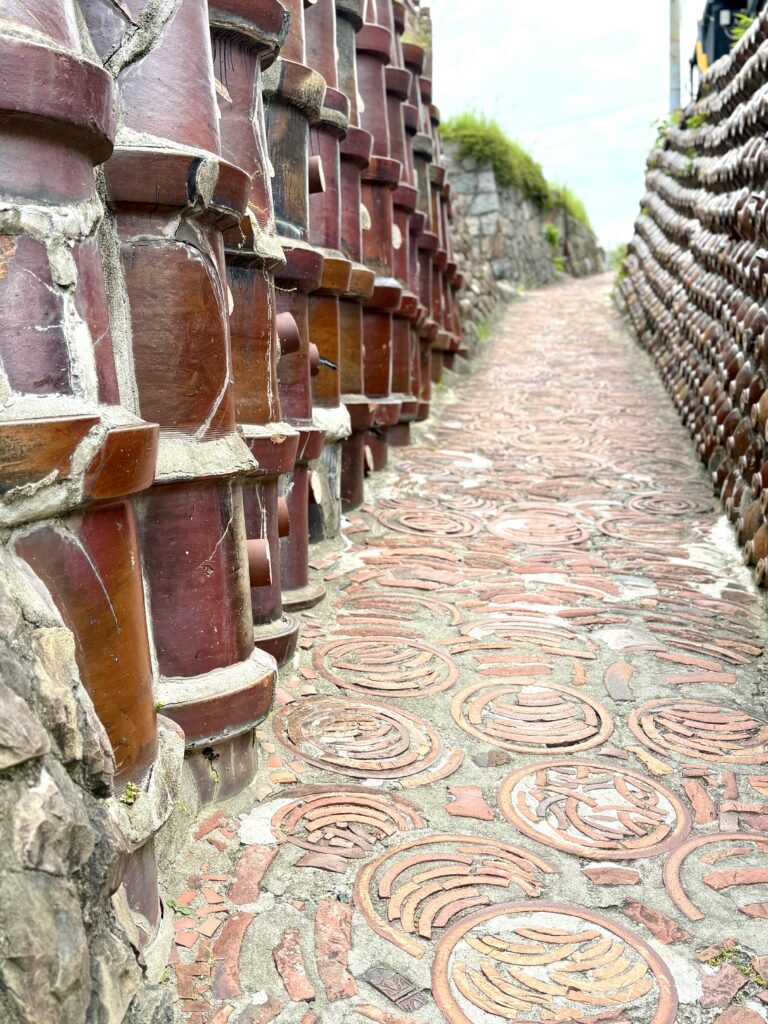
What makes Tokoname exceptional is that its craft is still very much alive. Dozens of active kilns, studios, and workshops operate throughout the city, producing everything from humble teapots to fine art ceramics. A charming townscape stretches across the city, where you can feel the history of pottery.
Access from Nagoya / Chubu Centrair International Airport
From Nagoya
Nagoya Station (Meitetsu) → Tokoname Station (Meitetsu)
- Take the Meitetsu Tokoname Line from Meitetsu Nagoya Station to Tokoname Station.
- Travel time: about 30-40 minutes by express train.
- Fare: 750 yen.
From the airport
Chubu Centrair Railway Station (Meitetsu) → Tokoname Station (Meitetsu)
- Take the Meitetsu Airport Line to Tokoname Station.
- Travel time: 5 minutes
- Fare: 330 yen
If you are staying at the airport-island hotels, or heading directly to Tokoname from there, “TOKONAME SHUTTLE” is a good option.
Free shuttle bus “TOKONAME SHUTTLE”
A free shuttle bus that connects the airport island (Chubu Centrair + airport‑island hotels) with Tokoname city center.
- Operating hours: runs roughly from around 9:00 a.m. to 10:00 p.m. on most days
- Operation patterns may differ slightly between morning/afternoon routes and evening routes
- Fare: free of charge
- Please check the latest transit information for details
I actually stayed at Toyoko Inn Chubu International Airport myself once, the night before an early flight to Amami Oshima. It’s an easy walk from Chubu Centrair Airport Station, clean and comfortable, and a stress-free place to rest before a morning departure — handy if you’d like to fit Tokoname in on your way in or out.
Lucky Cat (Maneki-neko) Town Tokoname
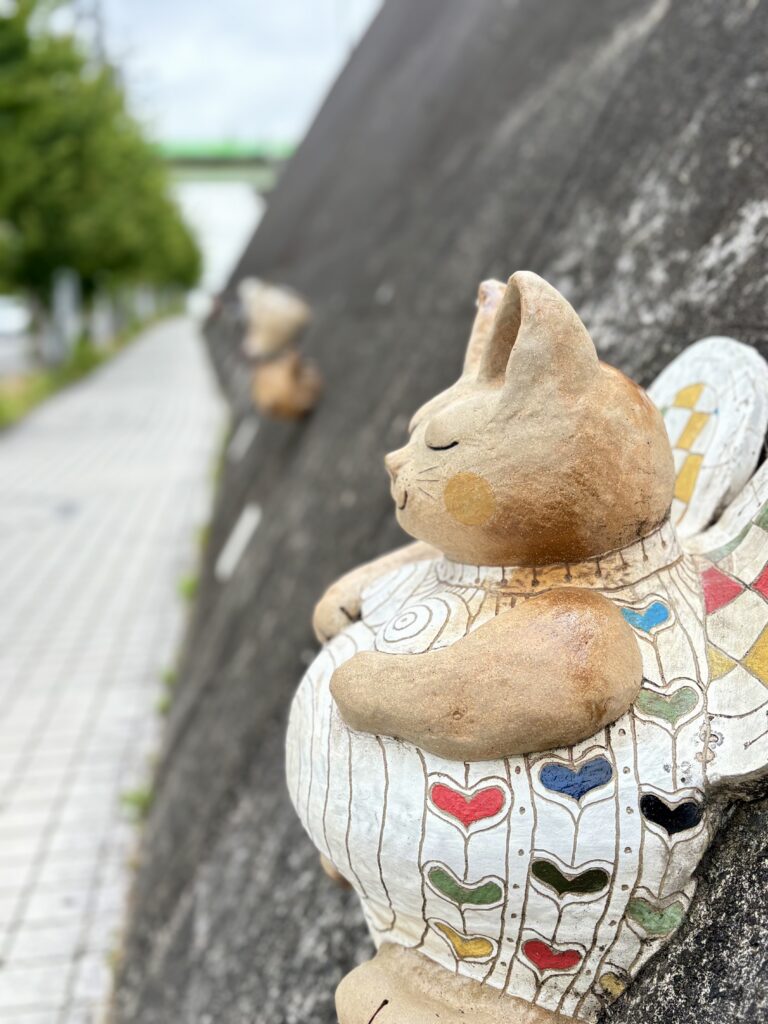
Tokoname is Japan’s largest producer of maneki-neko (lucky cats) and is loved as the home of the lucky cat:) About 80% of the national market share is produced in Tokoname. Tokoname is a serious craft center and also a charming place where cute cats peek out at every turn.
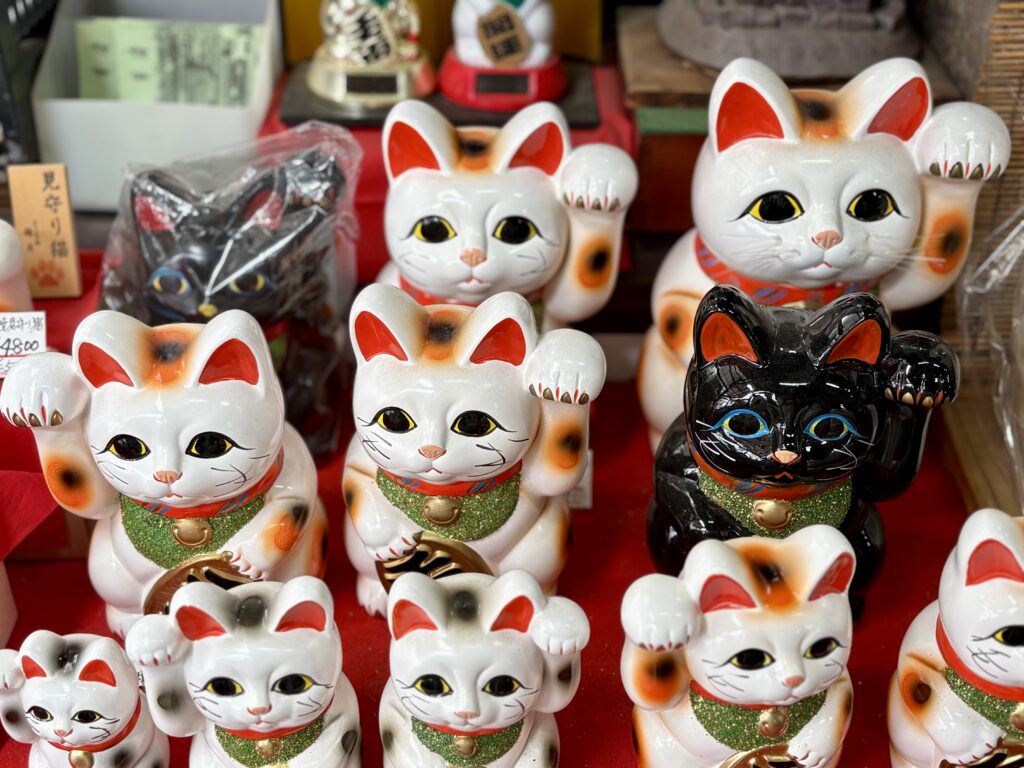
The lucky cats made in Tokoname are known as the “Tokoname style”. Tokoname lucky cats are characterized by their large round eyes and ears, a perfectly round face, a plump body, and cute, two-heads-tall proportions. Cats raising their left paw are said to beckon customers; those raising a right paw invite wealth. Also, each body color represents a different wish.
- White: Good Luck and Fortune (来福招福), white is the most traditional and popular color for maneki-neko
- Black: Protection and Ward Off Evil (厄除招福)
- Red: Health and Longevity (健康招福)
Tokonyan (とこにゃん) — The Giant Guardian Cat
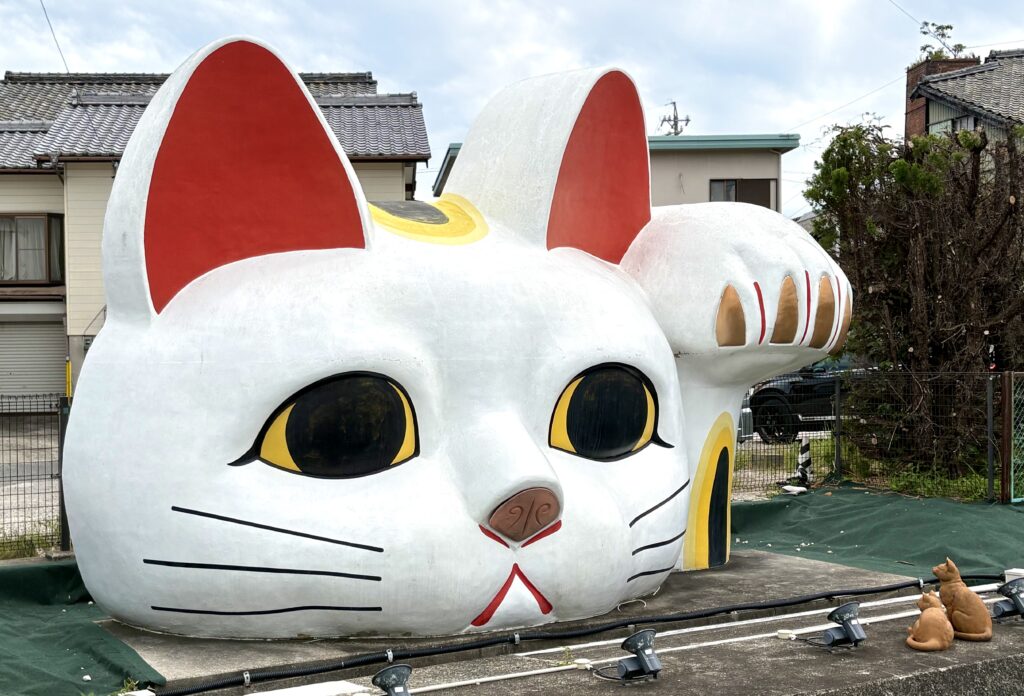
Tokonyan is an enormous lucky cat figure that dramatically peeks its head and raised paw over a retaining wall along Maneki-neko Street. It stands 3.8 meters tall and 6.3 meters wide, making it one of the largest maneki-neko in Japan. The name combines ‘Tokoname’ and ‘nyan’ (cat’s meow sound in Japanese). You must come and say ‘Nyallow!’;p
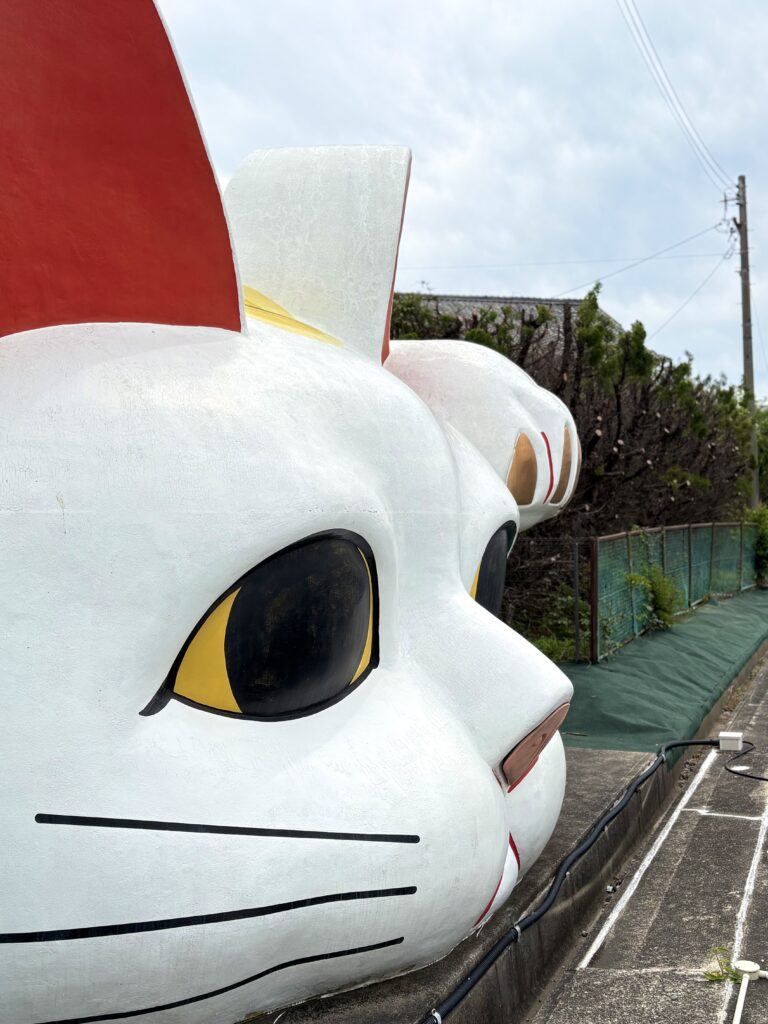
It is said that there are over 50 pairs of lucky cats, both big and small, scattered throughout Tokoname. Making “Find the Lucky Cats!” a sub-theme of your trip… doesn’t that sound like a lot of fun?;)
“Shudei” (vermilion clay) Teapots (朱泥急須)
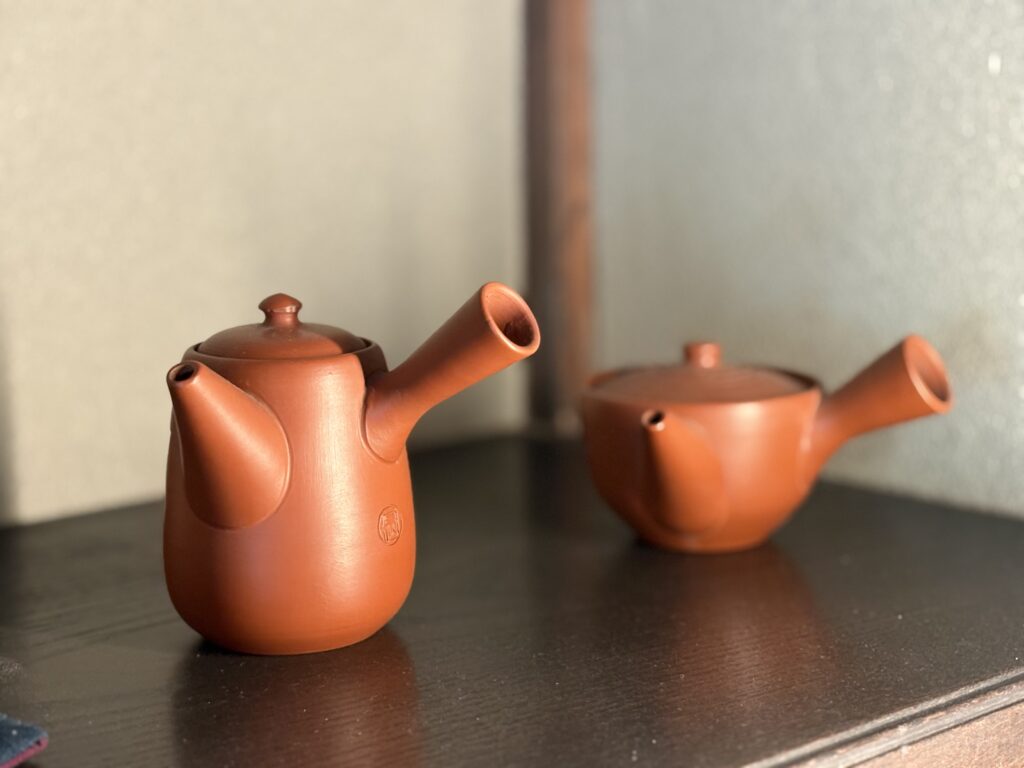
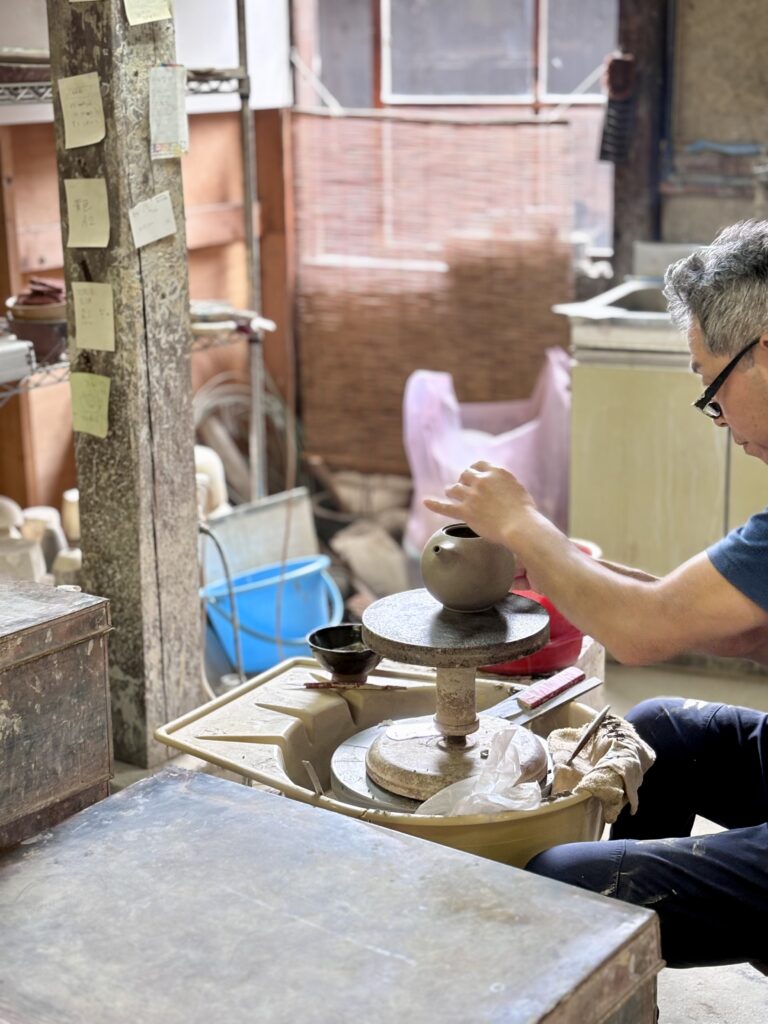
Tokoname is particularly famous for its “shudei” (vermilion clay) teapots — small, unglazed kyusu teapots made from iron-rich local clay that fires to a distinctive rust-red color. When this iron reacts with tannin — a component in tea — it removes the bitterness, making the tea taste smooth and mellow.
I’m pretty sure you have made up your mind now to get this beautiful Shudei teapot (like this one) designed to enhance the flavor of tea;)
Here is how to brew a delicious cup of sencha (steamed green tea). I hope you enjoy the whole process:) With just a few simple tips, you can bring out even more of the tea’s rich aroma and umami.
- Pour boiling water into the teapot, and then transfer it into the teacups. This step lowers the water temperature to 80–90°C (175–195°F), while also warming up your cup. Lowering the water temperature helps reduce the tea’s bitterness and astringency.
- Place the tea leaves in the teapot. As a general guide, use about 3 to 5 grams per person, depending on the type of tea.
- Pour the water from the teacups back into the teapot.
- Put the lid on the teapot and let the tea steep for about 1 minute.
- Gently swirl the teapot and pour the tea into the teacup. Make sure to pour out every single drop until the teapot is completely empty.
- You can enjoy the second and the third infusion with the same tea leaves.
The best way to brew tea varies depending on the type of tea you choose;)
For hojicha (roasted green tea), use boiling water (95–100°C / 203–212°F) and let it steep for about 30 seconds. Unlike sencha, do not let the water cool. (Use about 4 grams of tea leaves).
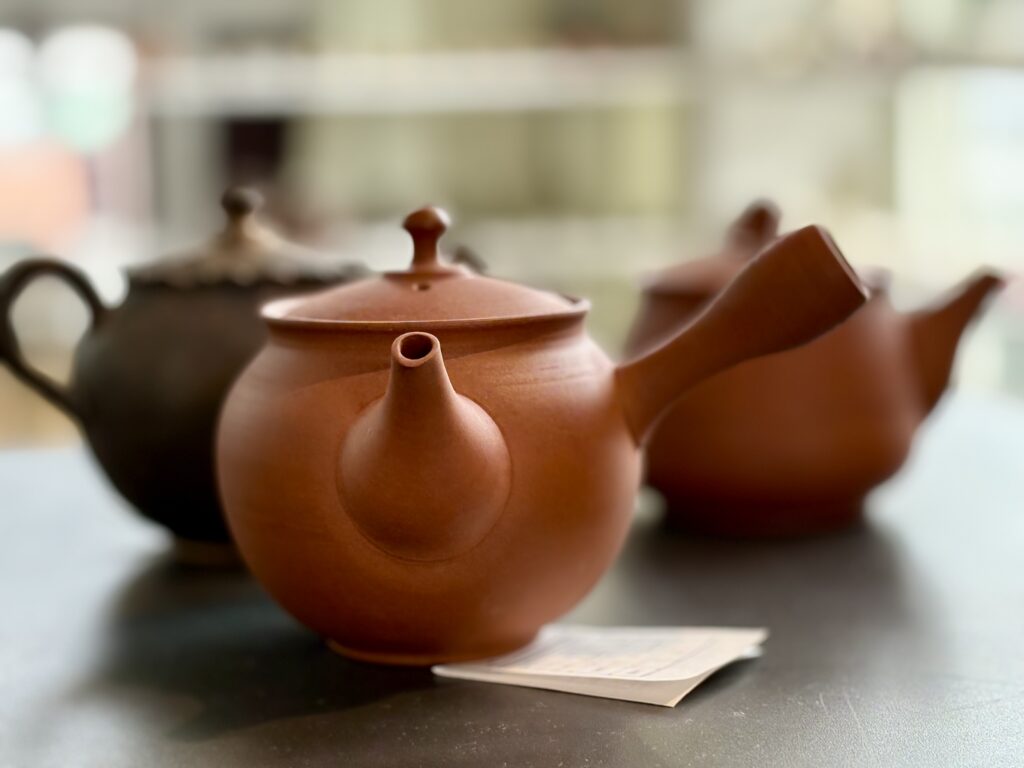
My friend actually works at a teapot factory in Tokoname;) It makes me so happy to think that the teapot you chose might have been made at their factory!
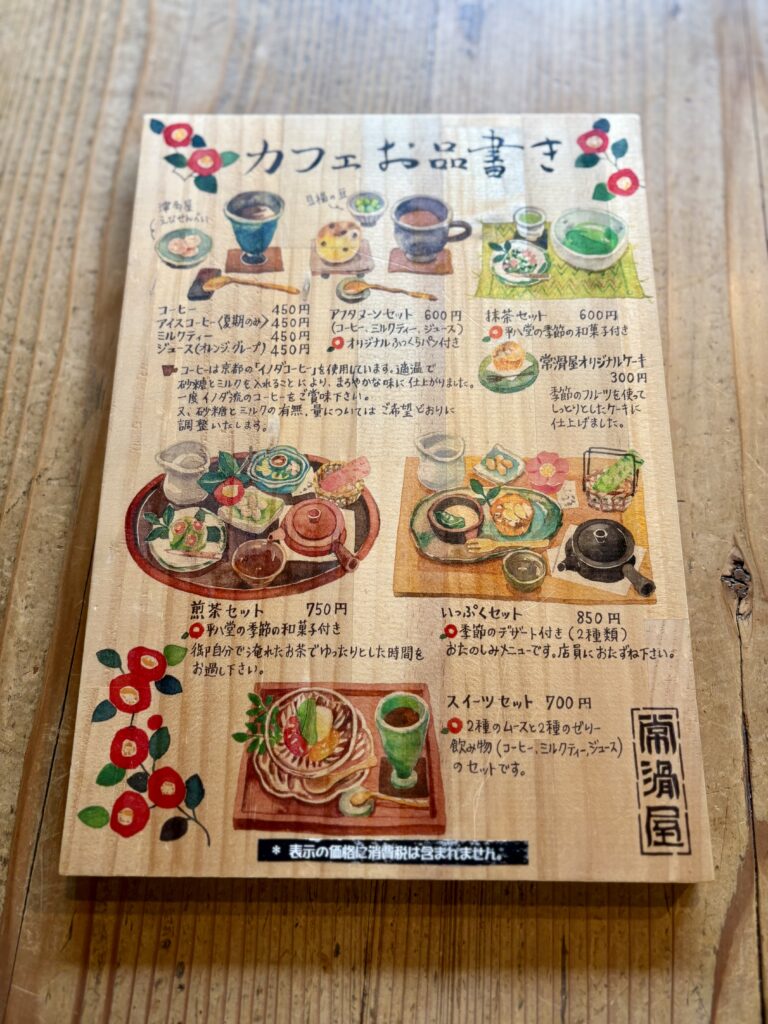
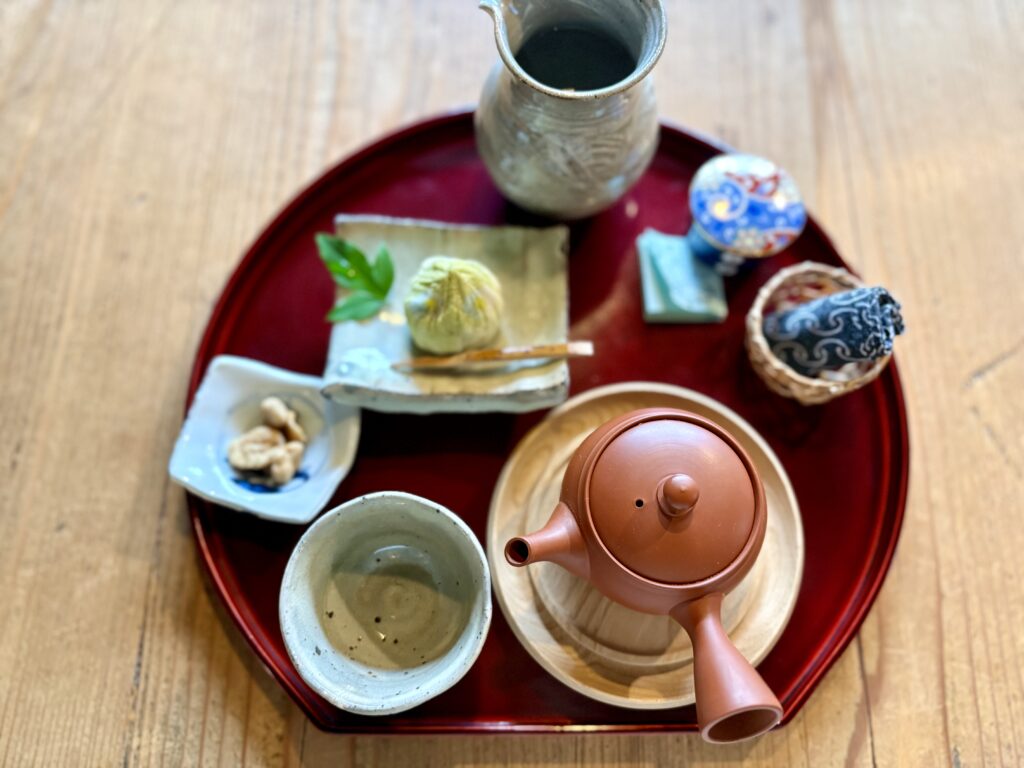
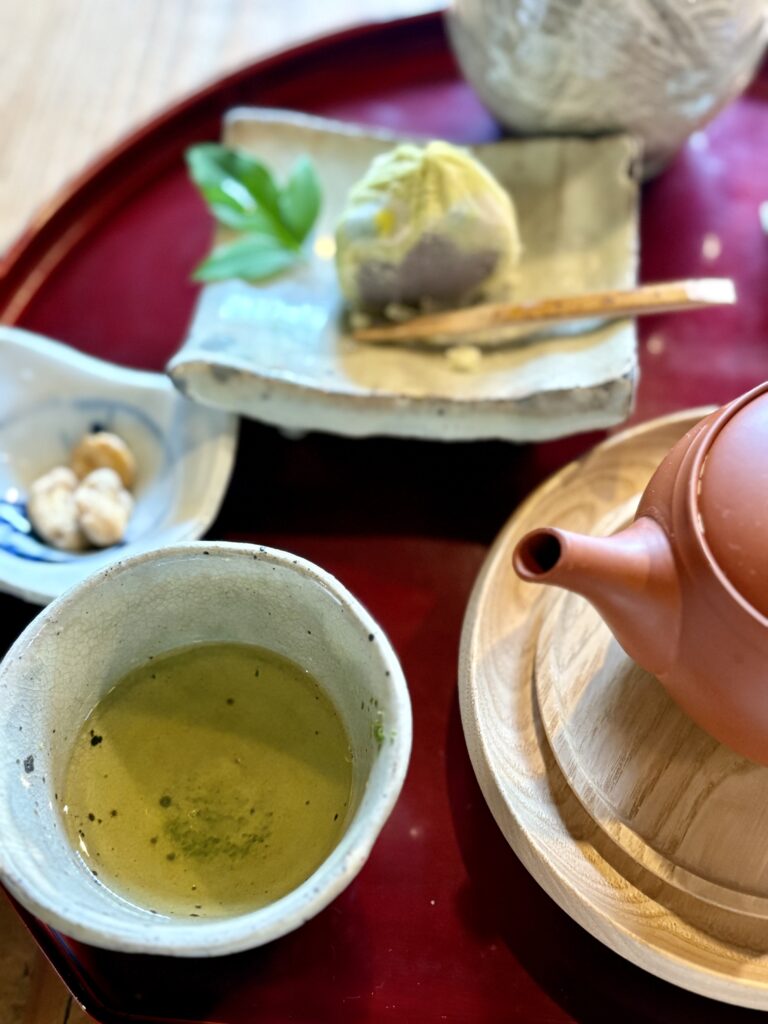
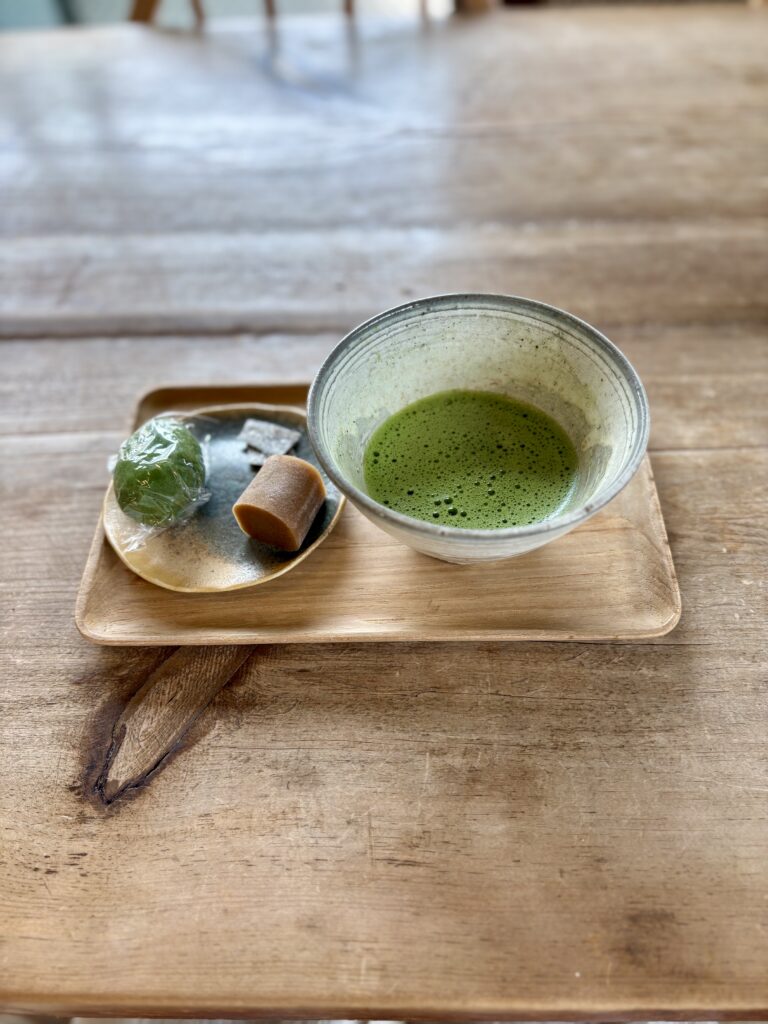
But, if you are backpacker, traveling light, and no place to securely store a teapot, please don’t worry, there is a cafe I’d like to recommend. At “Tokoname-ya (常滑屋)” located along the Pottery Footpath (やきもの散歩道/Yakimono Sanpomichi), they have a menu where you can actually use a Tokoname-yaki teapot to brew and enjoy your own tea. The “Sencha Set (煎茶セット)“ comes with sencha green tea (tea leaves, hot water, and a Tokoname-yaki teapot) paired with a traditional Japanese sweet. And look!—they serve it in such a beautiful set of teaware:)
Recommended Route — Yakimono Pottery Footpath / やきもの散歩道
I recommend taking a walk along Pottery Footpath. The Pottery Footpath (Course A is 1.6 km, ~1 hour walking) is a designated walking trail that winds through the historic pottery district, past ancient kilns, brick chimneys, and narrow lanes lined with recycled ceramic pipes and broken pottery.
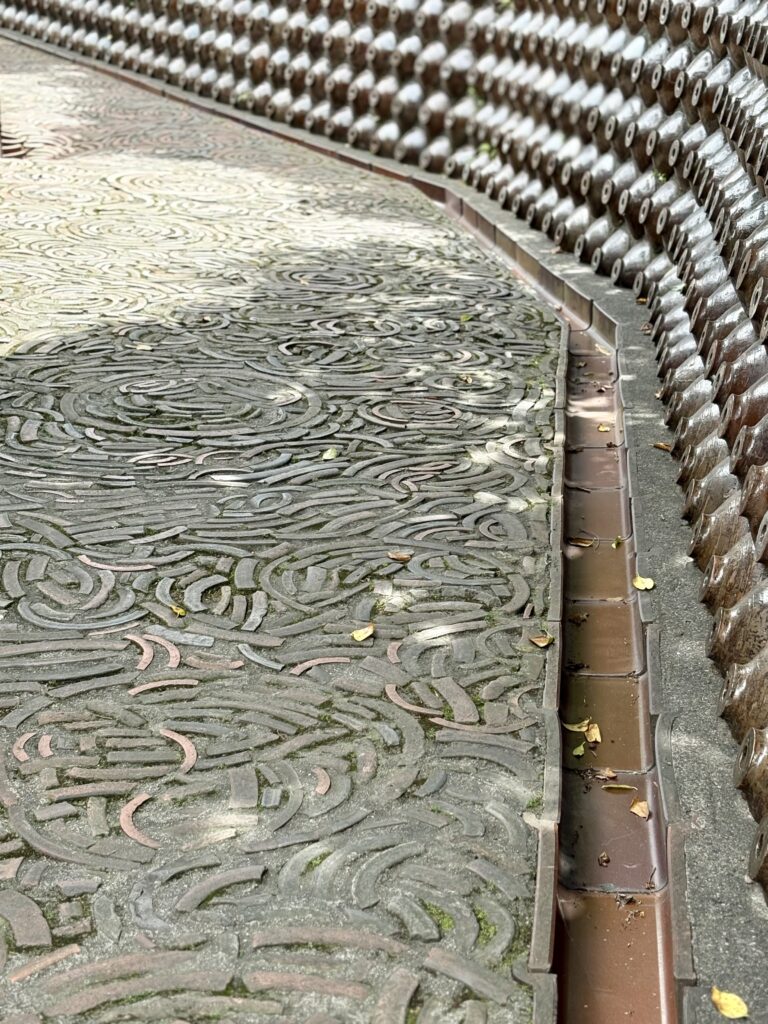
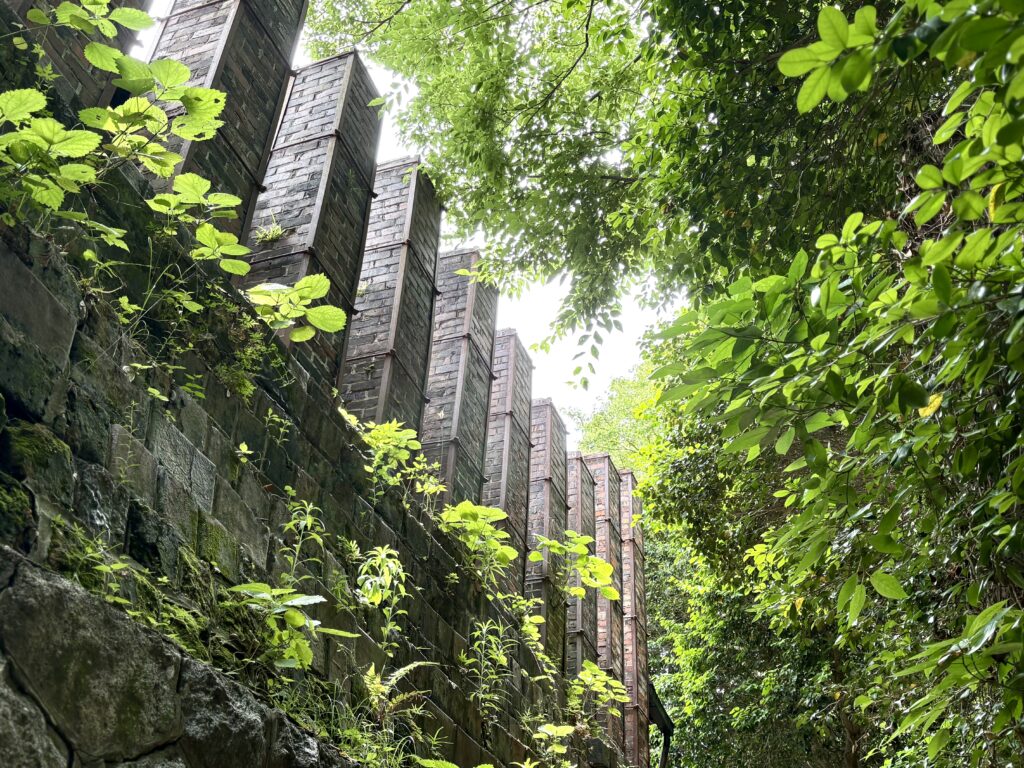
You can explore all of Tokoname’s highlights—from historic buildings to photogenic places—without missing a thing. With plenty of cute kominka (old townhouses) cafes and places to eat along the way, making it the perfect half day or one day trip to enjoy with tea or lunch breaks.
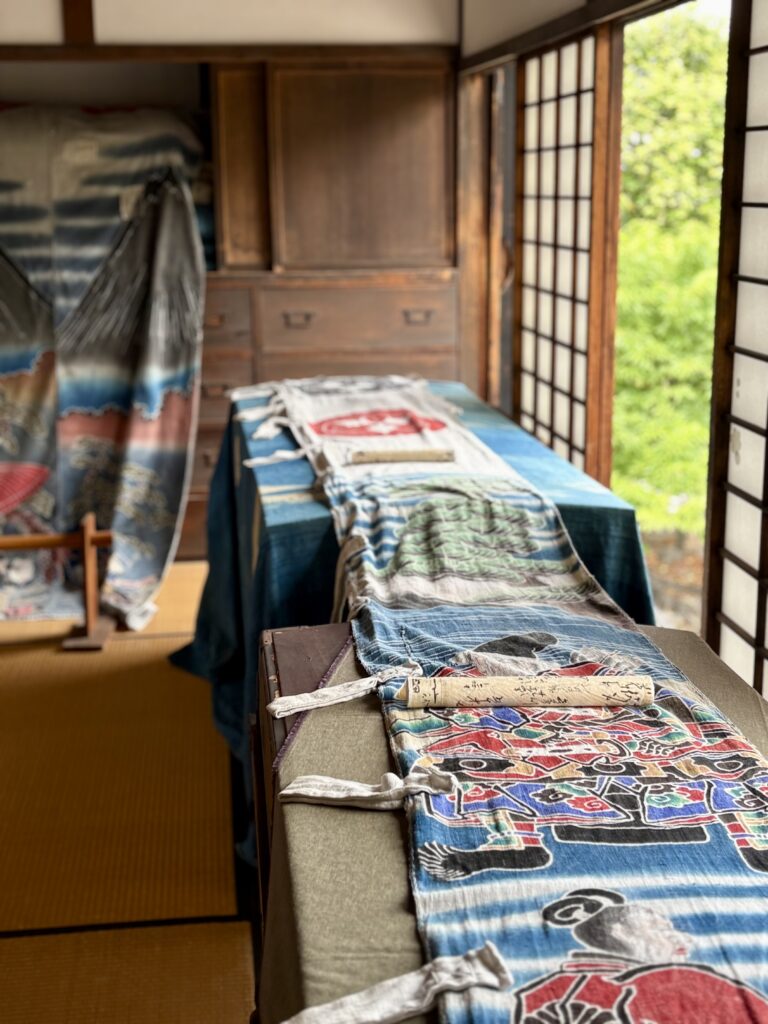
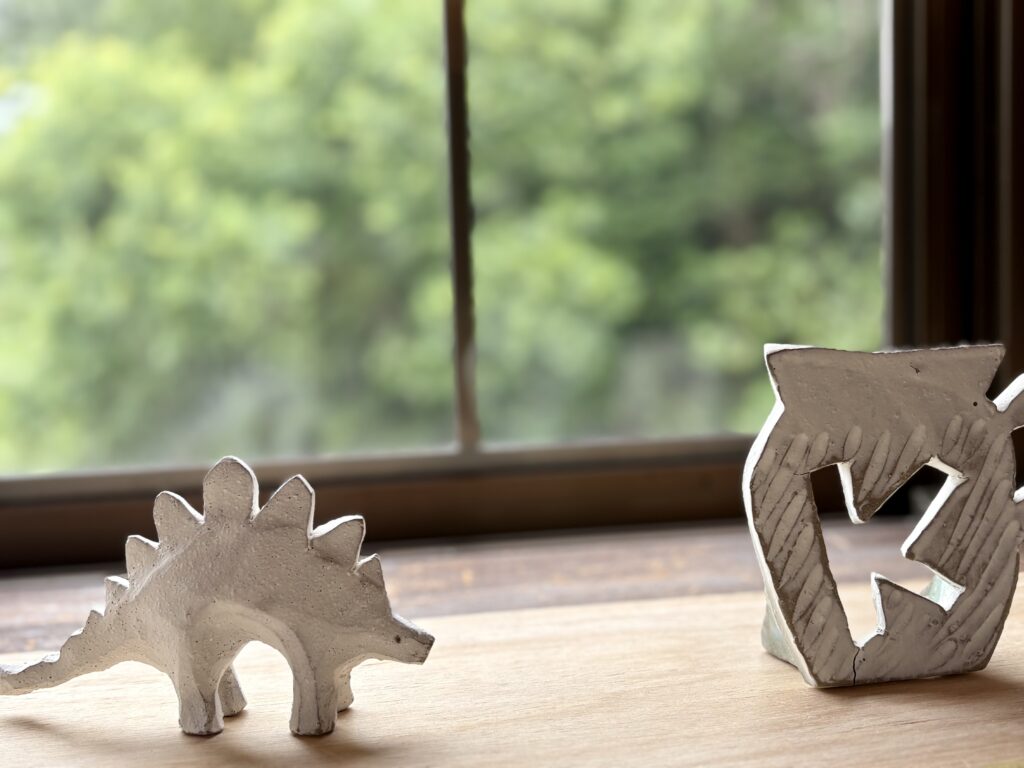
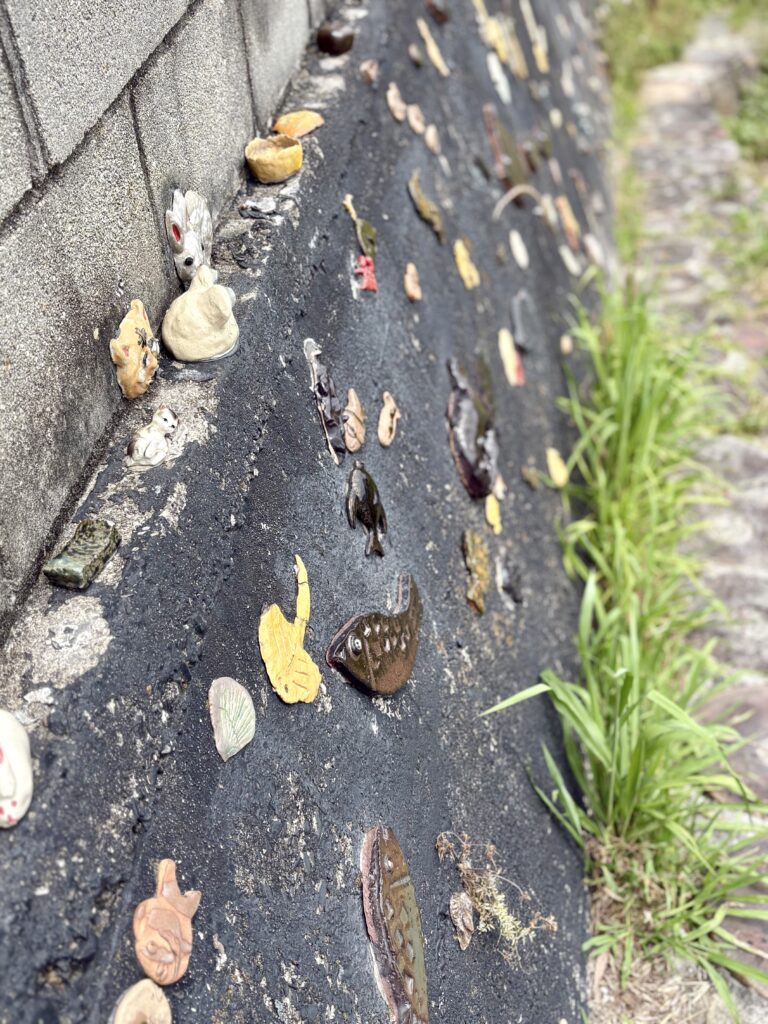
The path starts at Tokoname Tojiki Kaikan (陶磁器会館, Ceramics Hall), about a 5-minute walk from Tokoname Station (West Ext.), and loops around the Sakaemachi district.
You can get a Pottery Footpath map (in English and some of other languages are also available) at Tokoname Tojiki Kaikan so I suggest heading there first to pick up a map and start exploring even if you are planning not to follow the path. There are Pottery Footpath information signs everywhere (from Tokoname station), so I think you can enjoy without getting lost.
I haven’t personally tried Course B, but it’s a 4km walk and takes about 2 hours and 30 minutes. It also starts at Tokoname Tojiki Kaikan.
There are lots of studios you can try pottery-making and maneki-neko painting, so have fun planning your trip and enjoy the experience:)
Just a little extra info, but if you are mochi lover, I’d like to recommend to visit here for a mochi break;) It’s such a cute cafe with very nice mochi and matcha!
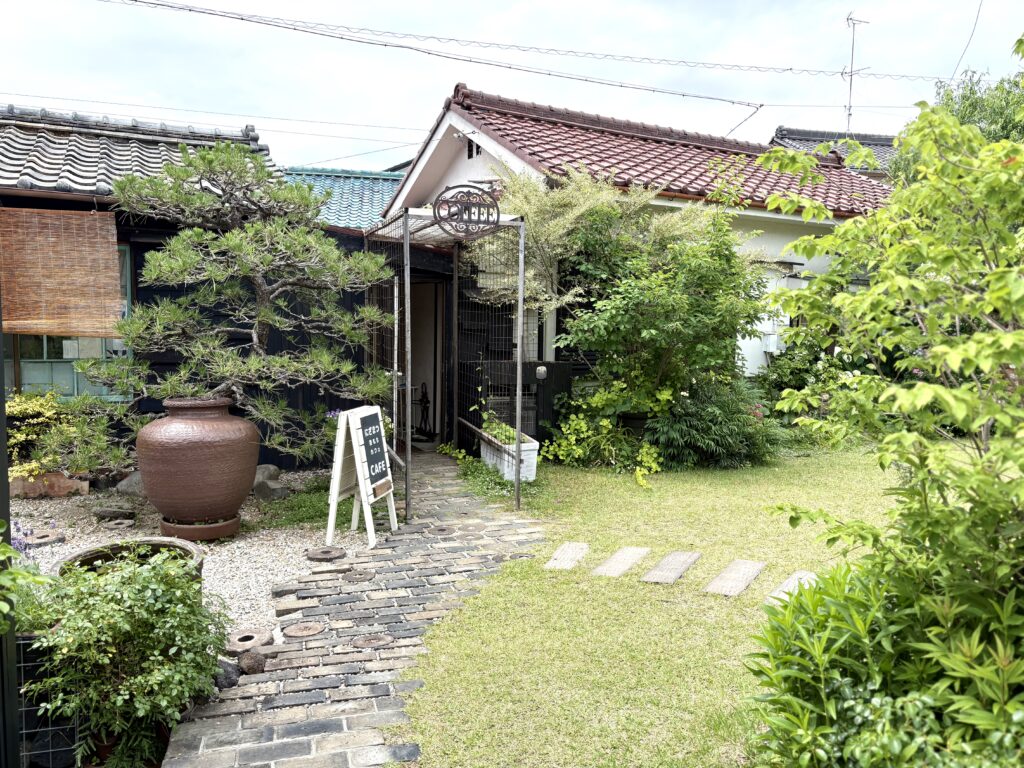
A kiln family’s café offering yomogi (mugwort) mochi made from self-grown mugwort. I heard that they mill their own rice flour using rice sourced from local farmers. They cook Japanese azuki beans at the shop, and make mochi every morning using a traditional stone mortar and wooden mallet. It is not along the path but it’s just 2 minutes away from Tokoname Tojiki Kaikan.
If you’re planning more day trips from Nagoya, Inuyama Castle is another great option — a historic castle town about 30 minutes away.
That maneki-neko in your suitcase, the one you bought in Kyoto or Asakusa, might actually be from Tokoname;) Why not go back to its hometown together? Your maneki-neko is probably homesick! That gives you the perfect excuse to visit Tokoname :p
📍 How to get there: 30 minutes from Meitetsu Nagoya Station on the Meitetsu Airport Line (about ¥750 one way). Get off at Tokoname Station.
⏱ Time needed: Half a day is enough for the Pottery Footpath; add a few hours if you want to try a workshop.
💰 Budget: Around ¥3,000 per person including the train, lunch, and a small souvenir.
🗓 Best time to visit: Weekday mornings are quietest. Avoid midsummer afternoons — the walk has little shade.
🎟 Book ahead: Want to paint your own maneki-neko? The Kobokan studio on the Pottery Footpath offers casual painting experiences (maneki-neko ¥2,200, small ornaments from ¥750), and the pen course is fired in about 30 minutes — you take your cat home the same day. The website is in Japanese (with an auto-translated English version), so reserve a few days ahead via their contact form and wait for a confirmation reply.
Tokoname is just one train stop from Chubu Centrair Airport — if you have an early flight, staying nearby the night before is an easy option.

Comments