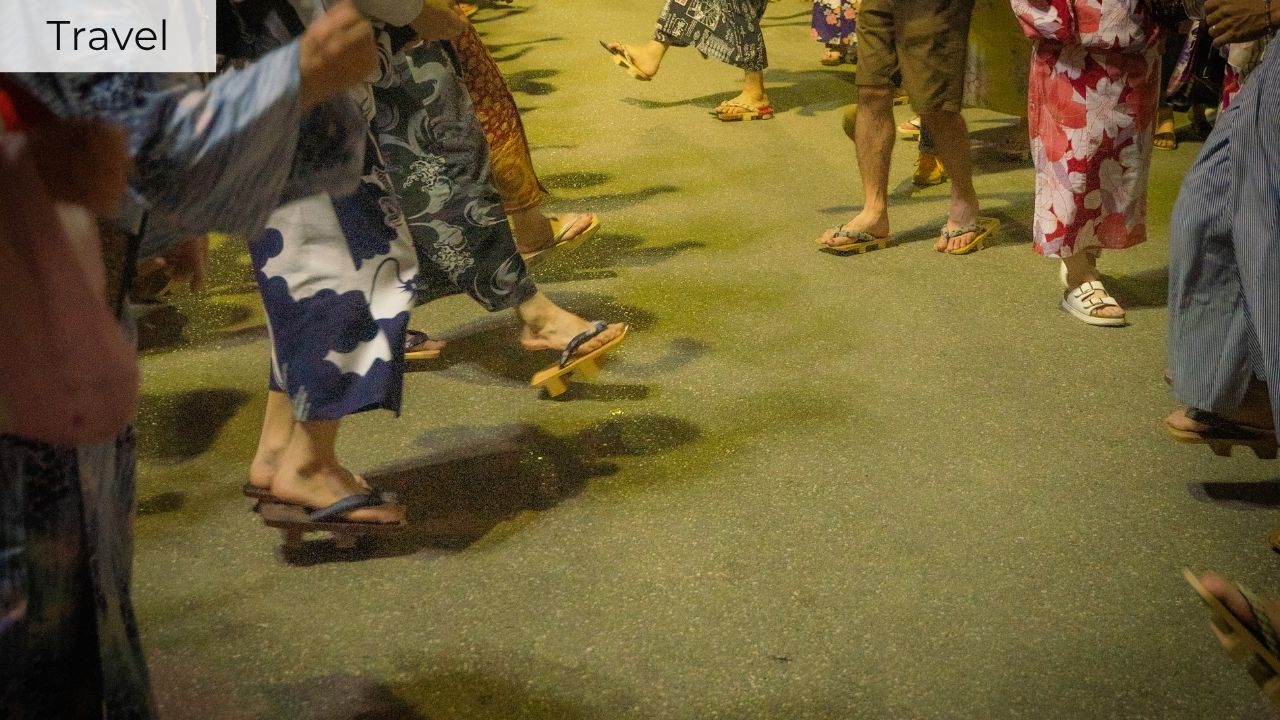
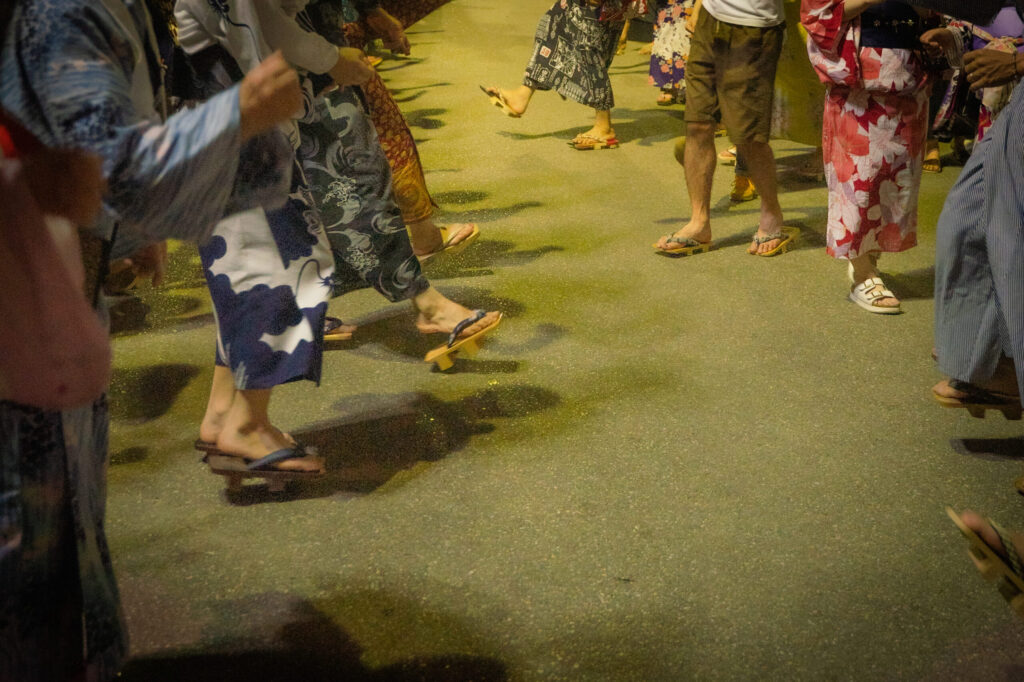
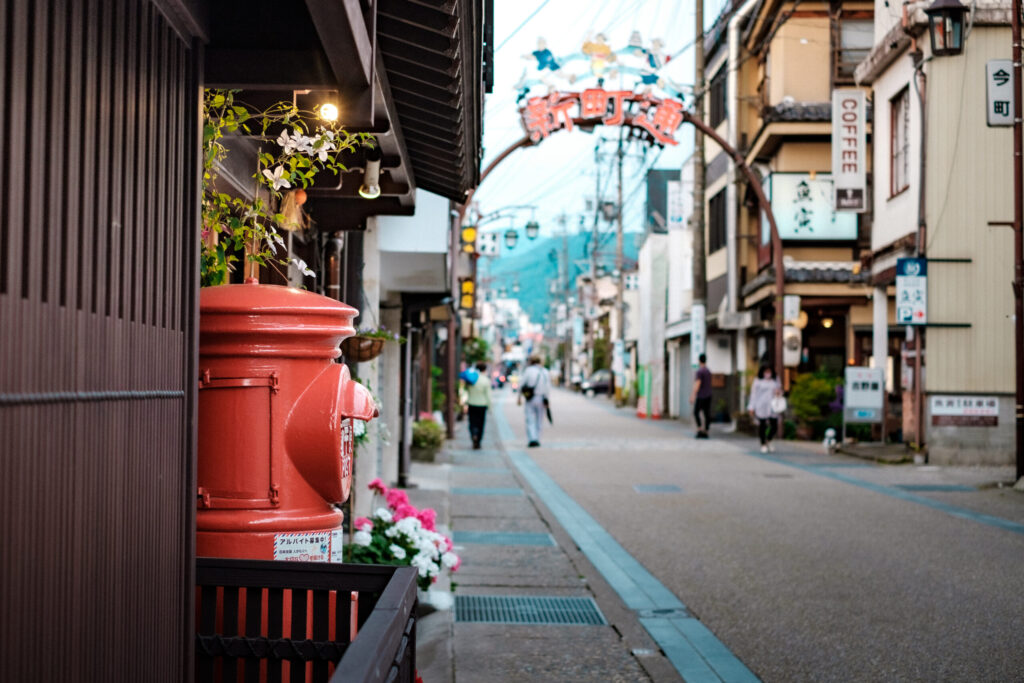
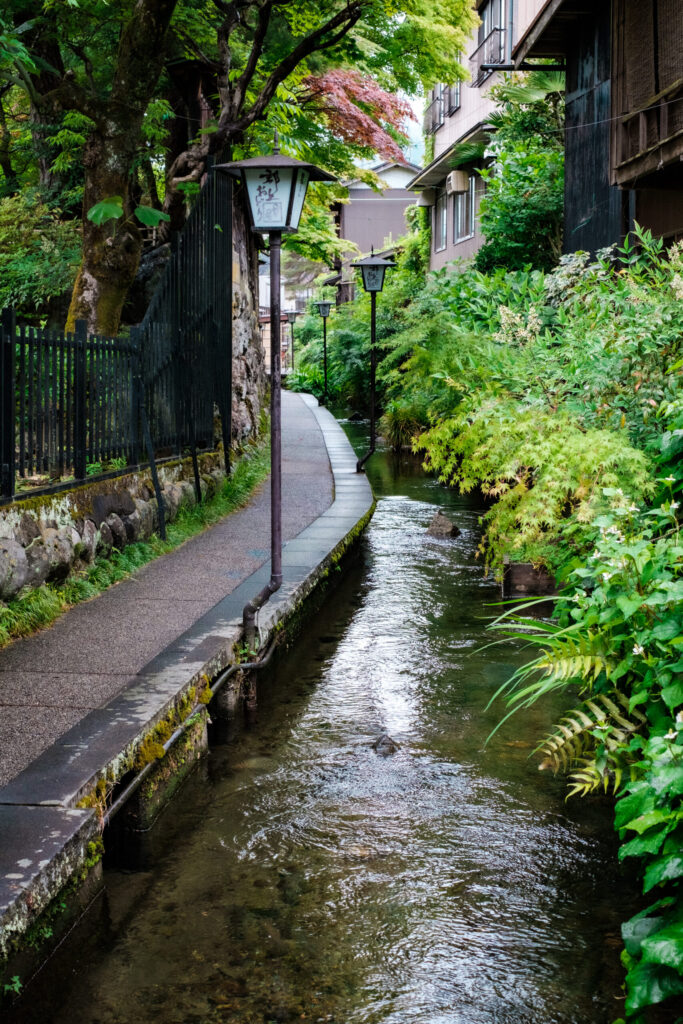
I went to Gujo Hachiman for a day trip. Strolling through the old town, quite a bit of a hike to the Gujo Hachiman Castle, beautiful scenery, taking a break at a cute café with lovely cake etc., they were all very nice and I had such a calm and relaxing time. But there is something special that Gujo Hachiman offer only in summer, Gujo Odori (郡上おどり). It is a bit more lively and exciting, and another side of Gujo Hachiman. I’d love to come back for this special season.
- Overview — What Is Gujo Hachiman?
- Access from Nagoya — 3 Routes Compared
- Gujo Odori (郡上おどり) — Overview & Cultural Significance
- Tetsuya Odori (徹夜おどり) — The All-Night Dancing
- How to Join — Anyone Can Dance
- Practical Tips for Tetsuya Odori
- Where to Stay for Gujo Odori
- Seasonal Highlights in Gujo Hachiman & Key Attractions
Overview — What Is Gujo Hachiman?
Gujo Hachiman (郡上八幡) is a small historic castle town tucked into the mountains of Gifu Prefecture, roughly two hours from Nagoya. Gujo Hachiman Castle (郡上八幡城), Water (Sogi-mizu (宗祇水) one of Japan’s 100 Famous Waters, and Yoshida River), Historic District (castle town), and the “Gujo Odori (郡上おどり)” define Gujo Hachiman. Its official population is modest, but every summer it draws hundreds of thousands of visitors to witness — and join — one of Japan’s greatest Bon Dance festivals.
[郡上八幡観光協会 (Official Tourism Association) — English]
[TABITABI Gujo — Official Tourism Guide]
Access from Nagoya — 3 Routes Compared
Gujo Hachiman is easily reached by bus and train from Nagoya. It’s perfect for a day trip or a one-night stay destination.
| Route A | Route B | Route C | |
| Time | 2-2.5h | 1h40m-2h | 2.5-3h |
| Cost | ¥2,280-2,430 | ¥2,400 | ¥2,300+ |
| Transfer | 1 transfer | Direct | 2 transfers |
My recommendation is “Route A”. I used route A (a day trip, not for the festival) and worked perfectly for me.
IMPORTANT: Fares and timetables are subject to change. Please always verify with official operators before travel.
Route A (★my recommended route)
Nagoya → Gifu (JR/Meitetsu train) + Gifu → Gujo Hachiman (Highway Bus)
Leg 1: Nagoya → Gifu
Departure: JR/Meitetsu Nagoya Station (JR/名鉄名古屋駅)
Arrival: JR/Meitetsu-Gifu Station (JR/名鉄岐阜駅)
Leg 2: Gifu → Gujo Hachiman (Highway Bus)
Departure: Gifu Station Bus Terminal (JR Gifu / Meitetsu Gifu)
Arrival: Castle Town Plaza (城下町プラザ)
Time: Approx. 2–2.5h total
Cost: ¥480-630 + ¥1,800 ≒ ¥2,280-2,430
Note: More frequent buses from Gifu. Best balance of cost, frequency & flexibility.
[Gifu Bus (岐阜バス) — Gifu to Gujo Hachiman]
Route B
Nagoya → Gujo Hachiman (Direct highway bus)
Departure: Meitetsu Bus Center, Nagoya (名鉄バスセンター)
Arrival: Castle Town Plaza (城下町プラザ)
Time: Approx. 1h 40m–2h
Cost: ¥2,400
Note: Most direct. Good for day trips without transfers. This route may have been limited to certain days only (weekends/festival season).
[Gifu Bus (岐阜バス) — Nagoya to Gujo Hachiman]
Route C
Nagoya → Gifu → Mino-Ota/美濃太田 (JR) + Nagaragawa Railway (長良川鉄道) to Gujo Hachiman
Time: Approx. 2.5–3h total
Cost: ¥2,300+
Note: Limited trains. Scenic river valley journey. For rail fans or leisurely trips.
Looking for more day trip ideas from Nagoya? I recommend Inuyama Castle. It’s just an hour away:)
Gujo Odori (郡上おどり) — Overview & Cultural Significance
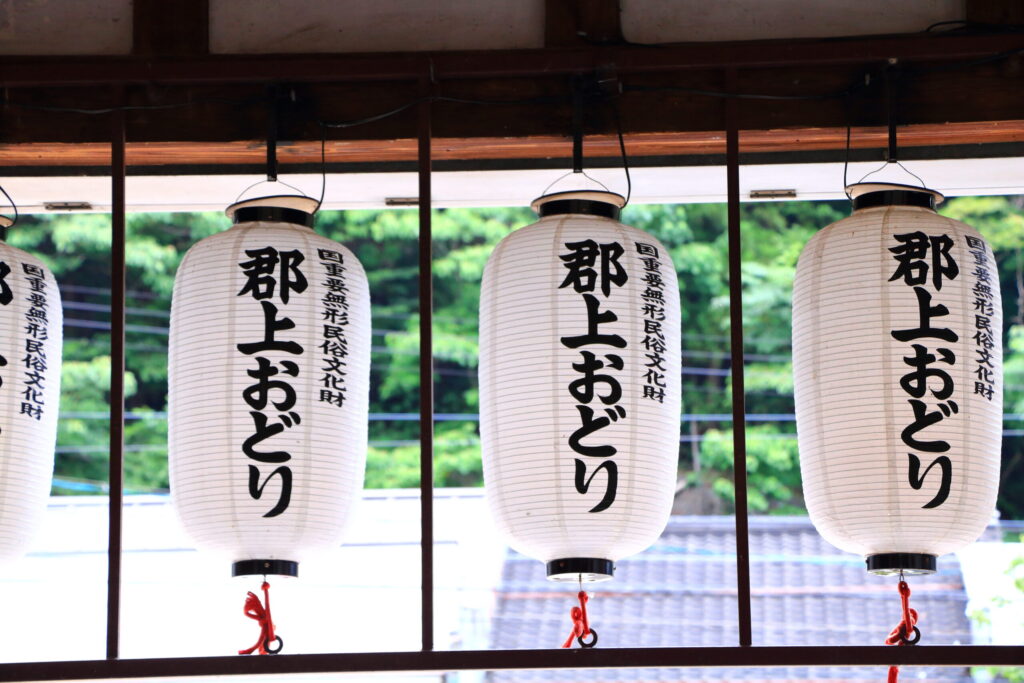
Gujo Odori is one of Japan’s Three Great Bon Dances — alongside Awa Odori (Tokushima) and Nishimonai Bon Odori (Akita) — and has been performed continuously for more than 400 years. Unlike many Bon Dance festivals that have become performances for audiences, Gujo Odori remains a participatory community event: locals and visitors dance together in the same circle, to the same music, in the same streets where people danced in the Edo period.
In 1996 it was designated an Important Intangible Folk Cultural Property of Japan. In November 2022, UNESCO registered Gujo Odori ― as part of the broader “Furyu Odori” (Japanese traditional folk dances) ― on its Intangible Cultural Heritage list.
There are a total of 10 different dances in the Gujo Odori. The most famous Kawasaki (かわさき), Harukoma (春駒), Sanbyaku (三百), Yacchiku (やっちく), Gengen-barabara (げんげんばらばら), Sawagi (さわぎ), Neko-no-ko (猫の子), Kocho-kawasaki (古調かわさき), Gujo-jinku (郡上甚句), and Matsusaka (まつさか). Every single night of Gujo Odori ends with Matsusaka ― without exception.
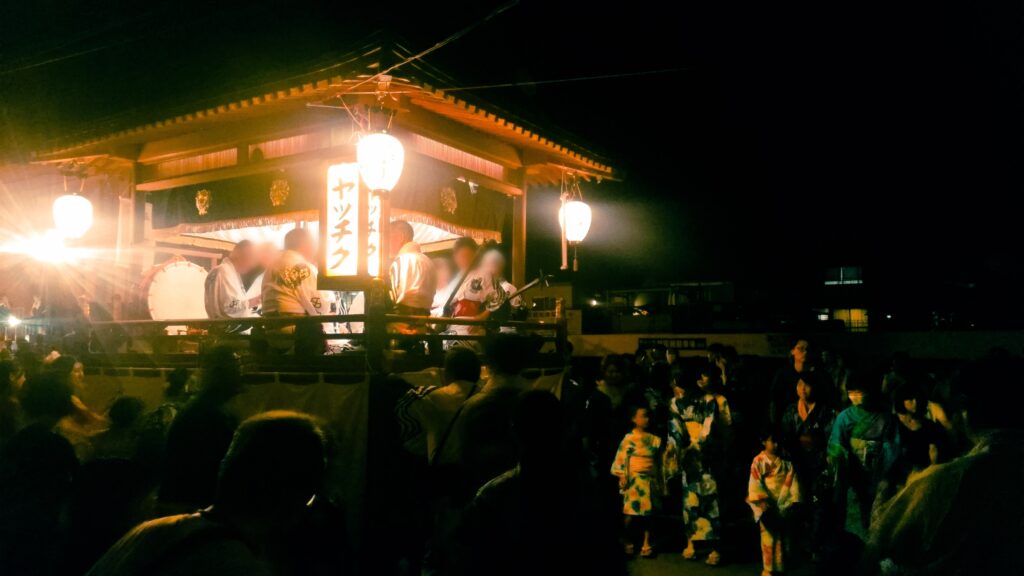
Festival Period ― 30 Nights!
The 2026 festival runs from Saturday, July 11 to Saturday, September 5 ― a total of 30 nights! Dancing is held in different locations across the town on a rotating schedule (the venue changes each night). Regular dancing begins around 8:00 PM and continues until approximately 10:30 PM.
[郡上おどり 公式ページ — Official Gujo Odori]
For the latest official 2026 schedule, see here
We can take Gujo Odori dance lesson (Kawasaki and Harukoma, the two most famous Gujo Odori dances) at the Gujo Hachiman Hakurankan (郡上八幡博覧館, Historical Museum) as a part of Gujo Odori performance. I usually do not join those types of things (I get a bit shy ;p) but when I visited there, there were only few visitors so everyone who was there had no choice but to participate. But it was fun in the end:) The dance was difficult (Harukoma!) but fun and exciting experience, I was still a little embarrassed though;p I could feel firsthand that a joy of dancing together regardless of whether you’re good at it or not, or whether you know it or not. I thought I definitely want to come back during the Gujo Odori festival season.
If you are coming for the Gujo Odori season, it might be a good idea to attend the lesson before the evening dance:)
Lessons/performance run approximately 15 minutes each and are held at:
Weekdays: 11am, 1pm, 2pm, 3pm
Weekends: also 12pm
Cost: ¥540 adults / ¥320 children (includes museum entry)
Tetsuya Odori (徹夜おどり) — The All-Night Dancing
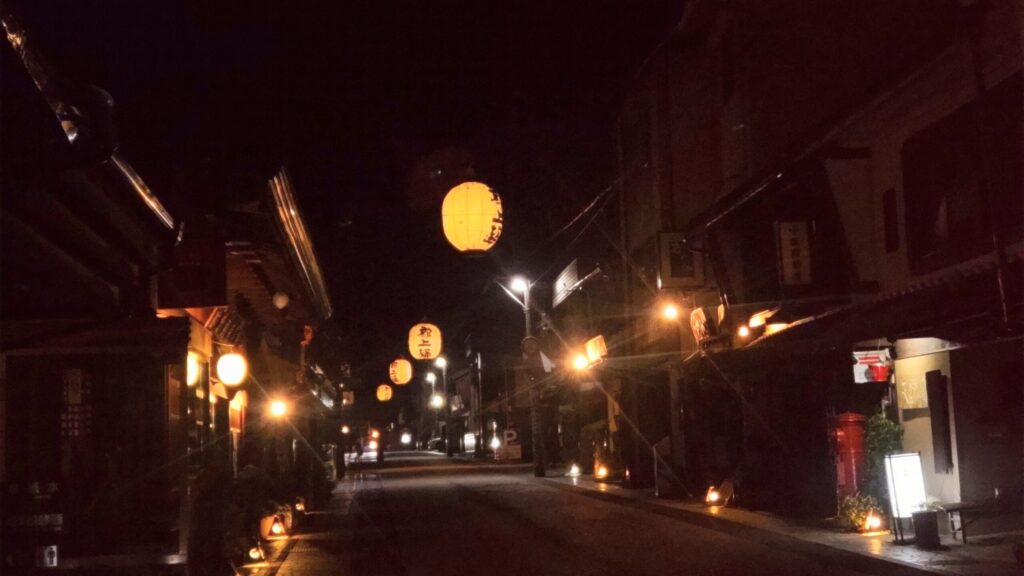
One of the most famous events in the Gujo Odori festival is Tetsuya Odori (徹夜おどり) . The Tetsuya Odori (徹夜おどり — literally “all-night dance”) takes place on four consecutive nights around the Obon (お盆) holiday period. Four nights in mid-August, during the Obon season, Gujo Odori does not stop at 10:30 PM. It continues — all night — until dawn.
2026 dates: August 13 (Thu), 14 (Fri), 15 (Sat), 16 (Sun)
(Please verify exact dates on the official schedule before visiting)
Dancing begins at 8:00 PM and continues until approximately 5:00 AM the following morning — nine hours of continuous dancing!
Obon (お盆) is the Japanese Buddhist period for welcoming the spirits of ancestors back to the world of the living — typically held around August 13–16. It is one of Japan’s most important cultural and spiritual occasions.
Gujo Odori’s Tetsuya Odori falls exactly on these four nights by design. The all-night dancing is not simply entertainment — it is a ritual of welcome and farewell for ancestral spirits. Dancing until dawn keeps the spirits company through the night; when morning comes and the dancing stops, the spirits return to the other world.
How to Join — Anyone Can Dance
No invitation, tickets, registration required to join Gujo Odori. The most important thing to know about Gujo Odori is that it is not a performance you watch — it is a community dance you join in and enjoy!
Gujo Odori has long embraced the spirit of “Bureiko (無礼講),” meaning everyone can enjoy the festival as equals, regardless of social status. This tradition of welcoming anyone to join the circle continues today, allowing locals and tourists alike to dance together as one:)
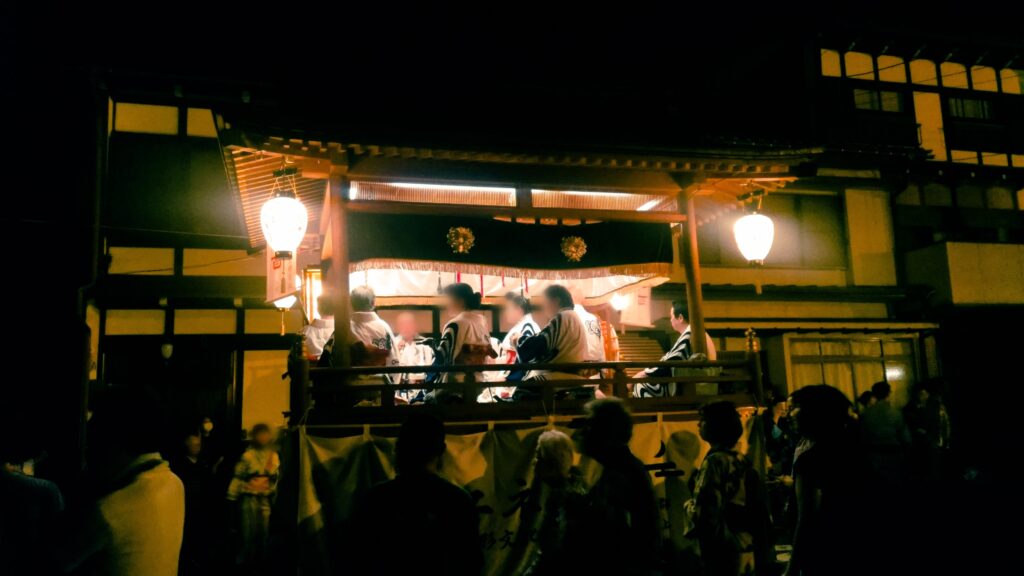
Also, there is no dress code. Jeans and a t-shirt are fine. But I think wearing a yukata (浴衣 — a light cotton summer kimono) and geta (下駄 — wooden sandals) might transform the experience a bit more. There are rental shops in town that offer full sets including geta and professional yukata dressing services so if you are interested in, why don’t you just try? I’m sure locals visibly appreciate your effort;)
Or, if wearing a yukata is too much trouble, you might want to at least try wearing geta. Gujo Odori’s geta is known as “Odori-geta”. “Odori-geta,” are more than just footwear — they serve as musical instruments that beat out the rhythm of the dance. Since many of the dance moves involve striking the ground forcefully, the sharp, clacking sound they produce blends with the music to elevate the energy of the entire festival. Odori-geta are known for their durability, capable of withstanding a full night of dancing, and for the distinctive sound they make when tapped, which sets them apart from other geta.
I heard the actual sound of “Odori-geta” when dancing at the Gujo Hachiman Hakurankan (郡上八幡博覧館, Historical Museum), they hold Gujo Odori performance everyday, and the powerful sound of the geta was amazing. I felt that the sound of Odori-geta is truly one of the charms of the Gujo Odori.
You can buy Odori-geta in town, and you can even make your very own original Odori-geta at some shops. They make great souvenirs and, of course, can be worn just like shoes, so it might be a great idea to treat yourself to some Odori-geta for this occasion. I will;)
Practical Tips for Tetsuya Odori
- Book accommodation months in advance — August 13–16 is the most popular period of the year, which fills up months ahead.
- Wear comfortable footwear — you may be standing or dancing for hours. Geta (wooden sandals) are traditional and part of the experience, but bring backup shoes for rest periods.
- Dress practically for August heat — even at midnight, Gujo is warm in summer.
- Take breaks as needed — you can step out of the circle anytime. Dancing with breaks in between — that’s how the locals do it.
- The all-night option is not for everyone. Going until midnight and heading to bed is a perfectly valid choice, and the experience is still extraordinary.
- If you are attending without accommodation, be sure to check the location of the rest area.
- Public transportation stops running late at night. Be sure to plan your return trip in advance.
Finally, Tetsuya Odori is not a crazy overnight party, but it is deeply connected with Obon, Japanese cultural and spiritual occasions. Please be respectful and considerate, and enjoy.
Where to Stay for Gujo Odori
The venue changes every night on a rotating schedule, but if you stay in one of the two areas below, you can walk to every dance venue, including the Tetsuya Odori venues. I haven’t stayed overnight in Gujo Hachiman myself yet, but here are the two areas I would look at if I were booking a place for myself.
Yanagimachi (柳町), Tonomachi (殿町) and Sakanamachi (肴町) — For the Old Townscape
This area keeps its Edo-period streets, and all of the Gujo Odori venues are within walking distance. Miharaya Ryokan is a traditional ryokan in Yanagimachi, and if you prefer a hotel, Hotel Sekisuien is also in Yanagimachi. Just note that both have a curfew — guests can’t enter between midnight and early morning — so they are not the best choice if you are planning to dance all night during Tetsuya Odori. In that case, The Nomad Inn Gujo, an apartment in nearby Shokunin-machi (職人町), might suit you better.
Hashimoto-cho (橋本町), Shinmachi (新町) and Honmachi (本町) — For Tetsuya Odori
This is where Tetsuya Odori takes place, and every other venue is within walking distance from here too. You will find private apartments and whole-house rentals here, such as Gujo Hachiman Kashiyado ICHI in Honmachi and Komorebi Stay, a traditional machiya you can rent as a whole — both just a few minutes’ walk from the Tetsuya Odori venue. The catch: during Tetsuya Odori, you will be right next to the dancing, with loud music all night, so getting some sleep may be difficult.
Whichever area you choose, if you are planning to join Tetsuya Odori, ask your accommodation whether it has a curfew when you book, just to be safe. If these places are fully booked, you can also browse other places to stay in Gujo Hachiman.
Seasonal Highlights in Gujo Hachiman & Key Attractions
Best Times to Visit (Beyond the Festival):
Spring (late March – mid-April)
Cherry blossoms peak about 1–1.5 weeks later than Nagoya/Kyoto. Castle and riverside walks are stunning.
Autumn (early November – late November)
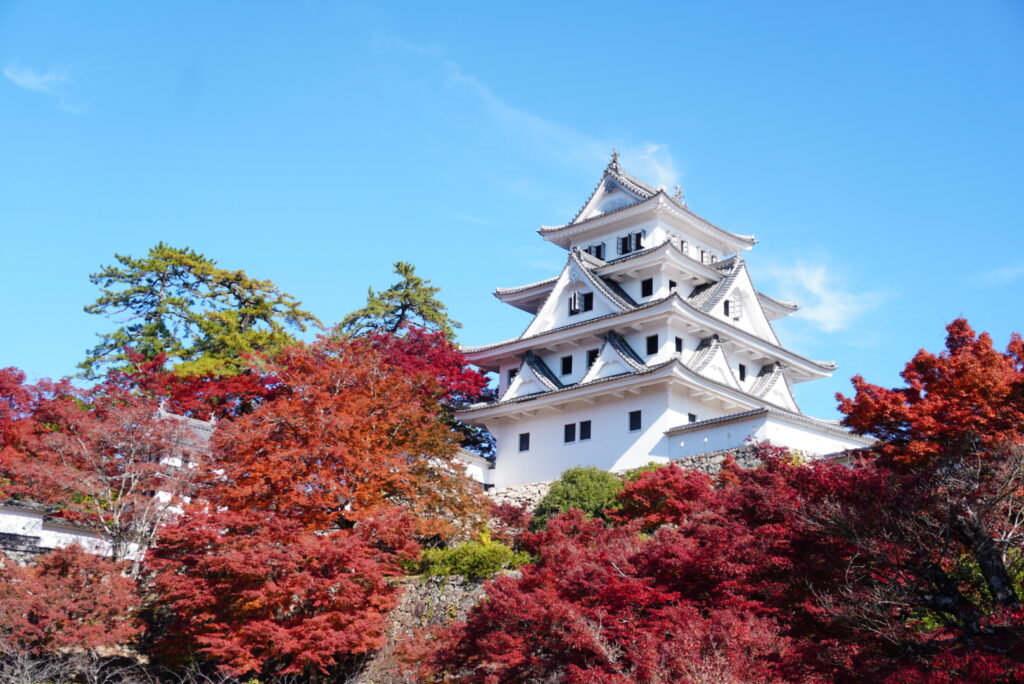
Autumn foliage — the castle surrounded by turning maples is one of Gifu’s most-photographed scenes.
Winter
Snow in the mountains and occasional frost on the waterways. Quiet and atmospheric.
Summer
Festival season — the most vibrant but also the most crowded.
Gujo Hachiman Castle (郡上八幡城)
Autumn is particularly special. The castle is illuminated during the foliage season and the surrounding maple trees turn brilliant red.
Historic District (城下町)
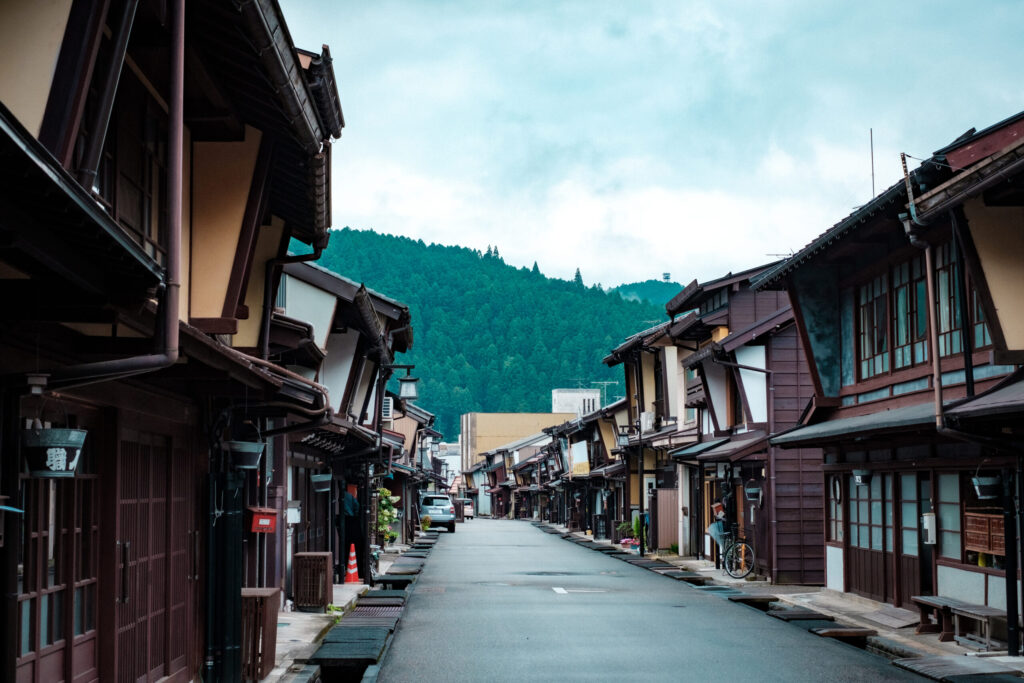
The central castle town district retains its Edo-period street layout: narrow lanes, wooden merchant houses with latticed facades, stone walls, and the sound of water everywhere. Unlike some preserved districts, this is a living neighbourhood — people still live and work in these buildings.
Food Sample (Sampuru) Experience
Gujo Hachiman is Japan’s undisputed capital of plastic food replica manufacturing (sampuru/サンプル). The town produces an estimated 60–80% of all food display models used in Japanese restaurants nationwide.
You can try making your own replica food here:
Sample Village Iwasaki (サンプルビレッジ いわさき)
Sample Kobo (サンプル工房)
There are plenty of other day trip spots from Nagoya:) For example, Takeshima Island. Please check out this post for more information!
Mark your calendar and let’s Bon dance together!
📍 How to get there: About 2–2.5 hours from Nagoya: take a JR or Meitetsu train to Gifu, then a highway bus to Gujo Hachiman (around ¥2,300–2,400 one way in total).
⏱ Time needed: A full day for the old town, the castle, and a food-sample workshop. For Gujo Odori nights, plan your return trip in advance — or better yet, stay overnight.
💰 Budget: Around ¥10,000 per person if you enjoy the full day — transport, lunch, castle admission, and a food-sample workshop.
🗓 Best time to visit: During Gujo Odori season (mid-July to early September) if you can — the town is at its best on dance nights. Otherwise, autumn for the castle’s foliage light-up.
🎟 Book ahead: Planning to join the all-night dances in mid-August? Book your room months in advance — the town’s small inns fill up first. For this year’s dance calendar, check the official schedule.


Comments