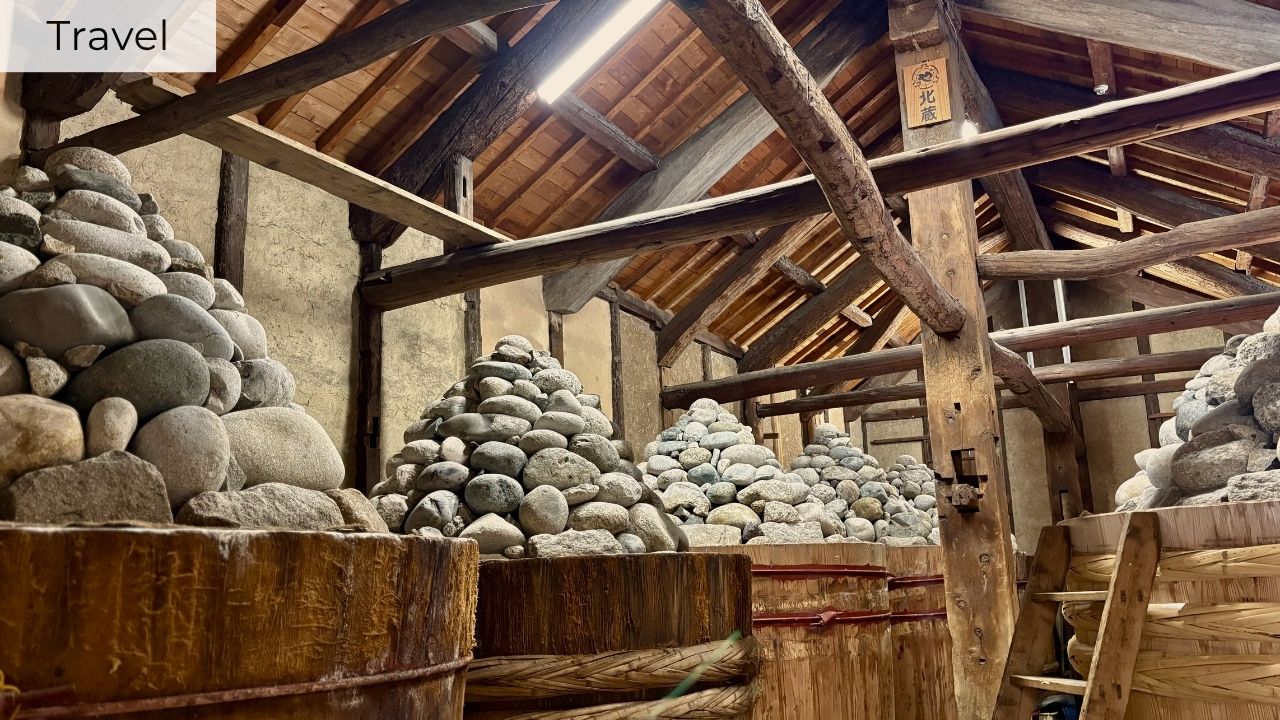
Have you tried any Nagoya meshi yet? Nagoya’s famous ‘Nagoya meshi’ dishes are largely a celebration of soybean miso such as miso katsu, miso nikomi udon and dote-ni.
Soybean miso is made from soybeans alone, without the rice or barley used in other types of miso and is unique to the Tokai (Aichi, Gifu, Mie) region. Its best-known example is Hatcho miso, produced in Okazaki, Aichi Prefecture. Hatcho miso is inseparable from the food culture of the Tokai region — a tradition that exists nowhere else in Japan.
If you’re visiting Nagoya, it would be a shame to do nothing more than enjoy miso cuisine! In the birthplace of Hatcho miso, you can visit two historic breweries where traditional production methods are still preserved today.
Let’s take a deep dive into Hatcho miso!
What Is Hatcho Miso
As you may know, miso is a fermented paste made from soybeans, salt, and koji (麹). The type of koji determines the three big families: rice/kome miso (soybeans + rice koji), barley/mugi miso (soybeans + barley koji), and soybean/mame miso (soybeans only — the koji itself is grown on the beans). Soybean miso (mame miso/豆味噌) is the specialty of the Tokai region (Aichi, Gifu, Mie).
Hatcho miso (八丁味噌) is the most representative type of mame miso. It’s made from only soybeans and salt, aged slowly in giant wooden barrels. Almost black-brown, with concentrated umami, gentle acidity and a hint of astringency.
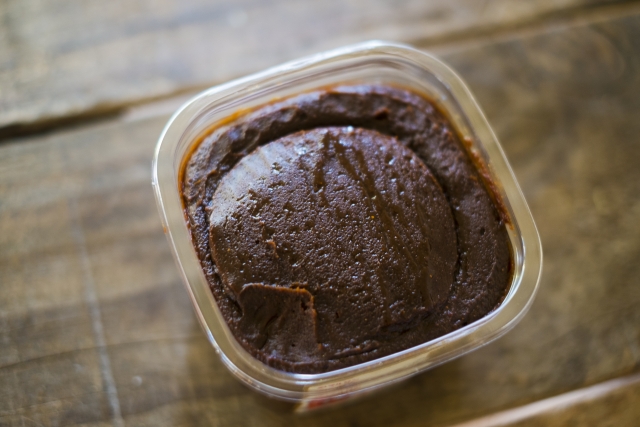
The name comes from Hatcho village (now Hatcho-cho, Okazaki City), where both breweries still stand. ‘Hatcho’ means ‘eight cho’ (about 870 m) – the distance from Okazaki Castle, the birthplace of shogun Tokugawa Ieyasu.
Hatcho Miso Production Method:
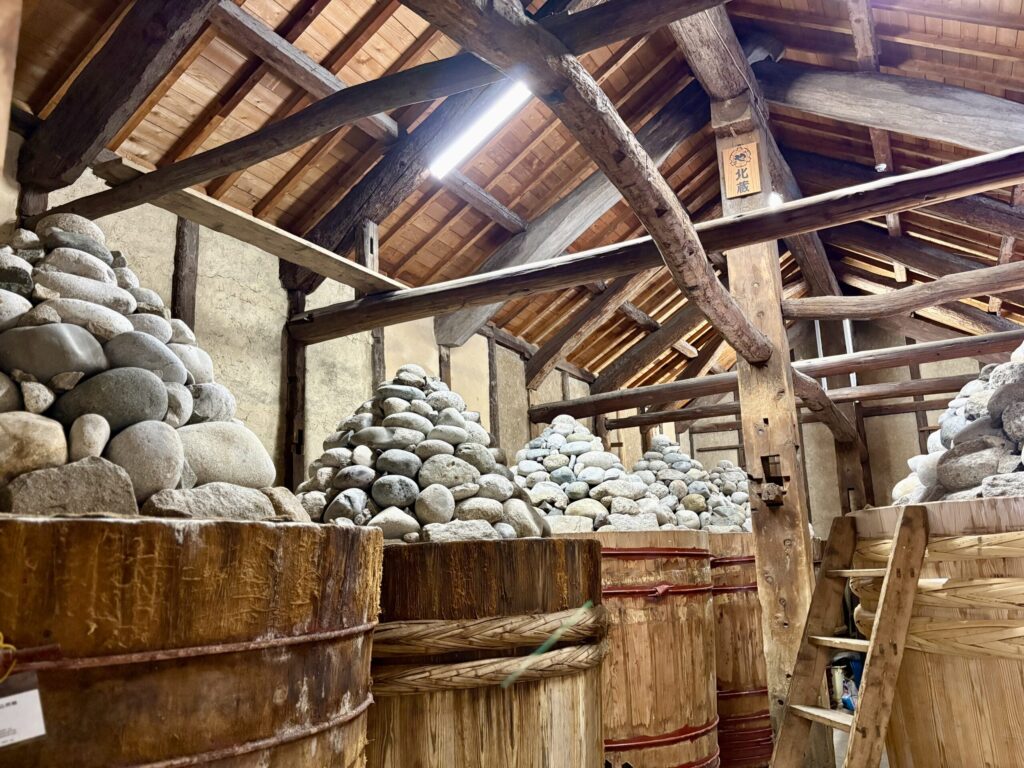
Whole soybeans are steamed, rolled into big balls and grown with koji mould, then packed into cedar barrels about 6 shaku (roughly 1.8 m) across and tall with nothing but salt and water. Around 3 tons of river stones are stacked by hand into a cone by specialist stone-stackers, and the miso is left to naturally mature, no temperature control, two summers and two winters (over two years).
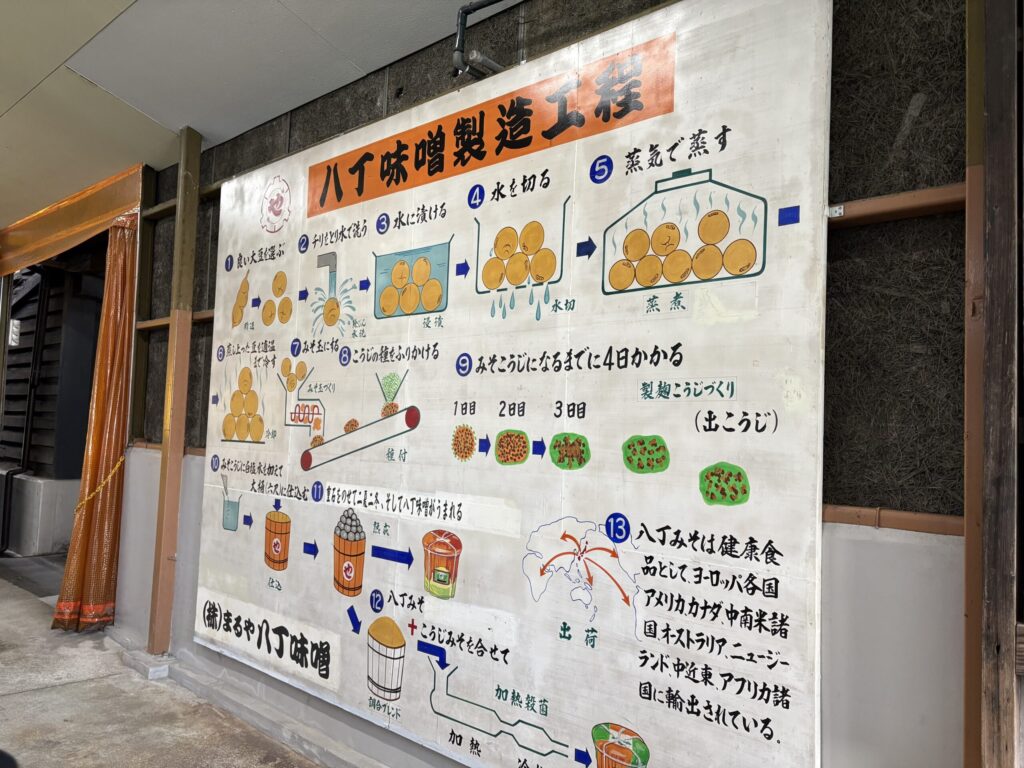
I heard it takes more than ten years to master the skill of stacking the stones in perfect balance so they won’t collapse, even in an earthquake.
Learn and Experience Hatcho Miso in Okazaki – Maruya & Kakukyu
Maruya Hatcho Miso (まるや八丁味噌) and Kakukyu (カクキュー) are long-established makers of Hatcho miso, located just across the old Tokaido road from one another, and have been neighbors (and friendly rivals) for centuries. They are the only two producers in Hatcho-cho, Okazaki, still using the traditional methods handed down since the Edo period.
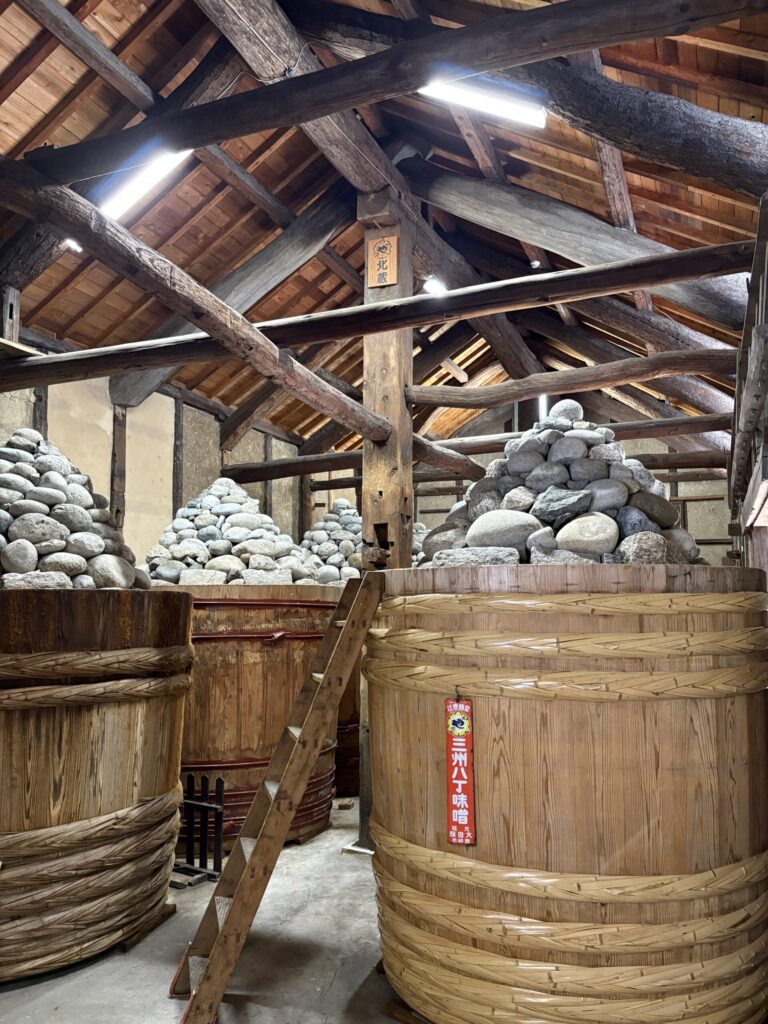
Both breweries offer free tours. They are a 1-minute walk from each other, and only a few minutes from the station. You can see 1.8 m (about 6 ft) cedar barrels topped with hand-stacked stone cones, in use for over a century. Visiting both takes about half a day including lunch, so I recommend visiting both, rather than choosing one.
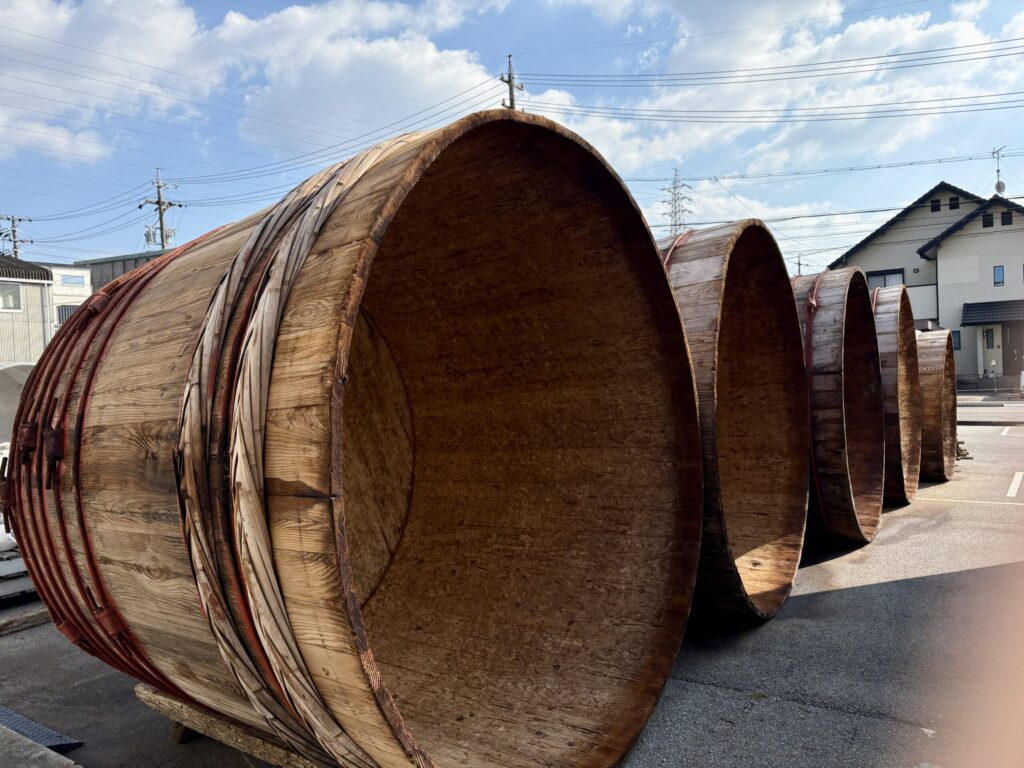
The guiding is in Japanese only, but you don’t need to understand the language to enjoy it. It is a great experience just to walk among rows of giant barrels, and stone cones;)
When you actually step inside the warehouse, you’re hit with this wonderful smell of miso right away!
Maruya Hatcho Miso / まるや八丁味噌
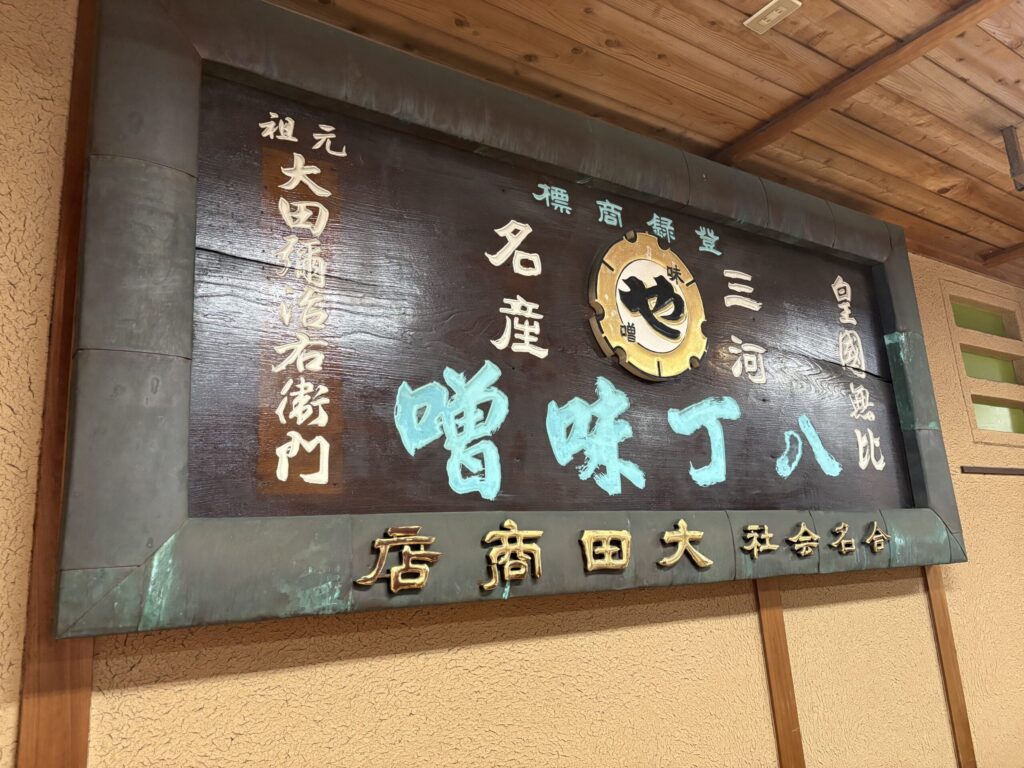
Maruya is the older of the two breweries (founded in 1337). The company started out as a general brewer, and began making Hatcho miso in the Edo period. After returning from his studies in Germany, the current president of Maruya pushed miso made with organic soybeans and won US OCIA organic certification in 1987. Maruya now sells in more than 20 countries, yet not one batch is made outside Okazaki. He insists on brewing at his brewery in Okazaki, and never overseas, and he is known abroad as ‘Mr Hatcho’.
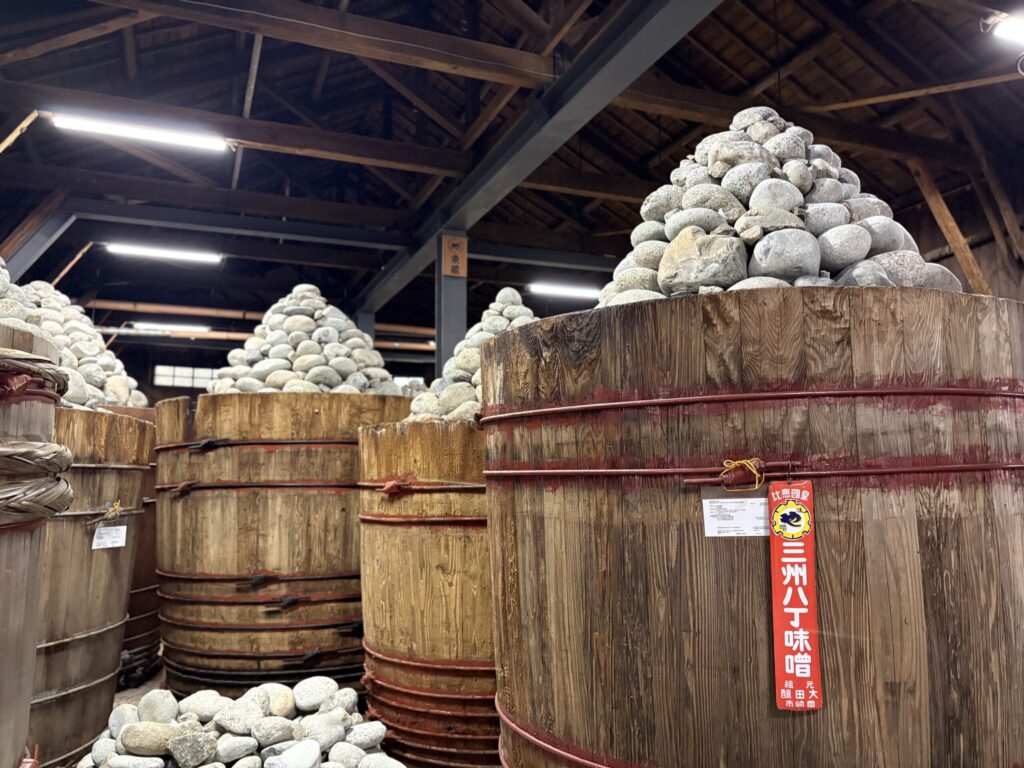
- Walk-in guided tours (in Japanese) depart at :00 and :30, 9:00-16:20 (last tour 16:20) with midday break 12:00–13:00.
- Please check in at the Miso Brewery Reception (蔵見学受付) first.
- Advance booking required for groups (0564-22-0678 / maruya02@8miso.co.jp).
- You can walk among the aged cedar barrels and see the craftsman-stacked stone weights up close.
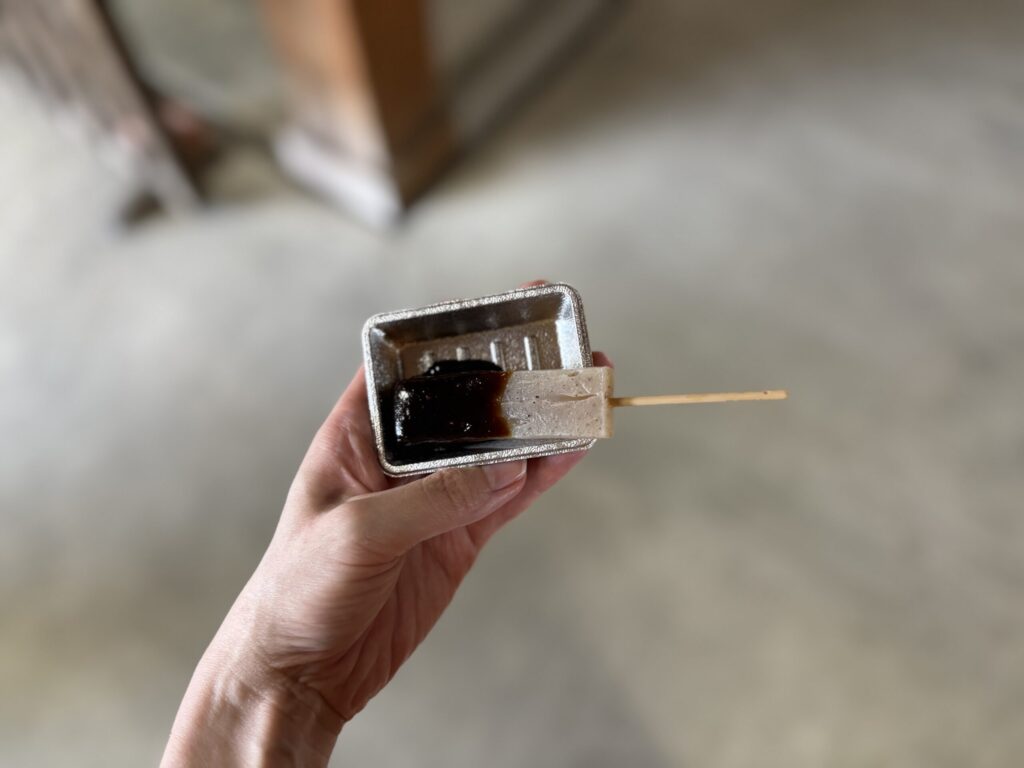
- The finale is a taste of konnyaku dengaku with Hatcho miso sauce.
Kakukyu “Hatcho Miso no Sato” / カクキュー「八丁味噌の郷」
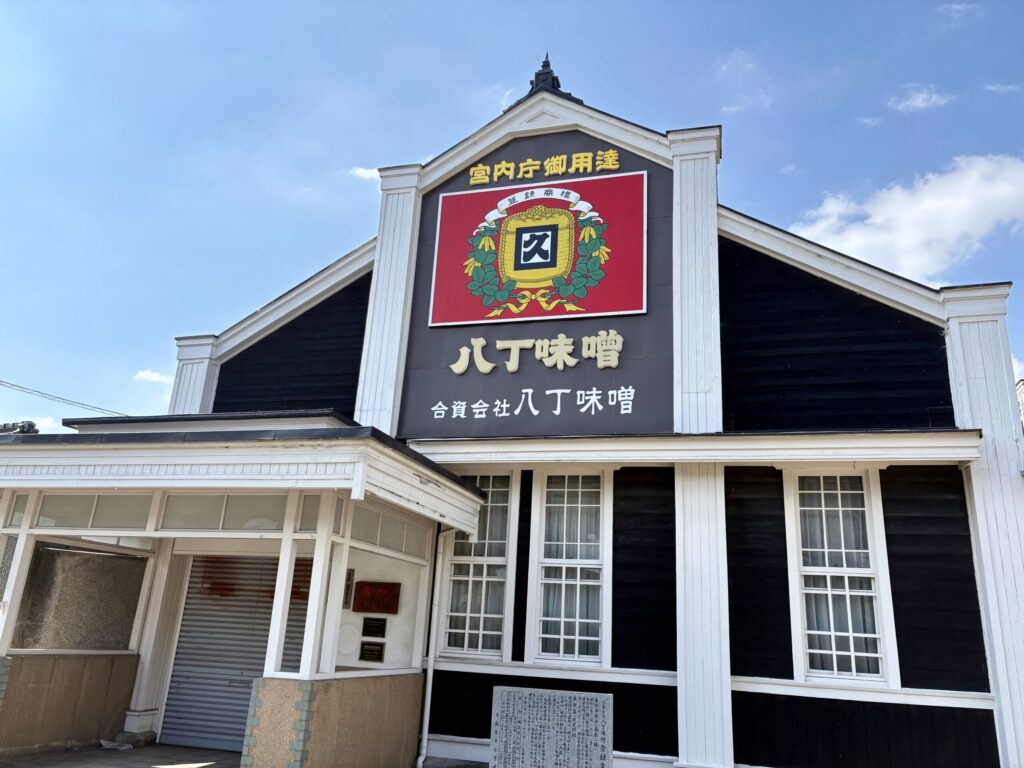
Kakukyu was founded in 1645. Built in 1927, the head office building — with its distinctive black-and-white exterior — remains in active use today with almost no alterations. Both the head office and the museum were registered as Tangible Cultural Properties in 1996 — the first such registration in Aichi.
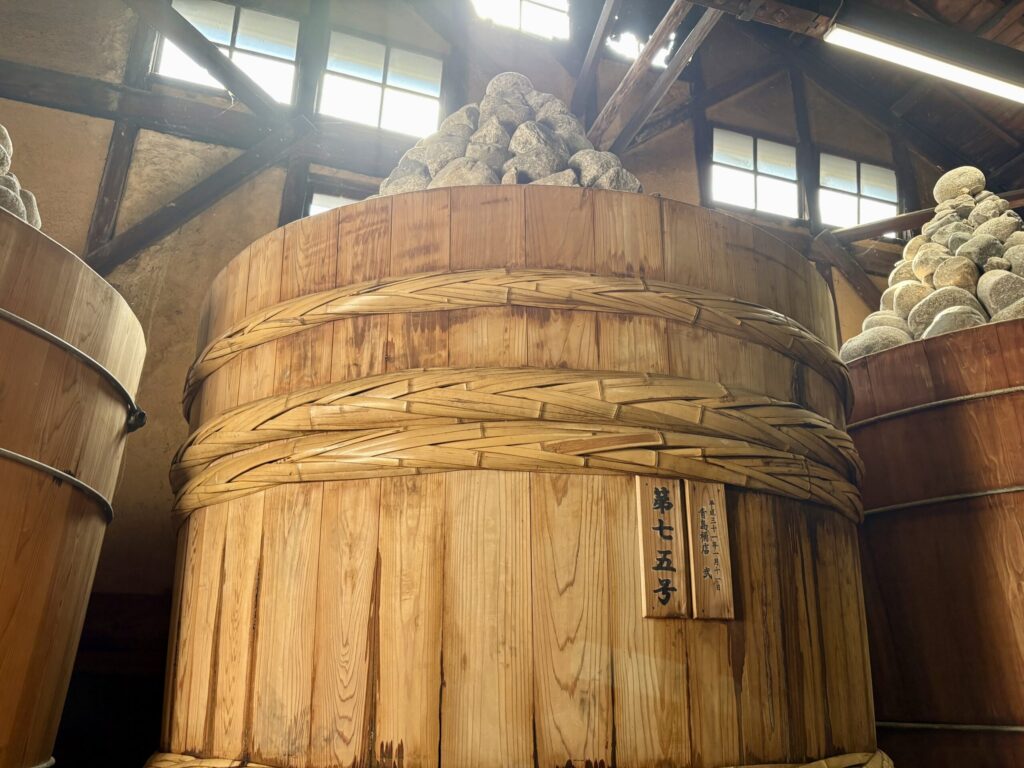
- A guide leads you through the history museum (a converted miso warehouse showing Edo-period brewing scenes) and the working aging warehouse, ending with a tasting corner and the shop (the guiding is in Japanese; English brochures available).
- Weekday tours start on the hour 10:00–16:00; weekend/holiday at :00 and :30 (the 12:30 tour may not run — please check at the reception desk on the day).
- Check-in closes 5 minutes before each tour begins.
- Each tour is limited to 50 people.
- Advance booking required for groups (0564-21-1355 / shop@hatcho-miso.co.jp).
- For tours during Obon and the New Year period, please see the announcements on the official home page (JP).
Access from Nagoya
Option 1 — Meitetsu (名鉄)
Meitetsu Nagoya Station (名鉄名古屋駅) → Okazakikoen-mae Station (岡崎公園前駅)
- Only local trains stop at Okazakikoen-mae Station
- Take the Nagoya Main Line:
- Express (急行) toward Toyohashi (豊橋), and transfer to a local train partway, at Shin-Anjo (新安城) — one transfer; or
- Limited Express (特急) toward Toyohashi (豊橋), transfer to a Express at Chiryu (知立), and to a local train at Shin-Anjo (新安城) — two transfers; or
- Local (普通) train bound for Higashi-Okazaki (東岡崎) — no transfer.
- Travel time: about 40-50 minutes with transfer(s) or about 1hr 20min by a local train
- Fare: ¥750 one way
Option 2 — JR + Aichi Loop Line (愛知環状鉄道)
JR Nagoya Station → Okazaki Station (岡崎 – JR/Aichi Loop Line) → Naka-Okazaki Station (中岡崎)
- Take JR Rapid (快速) to Okazaki, and transfer to the Aichi Loop Line and get off at Naka-Okazaki Station
- Travel time: about 50 minutes
- Fare: ¥630 + ¥270 = ¥900 one way
- Good for Japan Rail Pass holders — can travel to Okazaki at no extra charge
From the station to the breweries
Both breweries are a 1–5 minute walk from the stations (Okazakikoen-mae Station/Naka-Okazaki Station)
If you are still working out how to move around the city itself, I wrote a separate guide to subway passes and airport access in Nagoya.
Shop & Eat
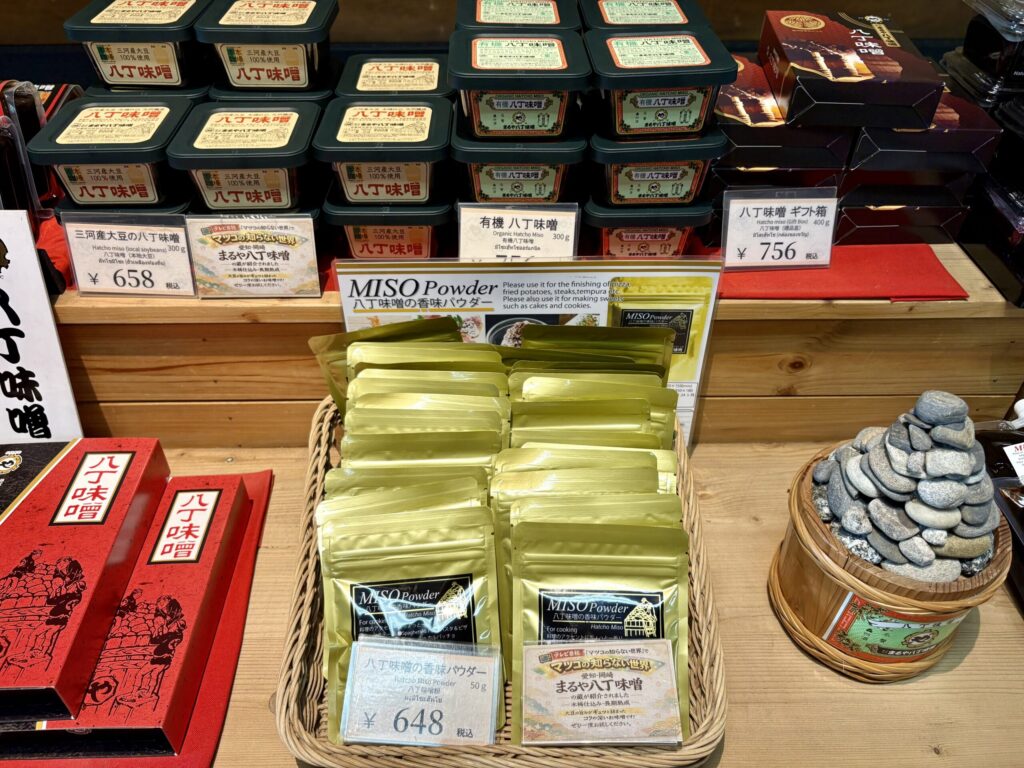
Both breweries have shops where you can buy their Hatcho miso, Hatcho miso sauce, sweets made with miso, and exclusive miso sold only there.
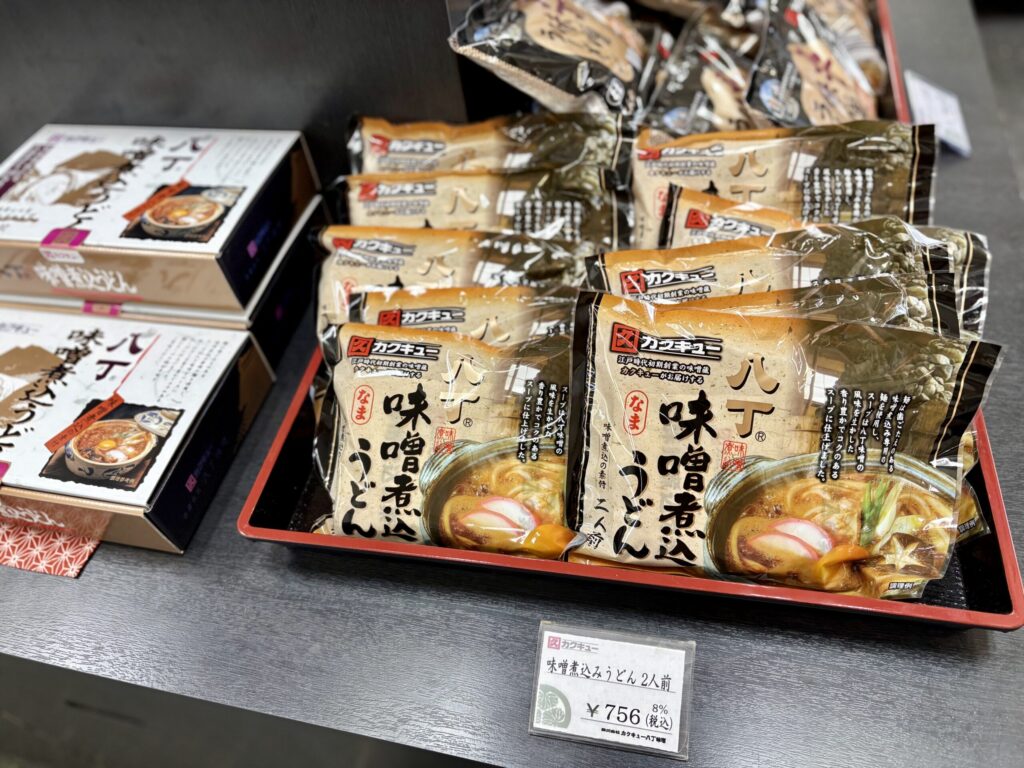
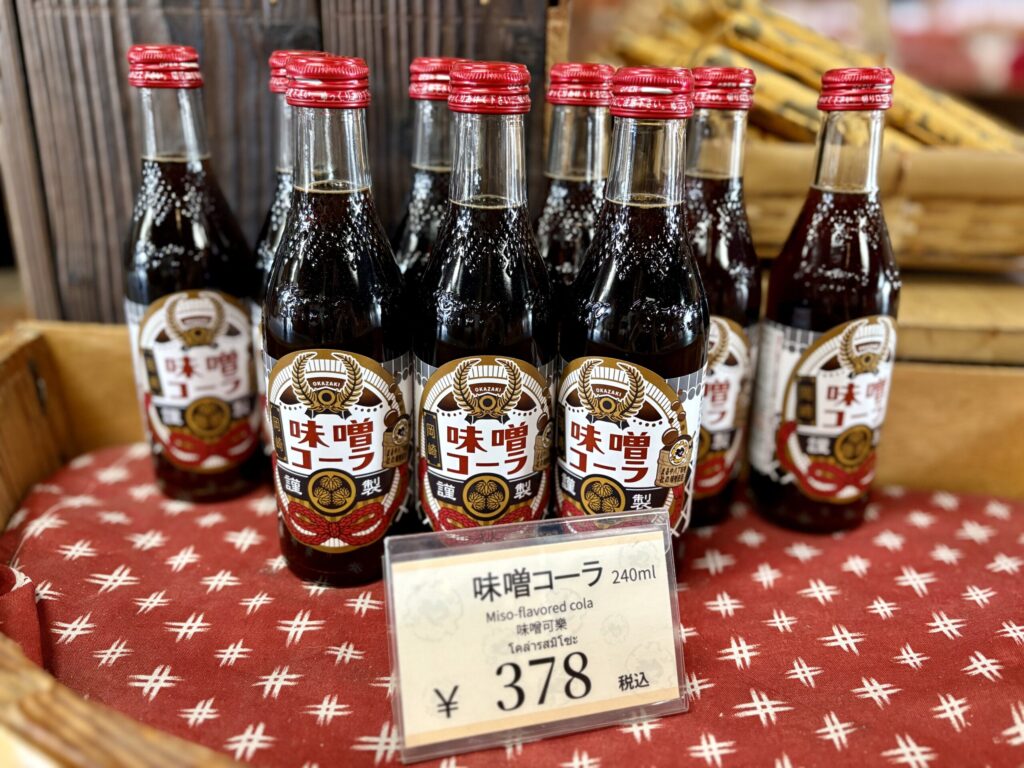
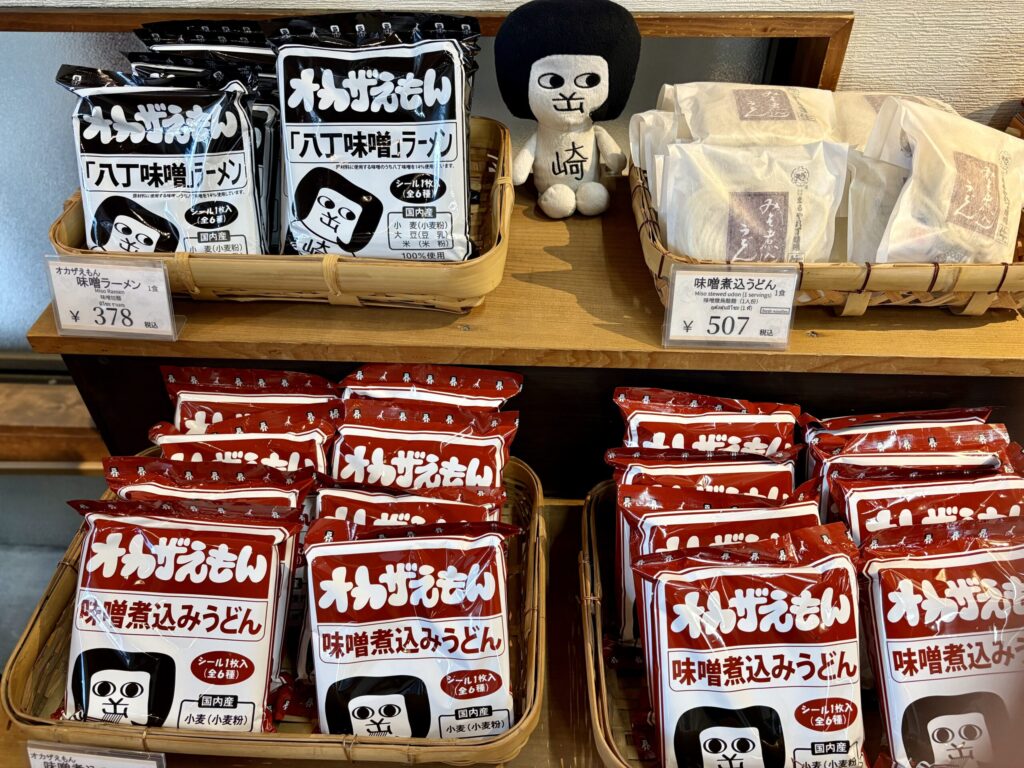
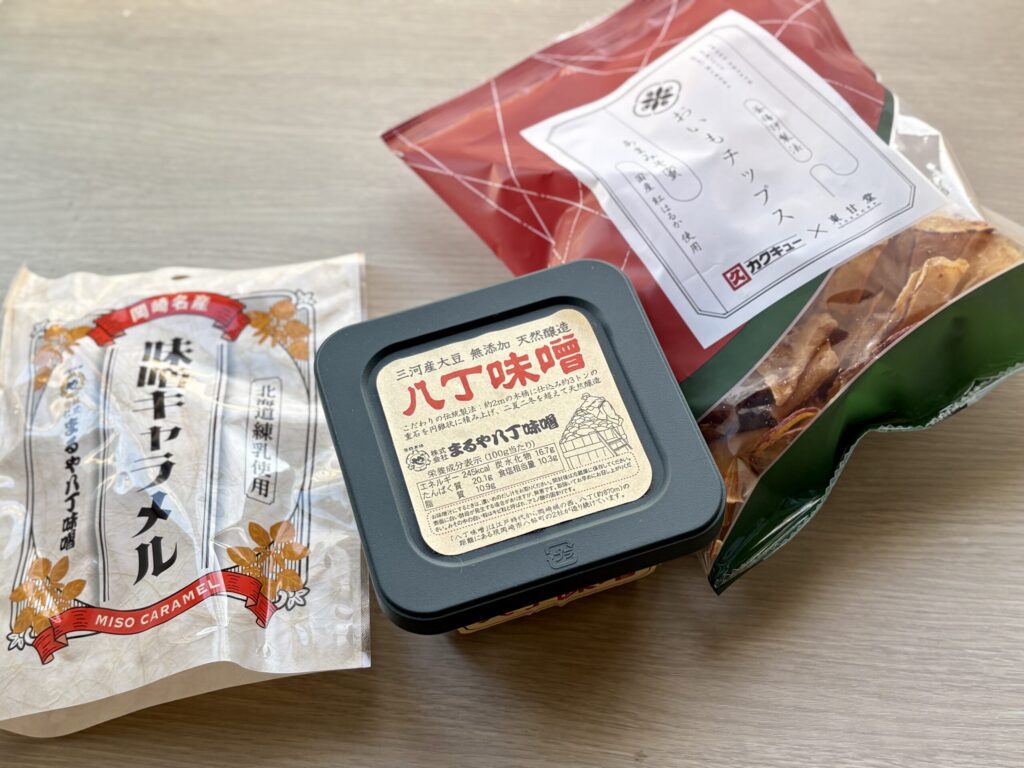
My top recommendation is, of course, Hatcho miso, but I also recommend miso caramel and miso karinto at Maruya, and miso soft-serve ice cream at Kakukyu. Miso nikomi udon (味噌煮込みうどん), miso ramen, and instant Hatcho miso soup also make great souvenirs. If a tub of miso feels too heavy to bring back, miso powder would be perfect!
If you are looking for somewhere to eat lunch, Kakukyu has a restaurant ‘Okazaki Kakukyu Hatcho Village’ inside. It serves miso nikomi udon, miso kushi-katsu and other Hatcho-miso dishes. Hours 11:00–15:00 (last order 14:30), open daily except the New Year holiday; no reservations needed for individuals.
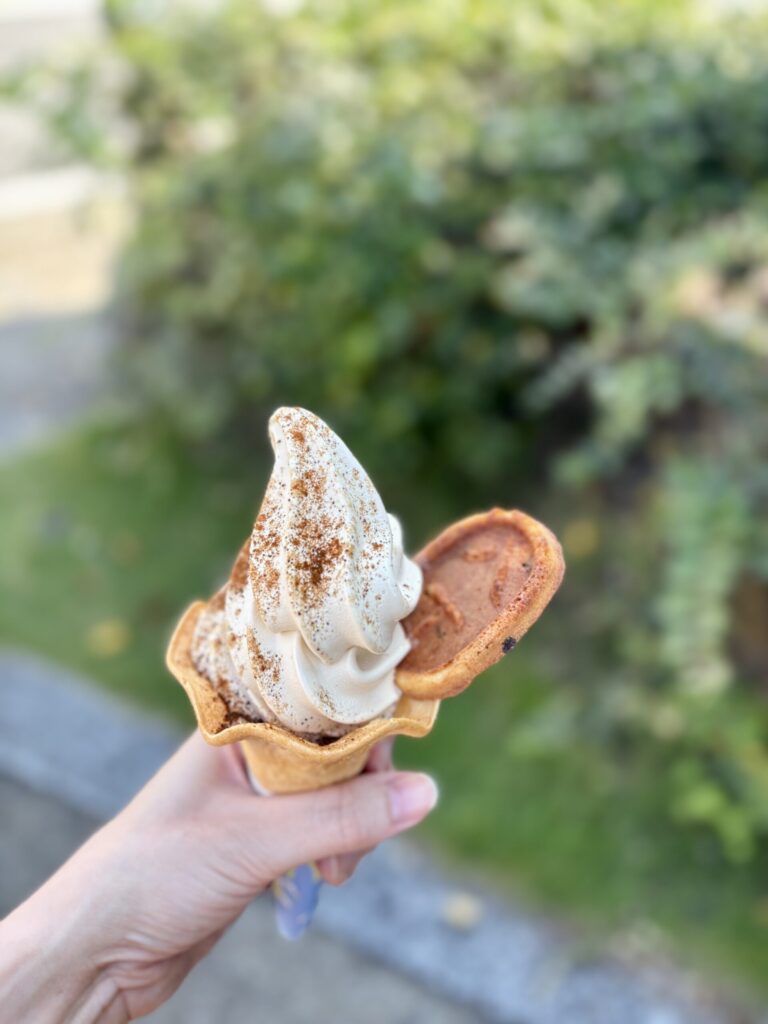
The Hatcho miso soft-serve ice cream had a nice salty-sweet flavor, and it was really delicious. I bought some miso caramels and miso-flavored sweet potato chips, so I’m looking forward to trying them.
I went on a weekend. There were more people at Kakukyu, but it wasn’t that crowded at either place. At Maruya, the tour I was on had only five people.
Kakukyu is set up for visitors – it felt like a mini theme park – while Maruya is a smaller place with a cozy, homey atmosphere. Both have their own charm, so if you are making the trip, I definitely recommend visiting both. This is just my personal impression, but at Kakukyu you can enjoy food, while at Maruya it was fascinating to take a leisurely tour inside an actual warehouse with a very sweet guide:)
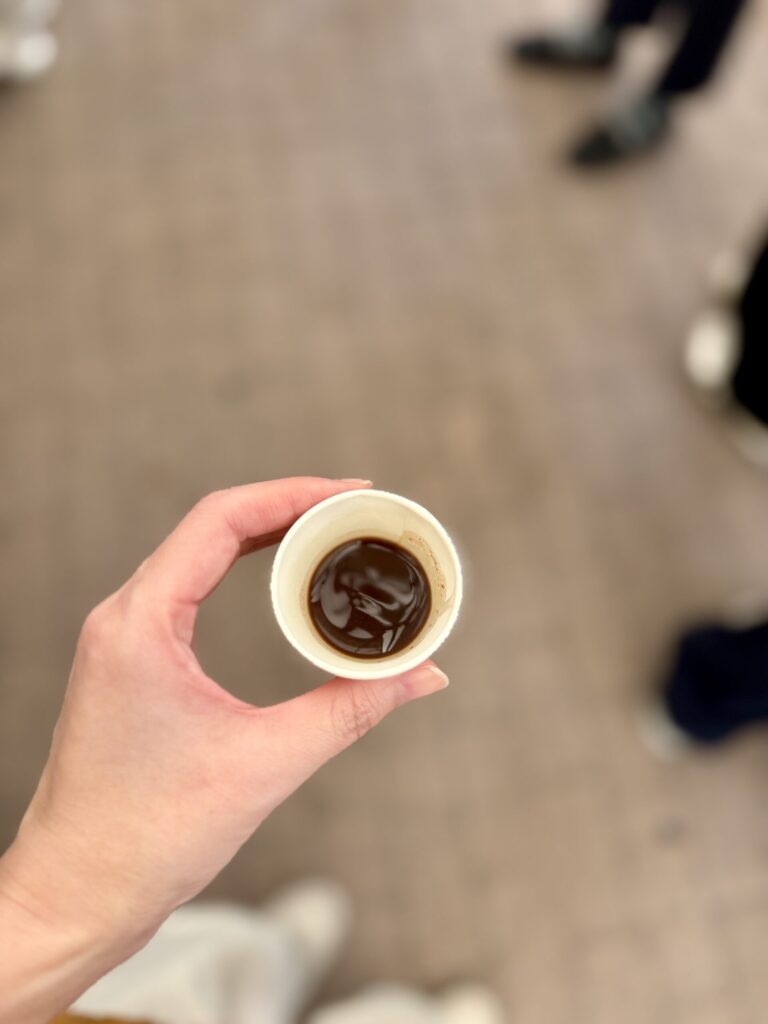
Both tours include a tasting session at the end (konnyaku miso dengaku at Maruya and Hatcho miso soup at Kakukyu), so if you’ve never tried Hatcho miso before, you can give it a try before you start shopping;)
You’ll need to walk outside to move between buildings, but other than that, the tours are mostly indoors, so they might be a good option on rainy days.
Okazaki works well as a half day, so it fits neatly into a 2-3 day Nagoya itinerary – or pair it with Arimatsu, another old Tokaido town.
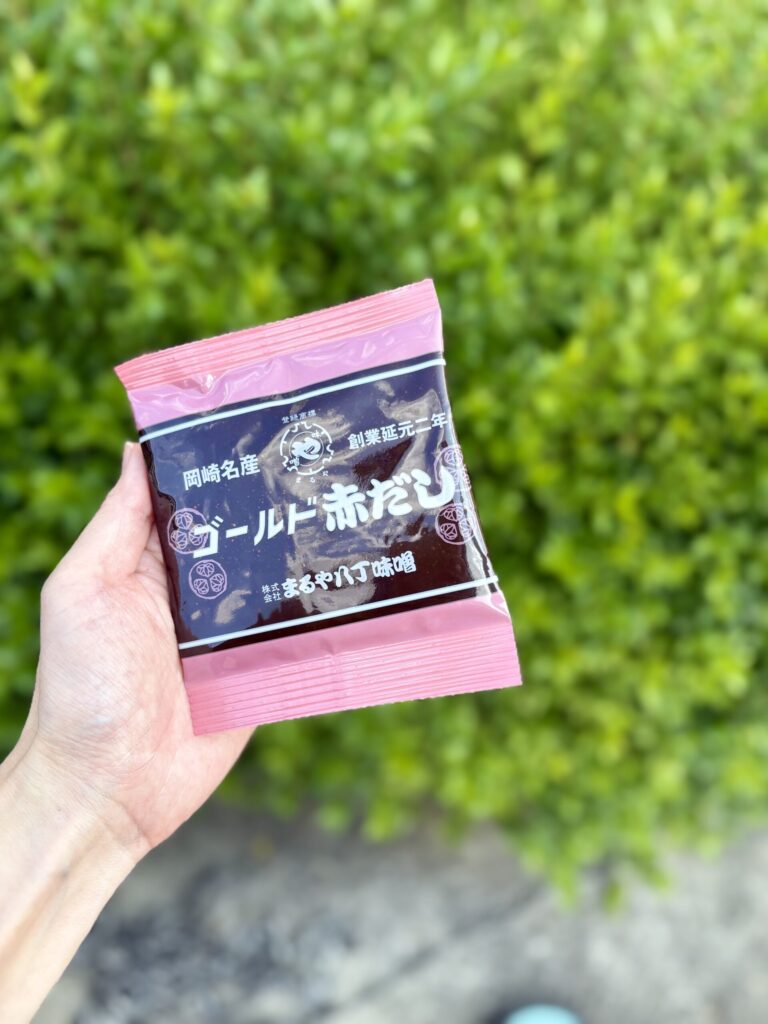
Both Maruya and Kakukyu gave me a souvenir — a small pack of red miso — as I was leaving!
📍 How to get there: About 40 minutes from Meitetsu Nagoya Station to Okazakikoen-mae (¥750 one way), changing to a local train at Shin-Anjo – only local trains stop there. Both breweries are a few minutes’ walk away. JR Pass holders can ride to Okazaki instead, then one stop on the Aichi Loop Line to Naka-Okazaki.
⏱ Time needed: Half a day. About 30 minutes for each tour, plus time for lunch and browsing the two shops.
💰 Budget: Basically free – just the round trip (about ¥1,500) plus lunch and whatever you take home.
🗓 Best time to visit: Any time of year – and since the tours are mostly indoors, it can be a good rainy-day option too. Avoid arriving right at midday though – Maruya pauses its tours between 12:00 and 13:00, and at Kakukyu the 12:30 tour may not run.
🎟 Reservations: Not needed for individuals – just walk in. Groups need to call ahead.
Comments