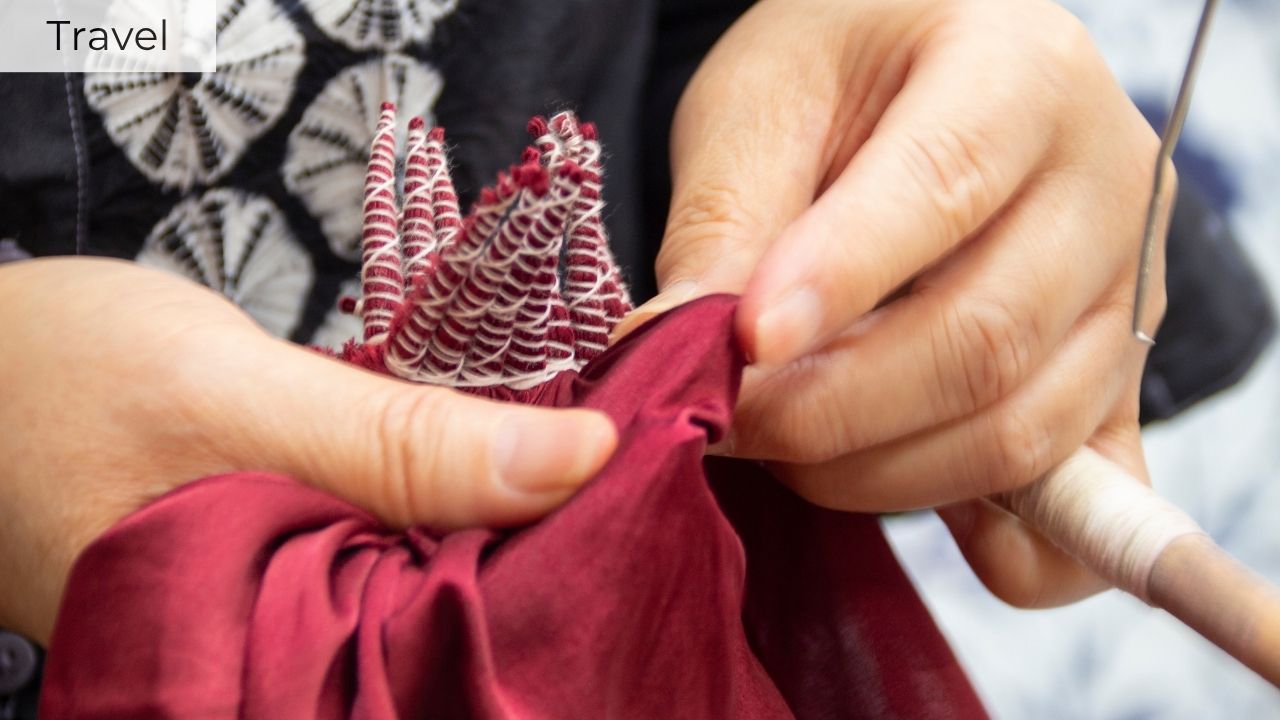
Do you have only one day to spend in Nagoya? If you have limited time in Nagoya and are wondering where to go during that time, I recommend Arimatsu.
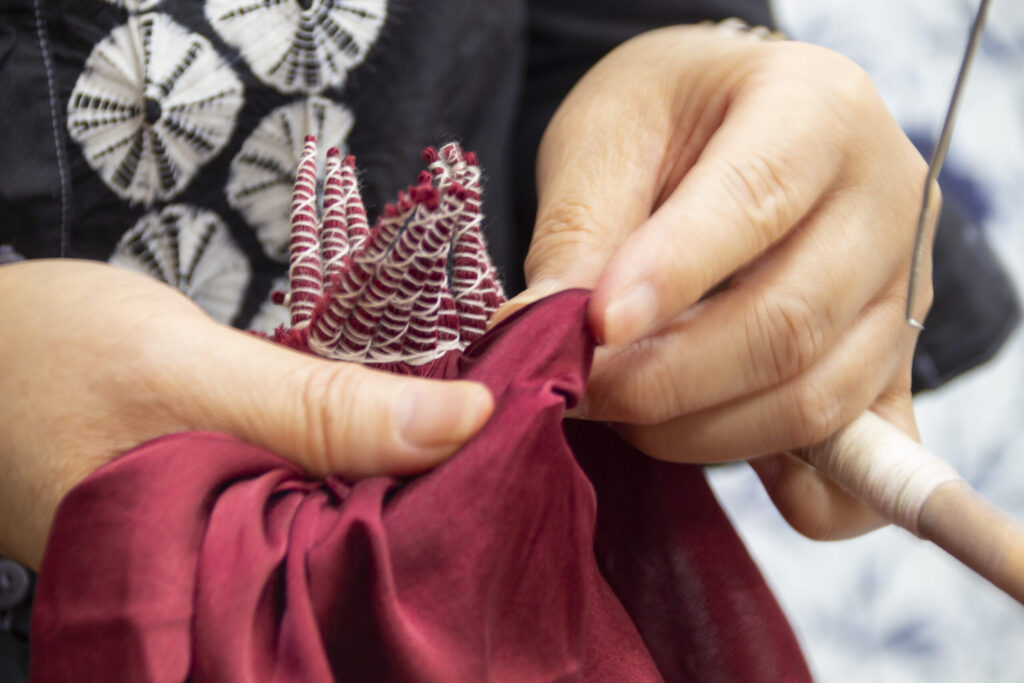
Arimatsu is a town of artisans inside Nagoya City, and the only place in the city with a nationally protected historic district — chosen for its long history of dyeing. The craft of tie-dyeing (shibori) has been passed down here for over 400 years.
How about taking a short train ride from Nagoya Station, strolling Edo-era streets, watching shibori artisans at work, and maybe making your own? Arimatsu can be fully enjoyed in just half a day, so you don’t have to give up any other sightseeing spots in the city you are curious about;) I think combining them is a good way to make the most of Nagoya without missing a thing.
Even as a Japanese person, I found Arimatsu such a charming town! So, please let me introduce you to Arimatsu:)
History
Arimatsu was founded in 1608 as a new settlement along the Tokaido – the great road linking Edo (Tokyo) and Kyoto. The land was poor for farming, so the villagers needed another livelihood.
It is said that around 1610, Takeda Shokuro – inspired by the tie-dyed clothing of workers who had come to build Nagoya Castle – began making tie-dyed cotton tenugui (hand towels). These were sold as souvenirs to the many travellers passing along the Tokaido, and became a hit. Under the protection of the Owari domain, Arimatsu grew into a prosperous specialist shibori town.
Arimatsu Shibori
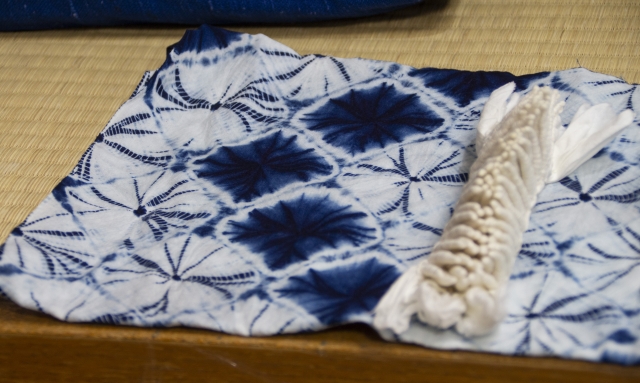
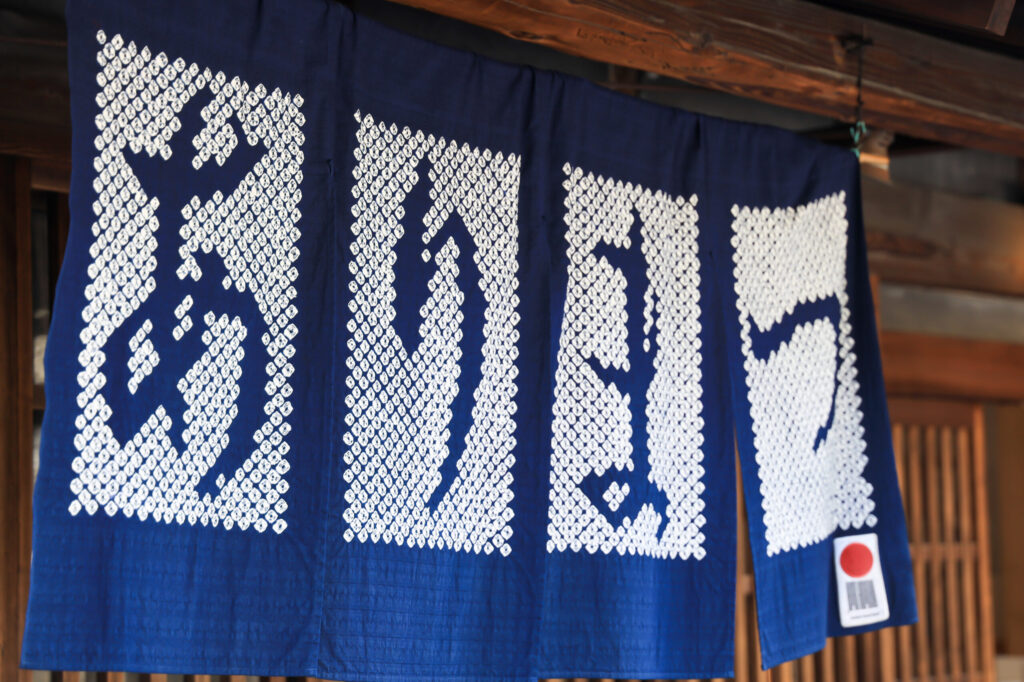
Arimatsu Shibori is a Japanese resist-dyeing (tie-dye) technique: cloth is bound, stitched, folded, clamped or twisted before dyeing so the tied parts resist the dye, creating intricate patterns – most famously in deep indigo blue. Traditionally, Arimatsu Shibori is primarily applied to cotton (such as summer yukata and tenugui).
Arimatsu-Narumi Shibori has over 400 years of history and is remarkable for its variety – over 100 different shibori techniques.
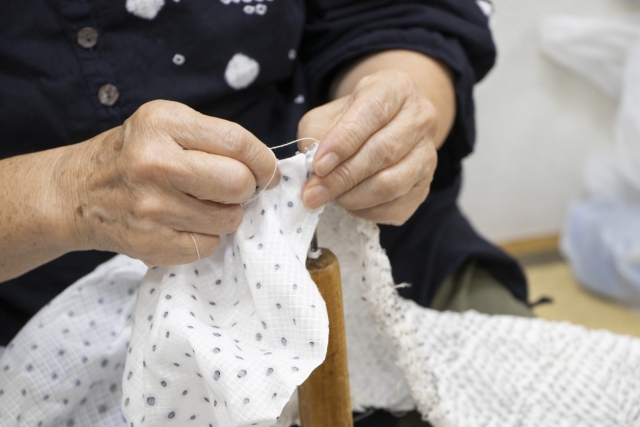
One piece of Arimatsu shibori is crafted through a chain of specialists – carving the paper stencil → printing the design onto the cloth in ‘aobana’ (dayflower) ink that later washes away → shibori (binding, stitching, folding or clamping) → dyeing → releasing the cloth → and finishing. Each stage is a separate trade.
The shibori stage itself is particularly complex, with a dedicated artisan for each specific technique, such as kanoko shibori, makiage shibori, and sekka shibori. Shibori artisans traditionally master a single technique, often over many years.
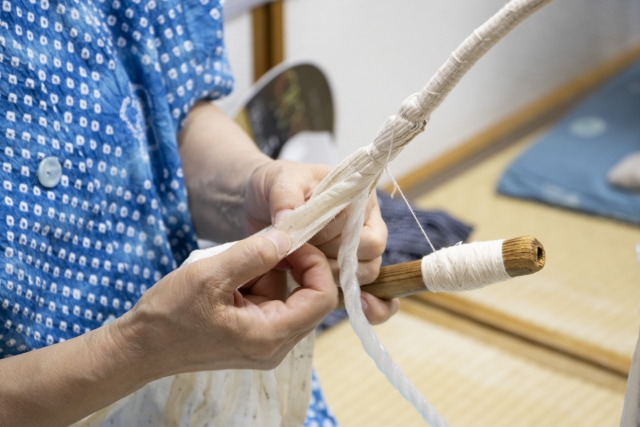
When a single bolt of fabric contains multiple different shibori techniques, each is handled by a different specialist. If the design requires many shibori techniques, this stage alone can involve ten or more artisans to complete one bolt.
A mini guide to the patterns

‘kanoko’ (fawn-spot) shibori/鹿の子絞り: tiny dots like a deer’s spots, regarded as the most delicate and meticulous technique
‘kumo’ (spider) shibori/くも絞り: radiating web-like rings
‘sekka’ (snow-flower) shibori/雪花絞: bold crystal-like flowers made by folding the cloth and clamping it between boards
‘arashi’ (storm) shibori/嵐絞り: diagonal lines like driving rain, a relatively new technique developed in the Meiji era, in 1879
‘miura’ shibori/三浦絞り: a soft, even dappled pattern, the most representative technique
Arimatsu is not the only craft town near Nagoya — Tokoname, the pottery town near the airport, makes a good companion trip.
The Townscape & Five Traditional Design Elements
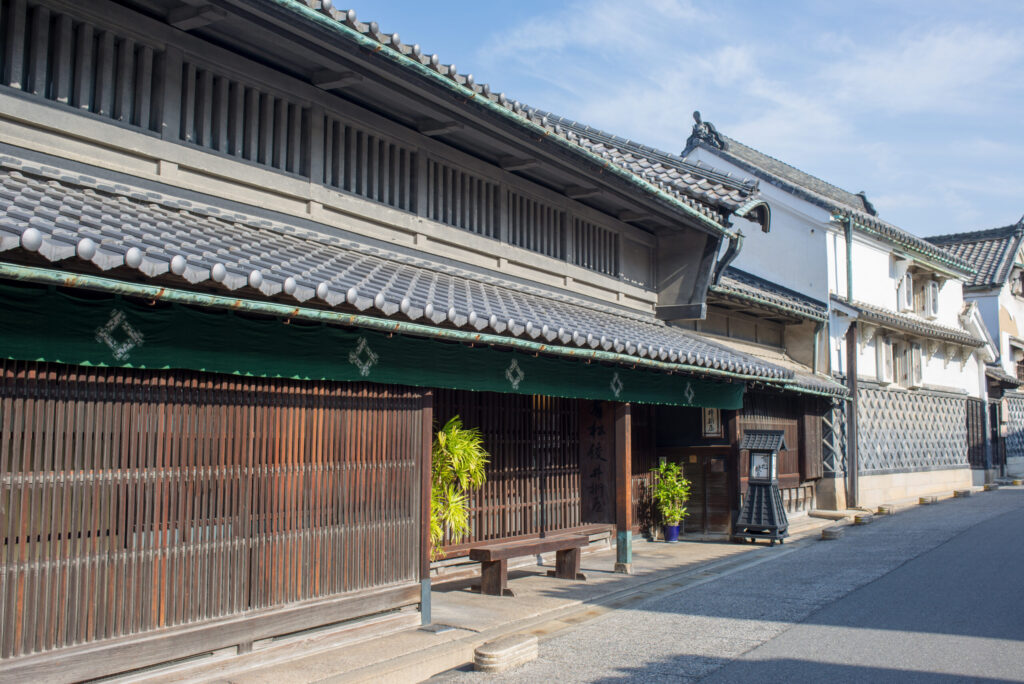
The heart of Arimatsu is a preserved stretch of the historic Tokaido lined with Edo- and Meiji-era shibori-merchant houses. It’s quite compact, atmospheric and easy to walk end to end.
The houses show classic Edo-period fireproof, status-showing design. In 1784 a great fire destroyed most of Arimatsu. Learning from the lesson of the great fire, when the town was rebuilt – with support from the Owari domain – the new houses were given fire-resistant, plaster-coated designs.
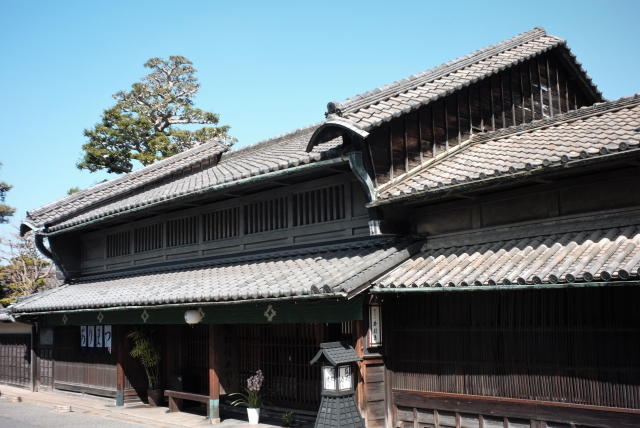
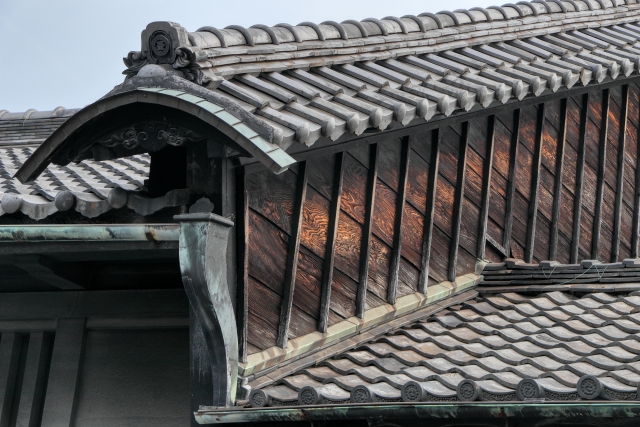
Udatsu/卯建 – raised fire-break walls: small roofed walls built out on the gable (side) ends of a house, rising above the roofline to stop fire spreading from the house next door. Because they were expensive, udatsu also became a status symbol – the Japanese idiom ‘udatsu ga agaranai’ (‘your udatsu never goes up’ = to never get ahead in life) is said to come from this. Spot them on the Hattori Family Residence (Igeta-ya).
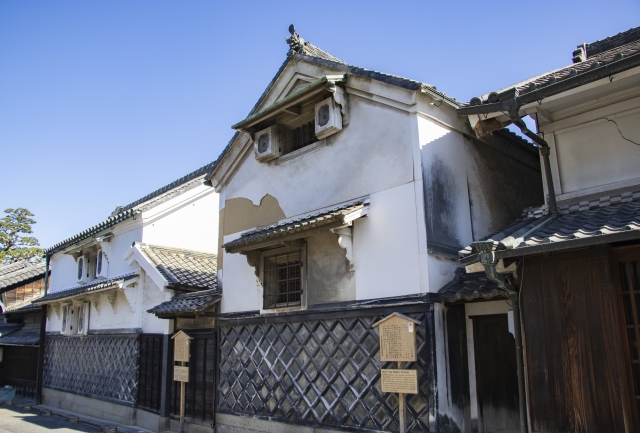
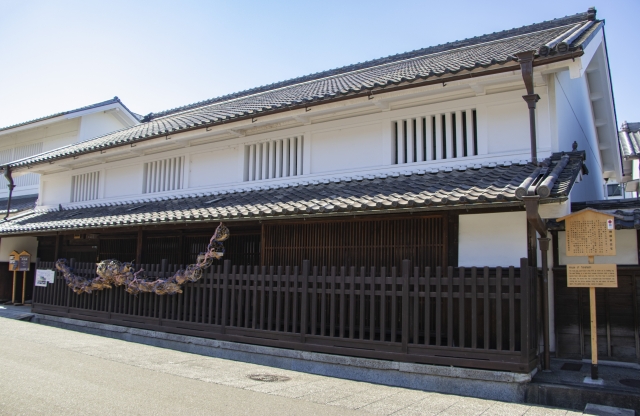
Nurigome-zukuri/塗籠造 – plaster-coated construction: the walls, and even the undersides of the eaves, are thickly coated with earth and white plaster so that no wood is left exposed, making the whole building fire-resistant. This is the signature look of Arimatsu’s merchant houses – the main houses of both the Hattori and Oka residences are built this way.
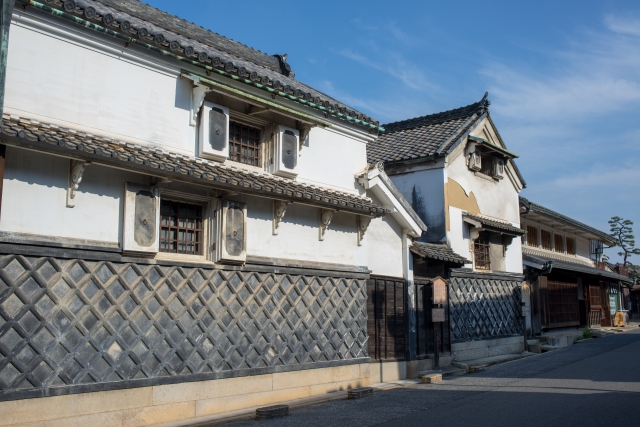
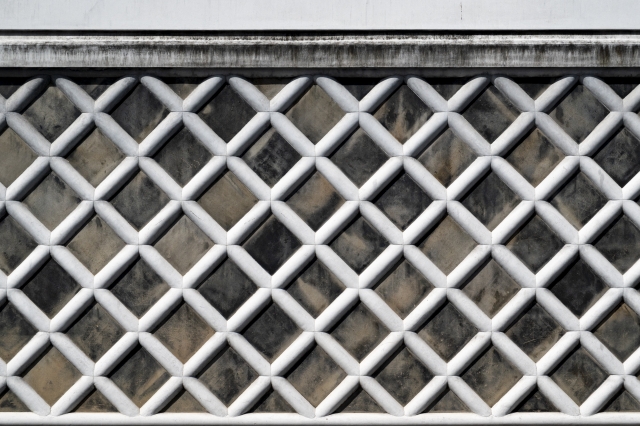
Namako-kabe/なまこ壁 – ‘sea cucumber’ walls: a finish used on storehouse (kura) walls. Square tiles are nailed to the wall and the joints between them are sealed with white plaster raised in thick, rounded ridges; the plump semicircular cross-section of the ridges resembles a sea cucumber (‘namako’), hence the name. Highly fire-resistant, it protected the lower walls of storehouses – see the kura of the Hattori residence and the ground floor of the Oka residence.
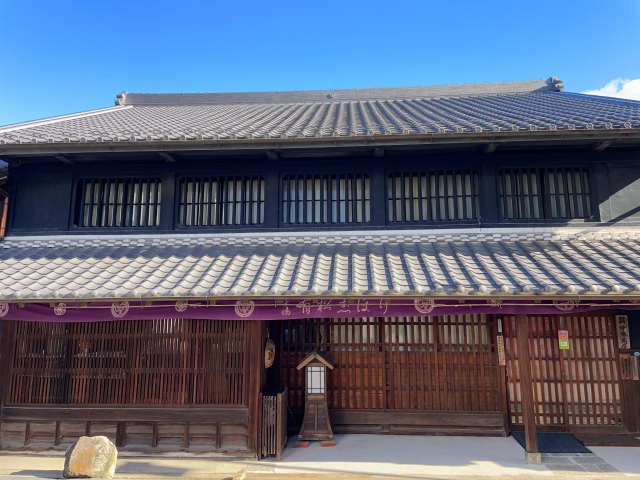
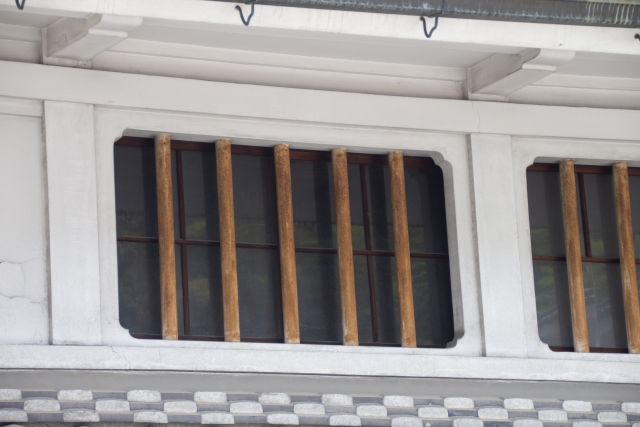
Mushiko-mado/虫籠窓 – ‘insect cage’ windows: small plastered lattice windows on the low-ceilinged second floor (‘tsushi-nikai’) of a machiya townhouse. Each lattice bar has a wooden core wrapped with rope and coated with earth, later finished in plaster for fireproofing. The name comes from their resemblance to traditional insect cages. Look up at the second floors of the Oka and Hattori houses.
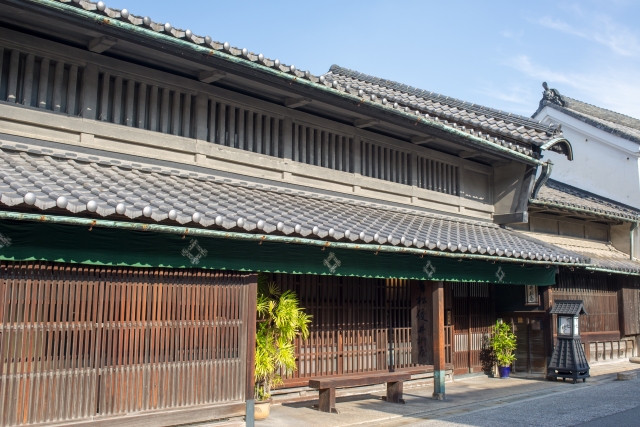
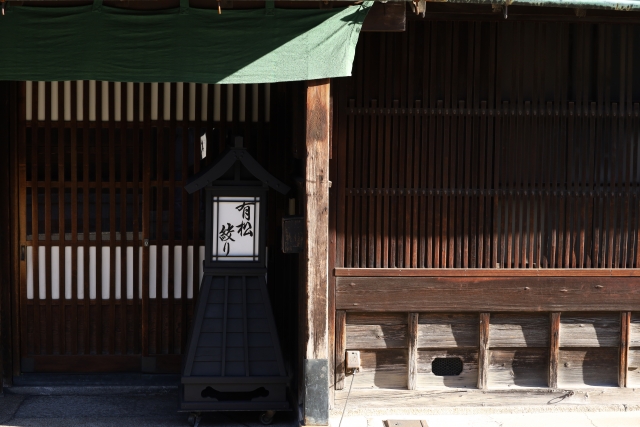
Renji-goshi/連子格子 – wooden lattice screens: rows of slender square bars (‘renji-ko’) set at regular intervals across windows and the street-facing front of a house. They let in light and air, and let people inside look out while making it hard to see in from the street – an elegant, practical machiya ‘face’. The ground floor of the Oka residence is a good example.
Access from Nagoya
Meitetsu Nagoya Station (名鉄名古屋駅) → Arimatsu Station (有松駅)
- Take the Meitetsu Nagoya Main Line to Arimatsu Station — board a Local (普通) or Semi-Express (準急). Not every train stops at Arimatsu: some Express (急行) trains do, but not all.
- Travel time: about 20-30 minutes
- Fare: ¥400 one way
From Arimatsu Station, it’s a 5-minute walk to the historic street.
Highlights
Note: Arimatsu-Narumi Tie-Dyeing Museum is open daily (except the New Year holidays), but the Oka Family Residence and the float museum are open only on Saturdays and Sundays
Oka Family Residence/岡家住宅
- A grand late-Edo shibori-merchant house with one of the largest frontages in Arimatsu (main house, workshop and two storehouses), notable for wavy plasterwork under the second-floor eaves
- A Nagoya City cultural property
- Interior open free on Sat/Sun, 10:30-15:30 (excluding the year-end and New Year holidays)
Hattori Family Residence (Igeta-ya)/服部家住宅 (井桁屋)
- The town’s most impressive estate — a 45-metre frontage with about eleven designated structures (a main house dating to 1861, udatsu walls, a well house, guest room, gate and six storehouses). In the grounds stands a kurogane holly (kuroganemochi/クロガネモチ) said to be around 370 years old.
- An Aichi Prefecture cultural property
- Still operates today as the ‘Igeta-ya’ indigo-dye shop (10:00-17:00) — you can shop inside a historic building!
Arimatsu-Narumi Tie-Dyeing Museum/有松・鳴海絞会館
- Live craftsman demonstrations, exhibits and a shop, and hands-on workshops
- Shibori Experience (workshop): Reservation is required.
- They run hands-on tie-dye workshops. There are a few courses, for more information and booking, check the official website.
- Admission: Adult ¥300, student ¥100
- Opening hours: 9:30-17:00 (demonstrations until 16:30)
- Closed during the year-end and New Year holidays, and other temporary closures. Check the official calendar for closed days before you go
If you’d prefer to explore with an English-speaking local guide, you can book a private walking tour of Arimatsu on Viator, which includes joining a shibori workshop! It runs on weekends, and you can book online and cancel for free up to 24 hours before.
Arimatsu Dashi Kaikan (float museum)/有松山車会館
- It displays the town’s three ornate festival floats in rotation, one per year – Hotei-sha, Karako-sha and Jingu-kogo-sha
- You can look closely at the float still in use today in the October festival and even view the float from above (only possible here).
- Open Sat/Sun 10:00-16:00; admission adult ¥200, high-school ¥100, JHS and under free.
Two Festivals (June & October)
Both festivals are held in the area around the old townscape along Arimatsu Tokaido. Head to the old townscape area and you will find the festival:)
Arimatsu Shibori Festival/有松絞りまつり (June)
Arimatsu Shibori Festival is the town’s biggest craft event. It usually takes place on the first Saturday and Sunday of June every year.
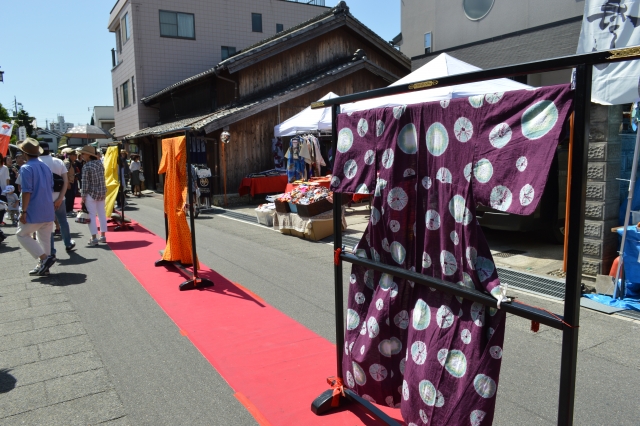
You can try hands-on experiences such as ‘sekka’ (snow-flower) and ‘tegumo’ (hand spider) tie-dye. There are also stalls selling all kinds of shibori goods (yukata, clothing, accessories) at special prices, plus craft demonstrations. It’s a shopping-and-making festival:)
In 2026, it was on June 6 (Sat) & 7 (Sun), 9:00-17:00. I was actually planning to go this year, but somehow I completely forgot about it… I should mark my calendar for next year;p
For next year’s dates, please check the official announcement for final confirmation (not yet announced at this moment), so you won’t get disappointed!
Arimatsu Float Festival/有松山車まつり (October)
The Arimatsu Tenmansha Autumn Festival – the ‘Arimatsu Dashi (float) Matsuri’ – is the town’s traditional shrine festival. It is held every year on the first Sunday of October.
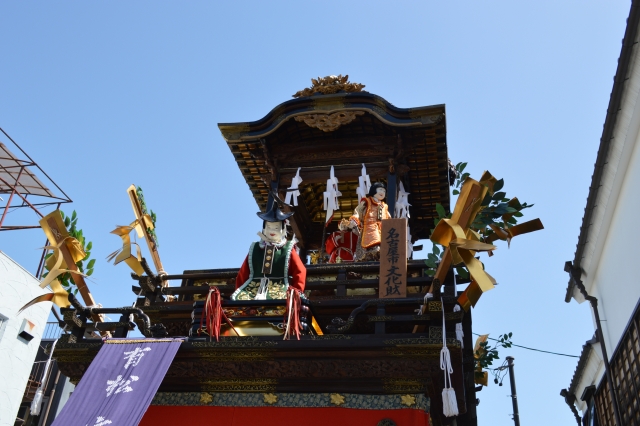
The three floats — Hotei-sha, Karako-sha and Jingu-kogo-sha — are pulled through the old Tokaido street. The festival itself is a Nagoya City Intangible Folk Cultural Property (2014), and it is also part of the Japan Heritage designation.
There are three main highlights:
- Karakuri puppets – each float carries mechanical ‘karakuri’ dolls that perform at several spots along the route.
- Shagiri – the heavy floats are spun around by human power alone, the moment where the pullers show their skill.
- Lanterns at night – the floats move through the dark streets lit by lanterns, still lit with real candles.
In 2026 it falls on October 4 (Sun): daytime 9:30-15:00 and an evening session 18:30-21:30.
Actually, I didn’t know about this festival until recently, but it looks really dynamic and especially, lantern-lit is charming and photogenic! Please take a look at the photos on the official website. The website is Japanese only but I have to show them to you — a picture is worth a thousand words, right? I’d love to go myself:)
When I visited Arimatsu last time, I strolled around, shopped for some Arimatsu shibori for myself, and took a break at a machiya café. My friend from overseas was very happy to get beautiful, authentic Arimatsu shibori tenugui towels and pouches as souvenirs;) I’d love to go back for the festivals next time!
If you are still working out the rest of your stay, I have put together a 2-3 day Nagoya itinerary here.
So, did I make you interested in Arimatsu?
📍 How to get there: About 20–30 minutes from Meitetsu Nagoya Station on the Meitetsu Nagoya Main Line (¥400 one way), then a 5-minute walk to the old street from Arimatsu Station.
⏱ Time needed: Half a day — add 1–2 hours if you book a shibori workshop.
💰 Budget: Around ¥1,300 per person for the round-trip train (¥800) and both museums (¥300 + ¥200) — the Oka residence is free. Anything else — shibori to take home, lunch, a hands-on workshop — is up to you.
🗓 Best time to visit: Come on a Saturday or Sunday if you can — the Oka residence and the float museum only open then.
🎟 Book ahead: Shibori workshops are reservation-only — book through the Shibori Museum official site, or book a private weekend walking tour with an English-speaking guide, which includes a shibori workshop.


Comments