Japanese obsession with soy is crazy.
This is what I had today. I just realized that there was soy in nearly everything on the menu in some form.
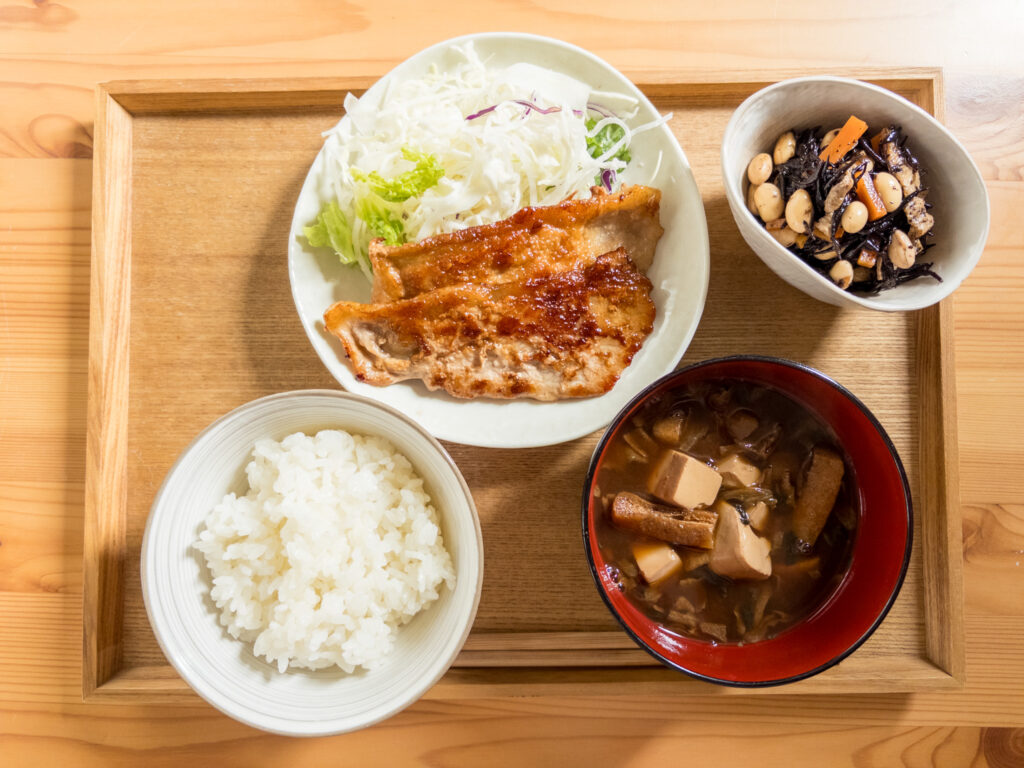
•steamed rice
•leftover miso soup from yesterday: miso, tofu, abura-age
•ginger pork/豚の生姜焼き: soy sauce
with bagged shredded cabbage (convenience is king ;p)
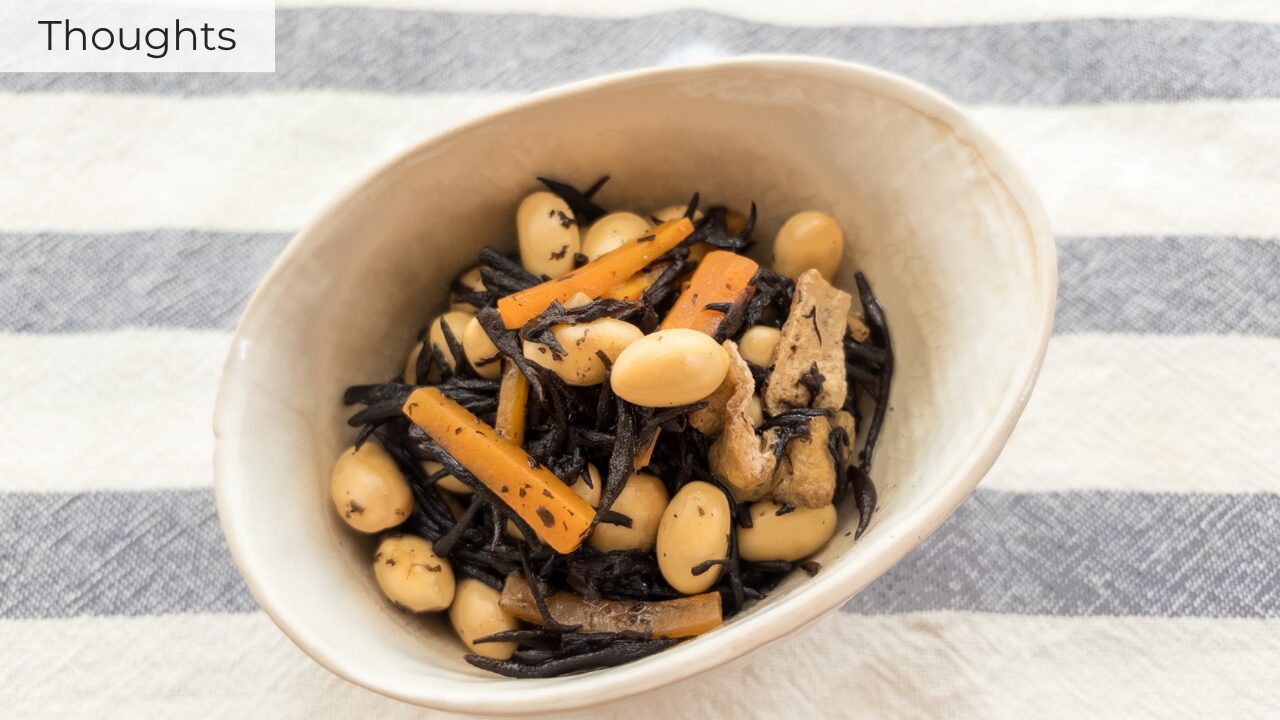
•meal prep simmered hijiki seaweed/ひじきの煮物: soybeans, abura-age, soy sauce
I kind of knew that we (Japanese) eat/use soy a lot but I never really realized it or thought about it in deeply because it’s not so much about we ‘liking’ it, but it’s more something like, we are always naturally being right there relationship.
Come to think of it, without even trying too hard, I can think of this many foods which contain or are related to soybeans ― Tofu, Soy sauce, Miso, Natto, Atsu-age, Abura-age, Edamame (did you know that edamame are actually soybeans? they are baby soybeans ;)), Yuba, Kinako..
The main reason of this “soy is in everything” phenomenon would probably be because two of the most representative seasonings in Japanese cuisine, soy sauce and miso, are made from soybeans. I use soy sauce and/or miso almost every time I cook.
But also, soybeans are processed in a wide variety of ways in Japanese foods. Soybeans are fermented, pressed, dried, fried, and ground ― transformed into dozens of distinct products with its own flavor and texture (a big high five to people of old Japan!). Soybeans take on various forms and find their way into all kinds of dishes. They’re like ninjas, the ninja soy.
Well, what else could I call this but obsession? You must be feeling now that deep, incredibly deep, passion and dedication for food among the Japanese people. Yes, we are VERY serious about food ;p
How can I live without you, Soy! xxx
•••••
Notes
I wonder why soy became so central to Japanese food in the first place. Here is what I learned:
In 675 CE, driven by Buddhist teachings against the taking of life, Emperor Tenmu issued Japan’s first formal ban on eating the meat of cattle, horses, dogs, chickens, and monkeys. Subsequent emperors reinforced the ban. For roughly 1,200 years, the majority of the Japanese population avoided eating meat.
This is the single most important reason for Japan’s soybean culture. With animal protein largely off the table, soybeans ― which are roughly 35–40% protein by dry weight ― became the primary protein source for ordinary people. They were nicknamed ‘the meat of the fields’ (畑の肉 / hatake no niku).
•••••
Natto/納豆:
Whole soybeans fermented with Bacillus subtilis (natto bacteria). Known for its strong smell, sticky strings, and intense umami. Rich in protein, vitamin K2, and the enzyme nattokinase. Often an acquired taste.
Abura-age/油揚げ:
Thin slices of tofu deep-fried until puffed and golden. The outer skin is crisp, the inside is chewy. Used in miso soup, udon, and as a wrapper for inari-zushi (sushi-filled pouches).
Atsu-age/厚揚げ:
Tofu deep-fried whole — outer skin is browned but the inside remains soft tofu. Grilled, simmered, or used in nimono (braised dishes).
Kinako/きな粉:
Roasted soybean flour with a nutty, caramel-like fragrance. Dusted on mochi, warabimochi, and traditional sweets. One of Japan’s most distinctive soybean flavors.



Comments