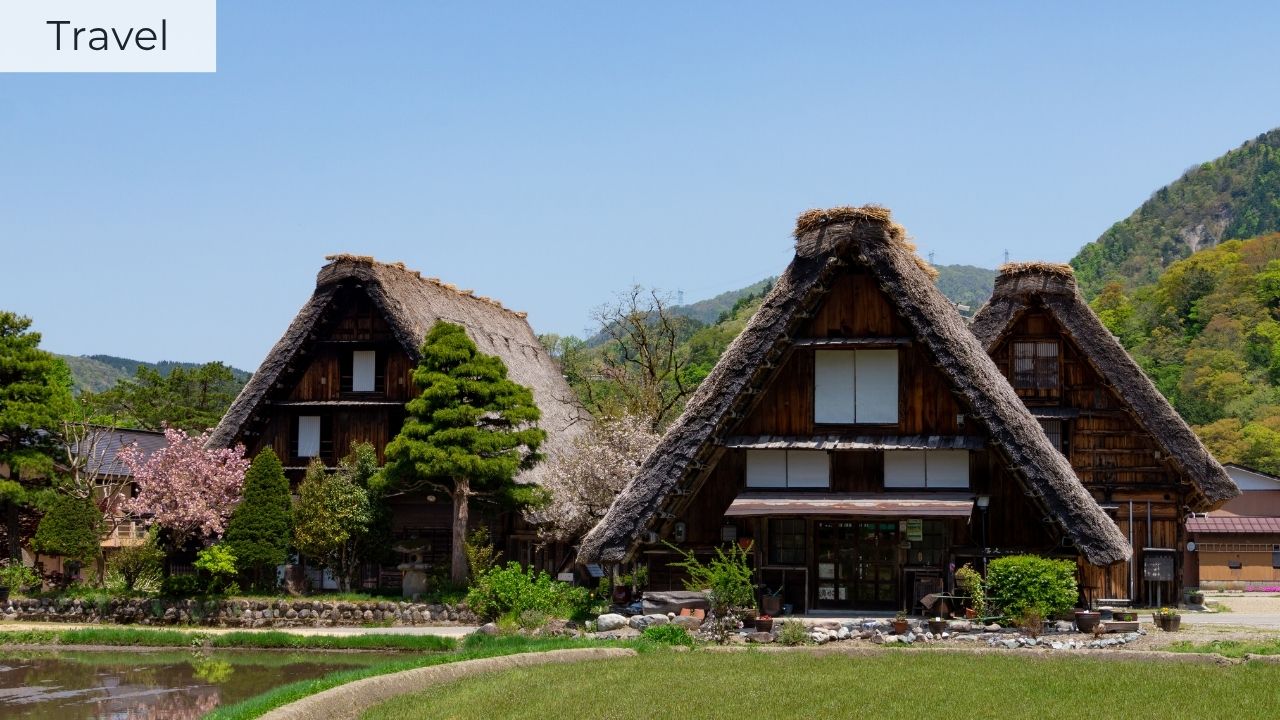
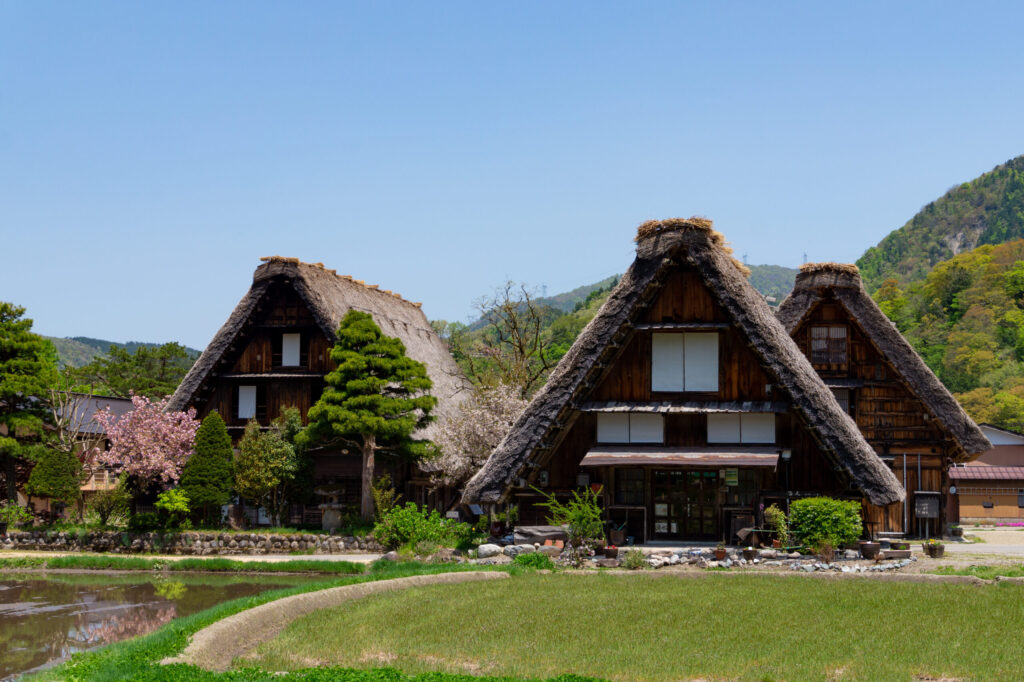
Are you thinking of visiting Shirakawa-go? Or are you looking for places to visit nearby Nagoya? Whether you already had it in mind or not, Shirakawa-go is one of the best destinations to visit. It’s easily accessible from Nagoya as a day trip or an overnight stay, plus if you are planning to get Japan Rail Pass or if you have it, you can use the JR Pass for part of the journey to Shirakawa-go;)
Let me share with you about this UNESCO World Heritage village known for its traditional Gassho-zukuri houses and some practical info and travel tips:)
Come and explore this charming village surrounded by beautiful scenery!
Overview
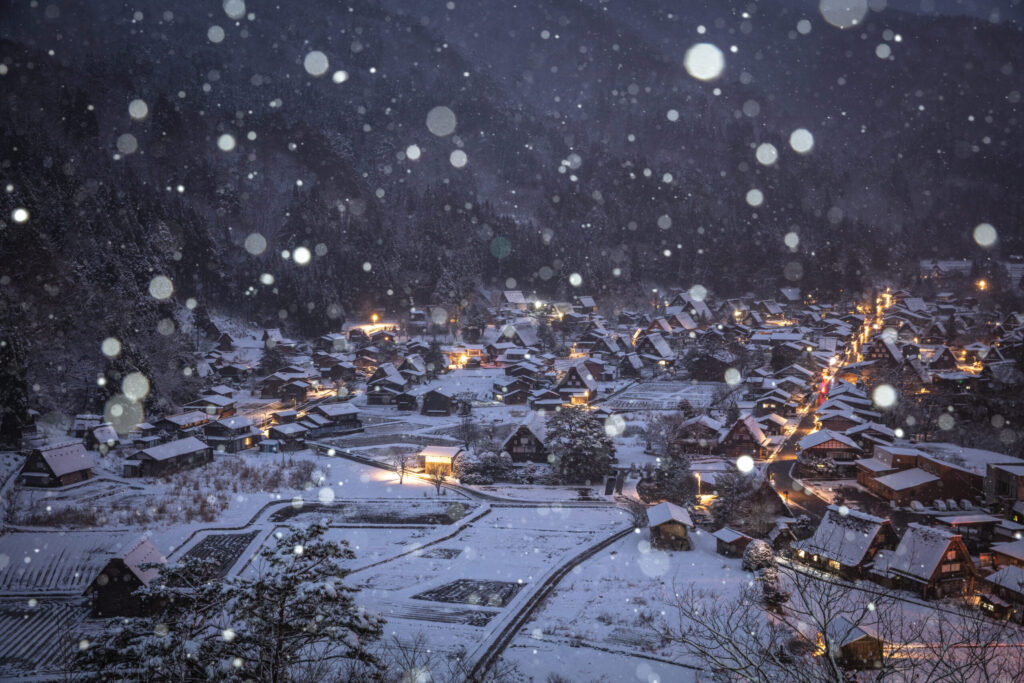
Shirakawa-go (白川郷) is a mountainous rural area in Ono District, Gifu Prefecture, famous for its clusters of traditional gassho-zukuri farmhouses (合掌造り集落). Together with Gokayama in Toyama Prefecture, it was designated a UNESCO World Cultural Heritage Site in December 1995. The main village open to visitors is Ogimachi (荻町), home to roughly 100 surviving gassho-zukuri structures — some more than 250 years old — still standing in their original landscape of mountain, river, and terraced fields.
What Is a Gassho-zukuri?
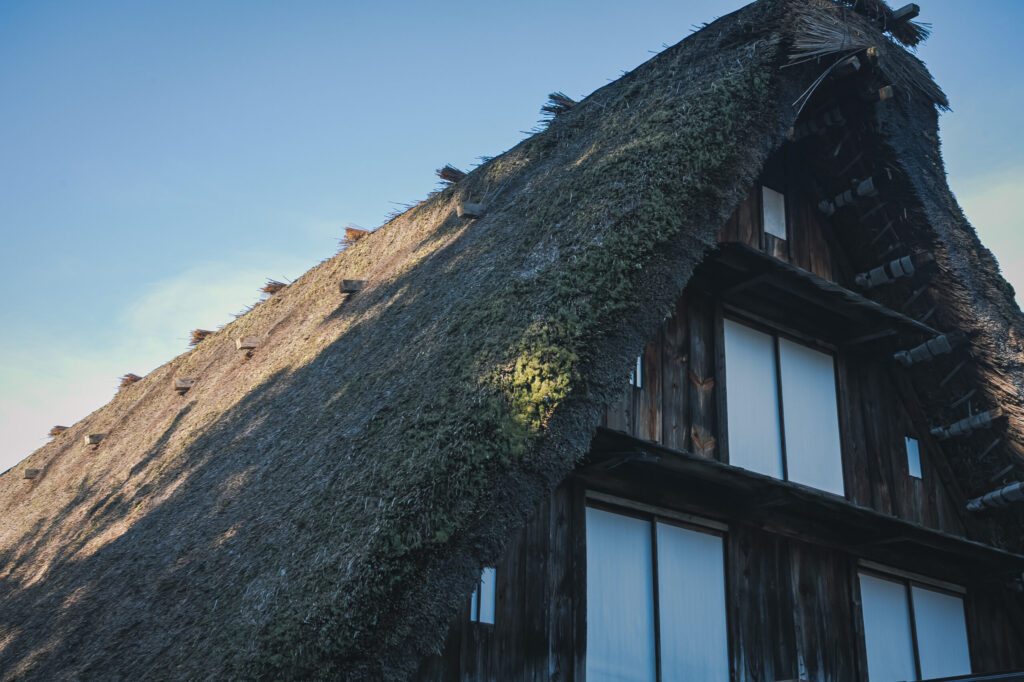
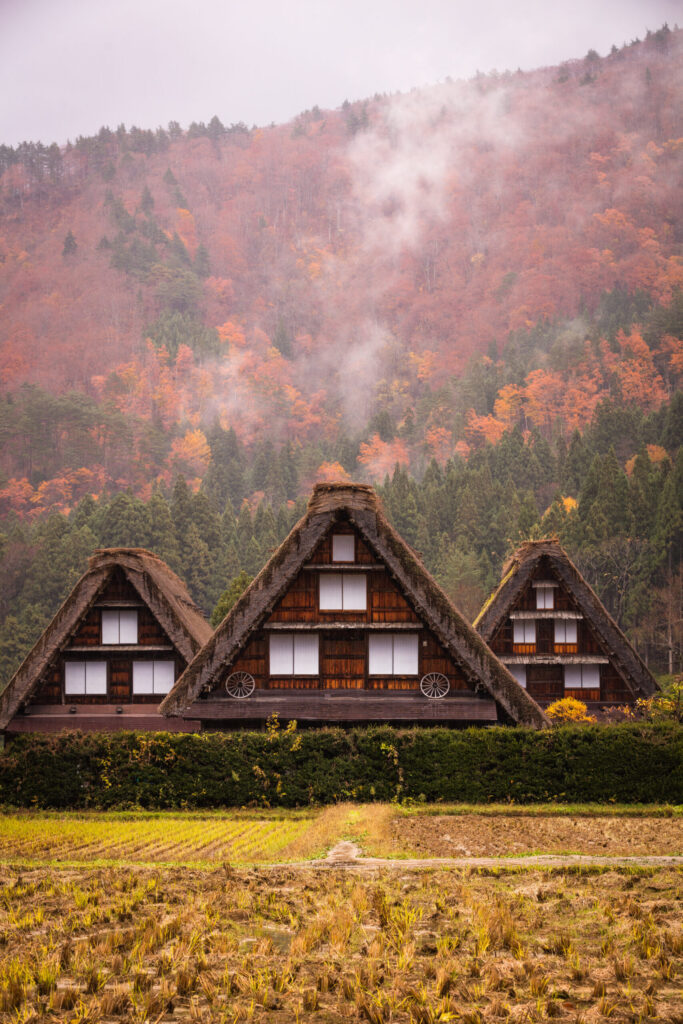
“Gassho-zukuri” (合掌造り) is a traditional Japanese wooden architectural style characterized by steeply pitched thatched roofs constructed using wooden beams arranged in an A-shape. The pitch sheds the region’s heavy snowfall and creates vast attic spaces, historically used for silkworm cultivation.
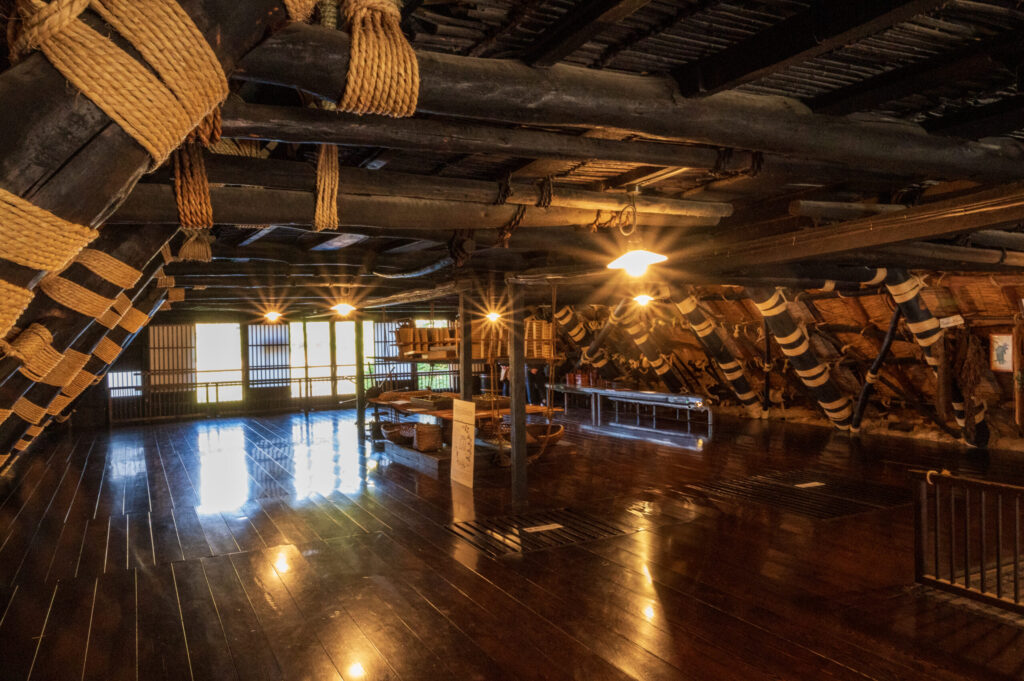
“Gassho-zukuri” means “constructed like hands in prayer” — there seem to be various theories but the name refers to the steep A-shape that resembles hands pressed together in prayer.
The buildings are constructed without a single nail — held together by rope and wooden joints, the entire framework can be disassembled and repaired cooperatively (No metal is used at all, it is made entirely from plants).
Yui (結) — The Spirit of Community
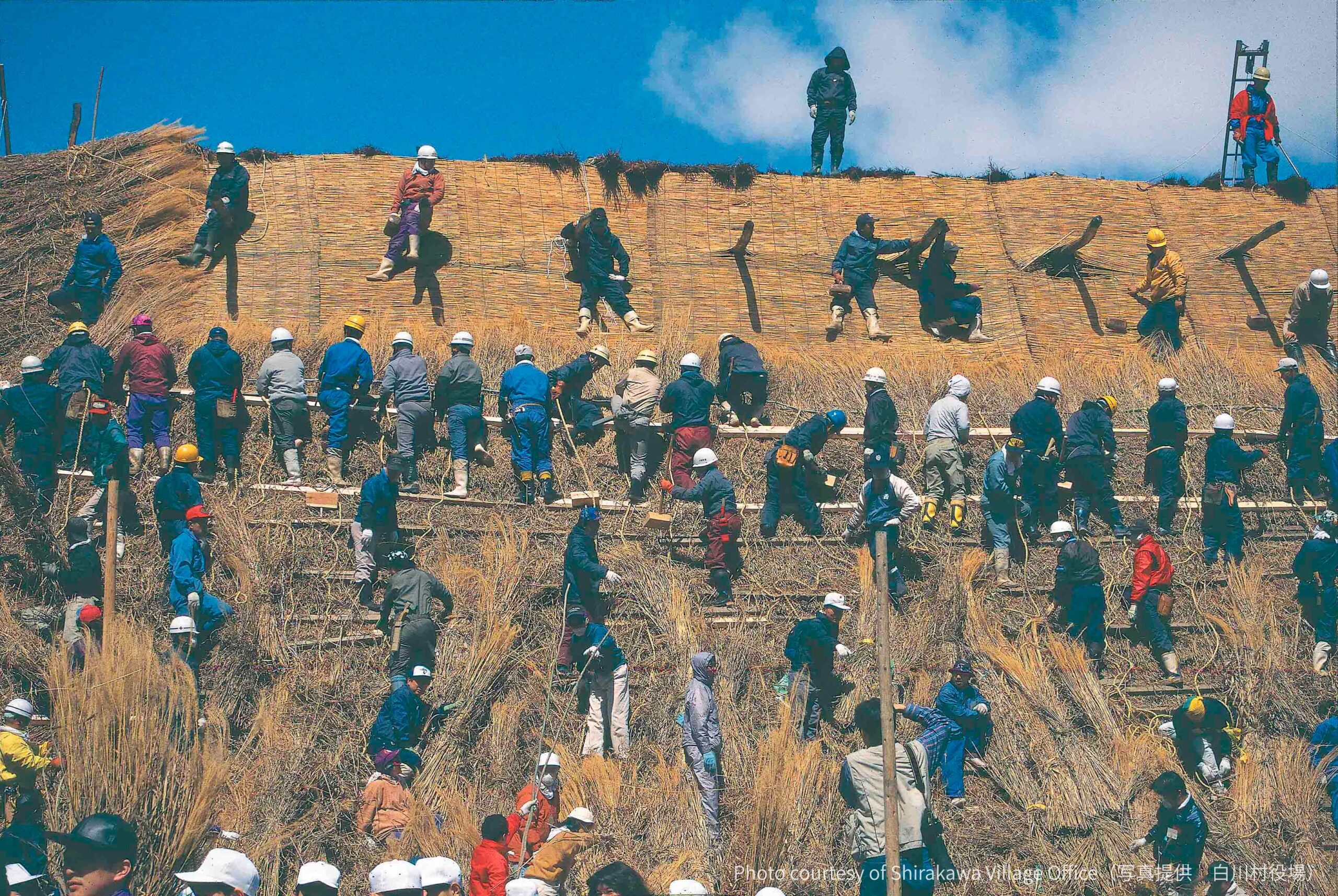
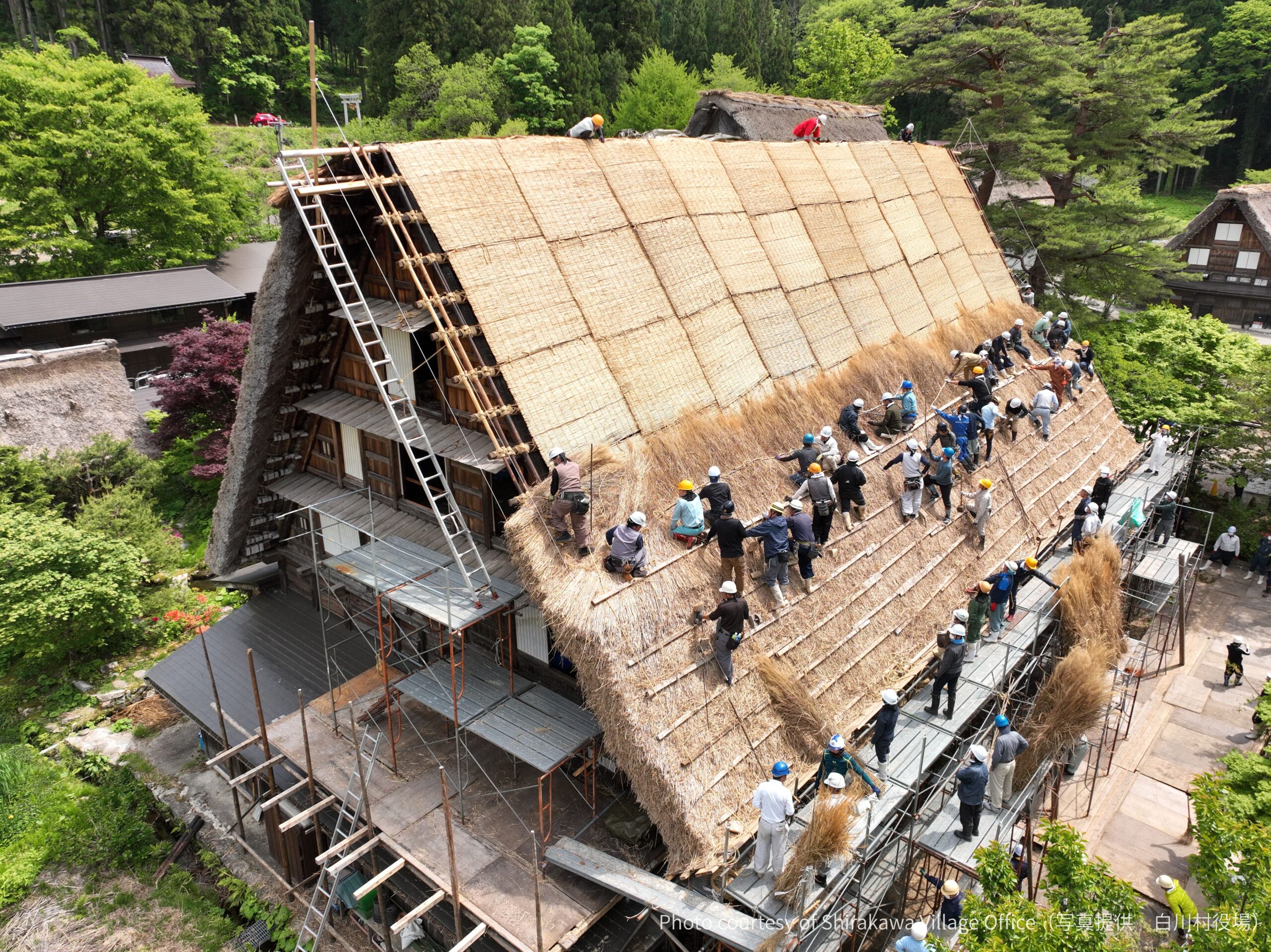
A key concept in Shirakawa-go’s culture is “yui” (結), a tradition of mutual aid. The most visible expression is the community roof-rethatching: replacing the thick thatched roof of a single farmhouse requires hundreds of workers over a single day. Entire communities still come together for this every 20-30 years, preserving both the buildings and the social bonds.
Access from Nagoya
Direct Express Bus (Option 1: Recommended)
Route: Meitetsu Bus Center (directly connected to Nagoya Station) → Shirakawa-go Bus Terminal
Travel time: approx. 2h 30min–3h
Fare: approx. ¥3,600–¥4,700 one way (varies by day/operator)
Frequency: approx. 4 departures/day (schedules change seasonally — confirm on official sites before travel)
Reservation in advance is strongly recommended. Seats sell out quickly during busy seasons. I recommend making a round-trip bus ticket.
Gifu Bus: Nagoya Shirakawago Line / Timetable
highwaybus.com: check here
If the buses are fully booked, or if you’d rather have everything arranged and see Takayama in the same day, there are guided day tours from Nagoya that combine Shirakawa-go and Takayama. It’s a fixed itinerary so you’ll have less time to linger, but it can be an efficient option if your days in Japan are limited. (You can check tours from Nagoya here.)
Train + Bus (Option 2: good for JR Pass holders and/or combining Takayama + Shirakawa-go into one trip)
Route: Nagoya → Takayama (JR Limited Express Hida, approx. 2h 20min) → Shirakawa-go (Nohi Bus / 濃飛バス, approx. 50min)
Total travel time: approx. 3h 30min including transfer
Fare: The JR leg is covered by Japan Rail Pass. The Nohi Bus segment (Takayama–Shirakawa-go) must be purchased separately (approx. ¥2,800 one way).
Nohi Bus: Takayama-Shirakawago-Kanazawa/Toyama/Takaoka Line
If you’re planning to combine Takayama and Shirakawa-go — or travel more widely around Japan — the Japan Rail Pass can save you money and hassle. You can order your JR Pass online here and have it ready before your trip;)
Car (Option 3)
Route: Nagoya → Tokai-Hokuriku Expressway (東海北陸自動車道) → Shirakawa-go IC
Drive time: approx. 2h 20min
- You must park at a designated lot (Open hours: 8:00-17:00, Last admission 16:30; parking fee is required) and walk.
- During busy seasons (weekends, Golden Week, autumn foliage, winter illumination) when there are many large vehicles (buses), the number of parking spaces for private cars might be reduced.
- Winter driving requires snow tires (studded tires or chains); road closures are possible in heavy snow. (It’s heavy snow region! I know it’s none of my business but I think it’s important to travel safely, hassle-free, and worry-free to fully enjoy the experience. So, if you are going by car, please be sure to plan carefully.)
Important Notes:
There may be heavy traffic due to congestion caused by drivers waiting for parking spaces between the Shirakawa-go IC and parking lots. Even though it’s only about a 5-kilometer drive, the wait time can be close to two hours depending on the season and when you arrive. By bus or car, the key is to depart early in the morning to arrive in Shirakawa-go early and avoid the traffic.
Day Trip or Overnight?
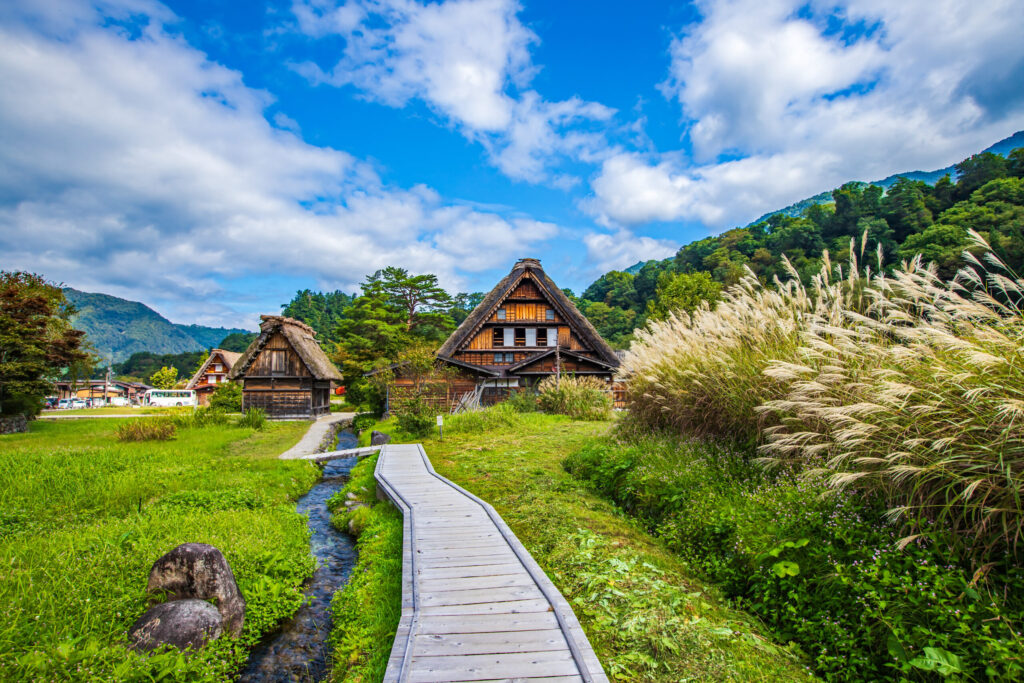
Personally, I think you can fully enjoy Shirakawa-go even as a day trip.
A day trip from Nagoya by bus gives you approximately 4–5 hours in Shirakawa-go. They say the average time to sightsee in Shirakawa-go is about 3 hours, and about 5 hours if you take your time strolling around, so, it gives you enough time to see around. (As I mentioned earlier, just make sure you get there early in the morning to avoid the traffic so you don’t need to sit and wait in the bus for 2 hours;p)
I have visited Shirakawa-go twice in the past and both times, I didn’t stay in the village (Shirakawa-go). The first time was a day trip (I used Option 1, direct bus from/to Nagoya), and the second time I stayed overnight in Takayama (by car and combining Takayama + Shirakawa-go into one trip). Both times, I didn’t feel I had missed out on anything or that had to rush to cover it all.
Of course, I’m not against staying overnight;) If your schedule permits and especially if you were lucky to get accommodation in gassho-zukuri farmhouses, it will be an unforgettable experience. I’d love to stay someday too if I have a chance:) I’m sure the village transforms after the day-trip visitors leave — the quiet evening and peaceful morning stroll — it will give you totally different experiences.
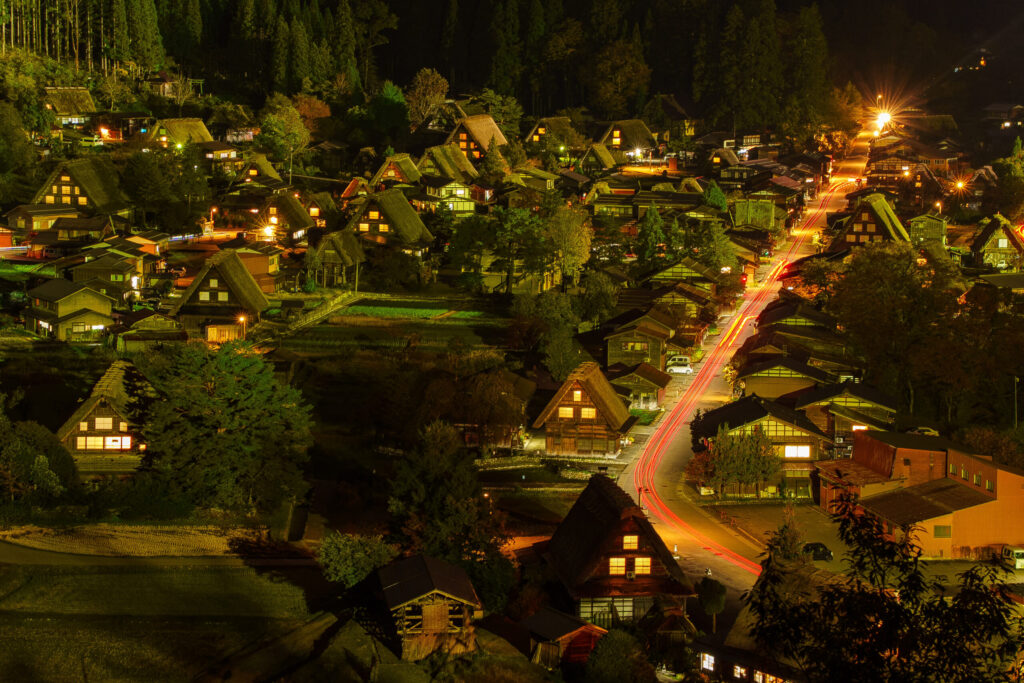
Most lodgings in the village are minshuku (民宿) — family-run guesthouses. These typically include dinner and breakfast, with food centred on local specialities such as hida beef (飛騨牛), river fish, and dishes cooked over the irori (囲炉裏) — a traditional central hearth. If you’re staying overnight in Shirakawa-go, I highly recommend staying at a traditional Gassho-zukuri minshuku:)
Please note that reservations should be made months in advance for peak seasons (weekend, winter, autumn, Golden Week). Reservations for Gassho-zukuri guesthouses generally open about 3 to 4 months in advance.
Booking Accommodation:
Shirakawa-go Tourist Association …TEL: 05769-6-1013 (Domestic) / +81-5769-6-1013 (International)
Highlights
Ogi-machi Gassho-zukuri Village Map
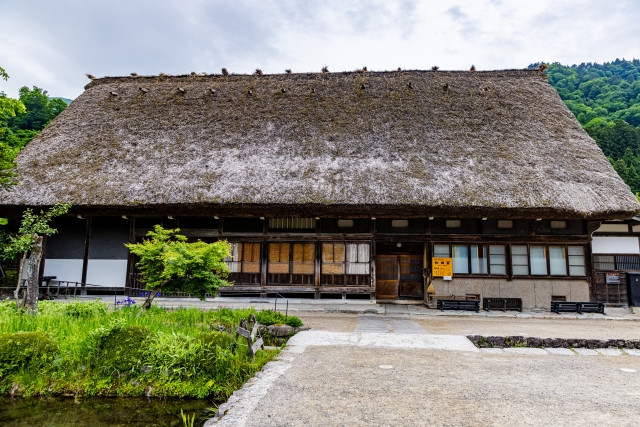
Wada House (和田家住宅)
The only nationally designated Important Cultural Property within the UNESCO village area. It is the largest gassho-zukuri farmhouse. Built during the Edo period, it belonged to the Wada family — once the most prominent household in the village, involved in gunpowder trade and sericulture. The 1st and 2nd floors are open to the public (while people are living there — living areas are not open to the public).
Admission: ¥400 (adults)
Payment: cash
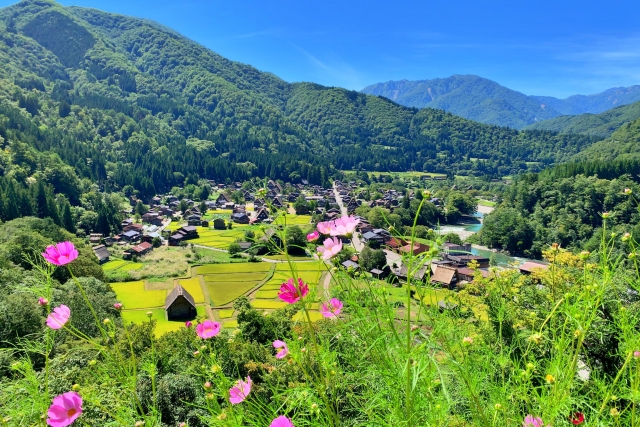
Ogi-machi Castle Ruin Observatory (荻町城跡展望台)
The single most iconic viewpoint of Shirakawa-go. Located on the hillside above the village, it offers a sweeping panorama of the entire Ogimachi cluster — farmhouses, paddy fields, and river — in one frame.
Access: 10 minutes by shuttle bus or 20-minute uphill walk from the village
Shuttle Bus for the Observation Deck (the bus stop is 1-minute walk from Wada House)
・Operating Hours: 9:00–15:40
・Departs every 20 minutes (at 00, 20, and 40)
・300 yen per person, one-way (adults)
・Payment on board (cash)
Nagase House (長瀬家)
The tallest gassho-zukuri farmhouse in Ogimachi, reaching 5 stories. The Nagase family were village doctors — the first through third generations were all doctors. Medical instruments from the Edo period have been preserved and on display. You can watch a video of the roof-thatching project carried out by “yui” in 2001 with a total of about 500 volunteers.
Admission: ¥400 (adults)
Payment: cash
Gassho-Zukuri Minkaen (合掌造り民家園)
An open-air museum located just across the Shokawa River from the main village, with 25 relocated gassho-zukuri structures including homes, a shrine, a Buddhist hall, and a watermill. Nine buildings are designated Gifu Prefectural Cultural Properties. Main house opens its attic floor for exploration.
Admission: ¥800 adults, ¥400 children (under school age free)
Hours: seasonal — check official site
A Stroll Through the Village
Simply walking the narrow lanes of Ogi-machi is itself an experience. Most farmhouses are still inhabited — residents live among the tourists. Side streets away from the main path are quieter and often more atmospheric.
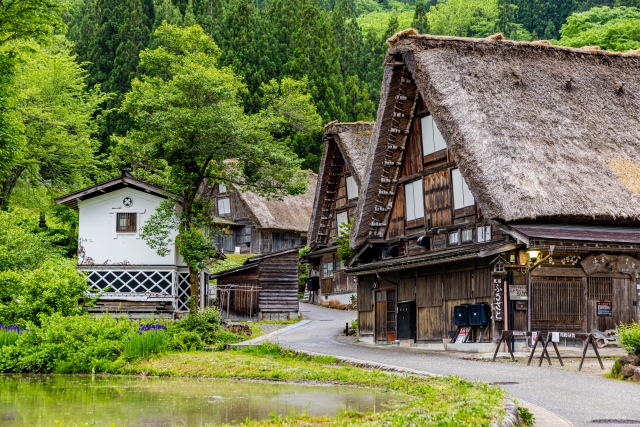
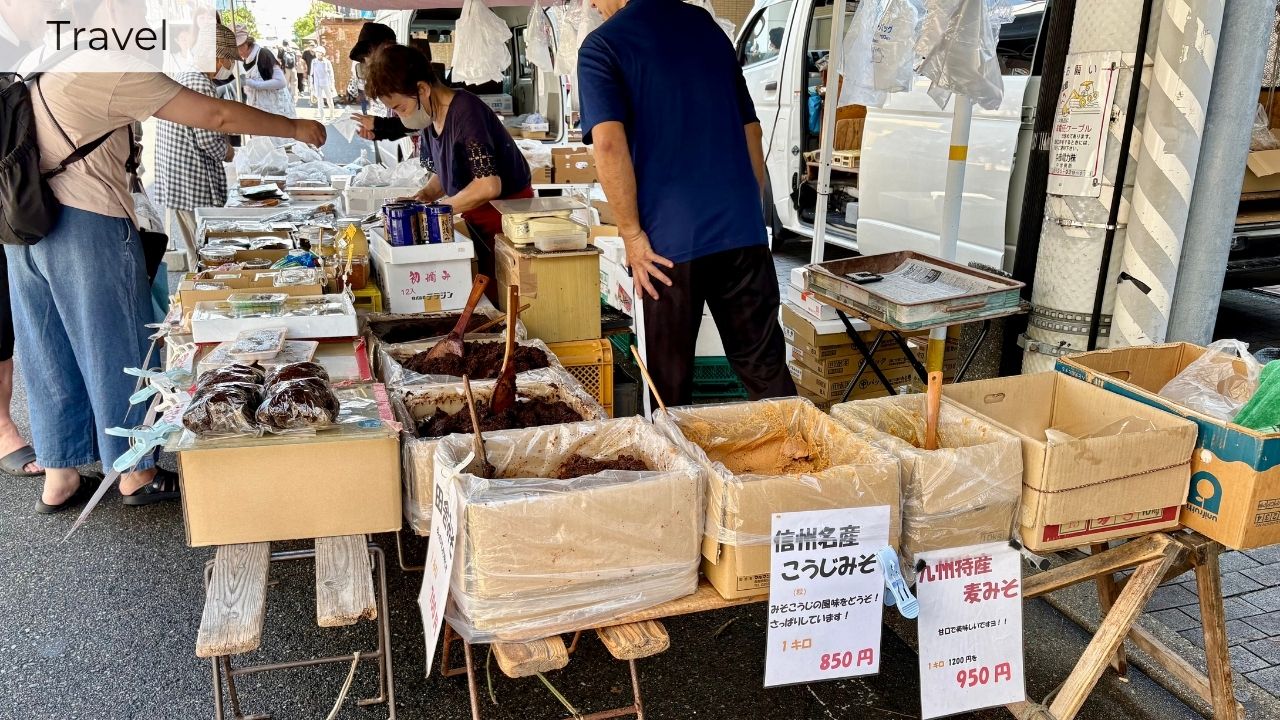
Please enjoy trying the local street food and picking out souvenirs. There are so many great spots for eating on the go and Instagrammable soft-serve ice creams that you’ll probably be spoiled for choice;) Make sure to fully enjoy the local flavors of Shirakawa-go, too.
Local Specialties
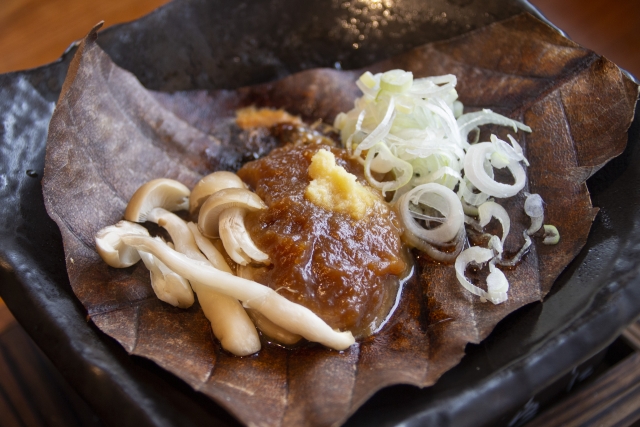
•Houba Miso (朴葉味噌) — A beloved Hida dish: miso paste mixed with mushrooms, green onions, and other ingredients, placed on a large houba (magnolia) leaf and grilled over a small clay stove. The leaf imparts a subtle woody fragrance.
•Gohei Mochi (五平餅) — A classic Hida/Shirakawa-go street food: oval-shaped rice cake on a flat wooden stick, coated in a sweet walnut or sesame miso paste and grilled. Served warm at stalls throughout the village. Chewy and smoky.
•Ishidofu (石豆腐 / Stone Tofu) — A regional speciality unique to mountainous Hida/Shirakawa-go. Made with a very high ratio of soybeans, “stone tofu” is extremely firm and dense — a texture unlike standard Japanese soft tofu. In fact, it is so sturdy that it won’t break apart even when tied with a straw rope! Prepared as dengaku (grilled on a skewer, coated in miso), in hot pot, or as a simple side dish.
•Doburoku (どぶろく) — Doburoku is an unfiltered rice sake — cloudy and thick, with a creamy texture, gentle rice sweetness, and a distinctive mild sourness from natural fermentation. Unlike clear nihonshu (日本酒), the rice solids remain in the liquid, giving it a porridge-like richness. Even if you’re not a fan of alcohol, you might still enjoy Doburoku-style Ice cream or Doburoku Sweet bean jelly /どぶろく羊羹;)
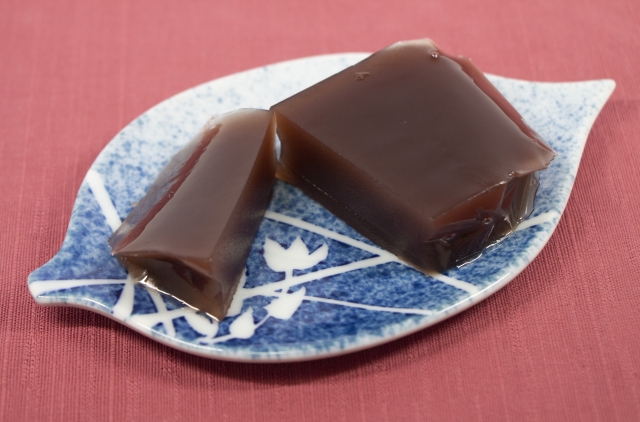
Doburoku Festival (どぶろく祭):
Every year in Shirakawa-go, from late September through October, the “Doburoku Festival” is held to pray to the mountain gods for a bountiful harvest, household safety, and peace in the village. Doburoku is offered to the gods, then for visitor.
What to Keep in Mind During Your Visit
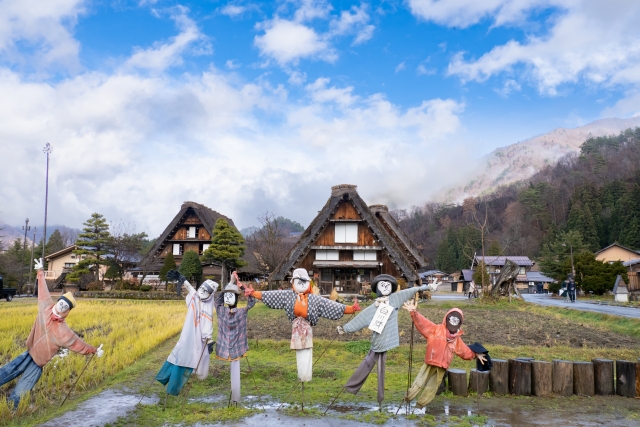
Most importantly, the Ogimachi World Heritage Village (Gassho-zukuri Village) is not a theme park. It is a living village where residents continue to live and work. Please respect the daily lives and privacy of local residents while helping to preserve this unique World Heritage Site.
Respect Private Property & Residents
- Do not enter private property or farmland, look into homes, or open doors without permission. Any area off the paved roads is private property.
- Sightseeing is permitted during daytime only (8:00 a.m. – 5:00 p.m.). To protect the daily lives and privacy of residents, nighttime visits are limited to guests staying within the village.
- Drone photography is prohibited in order to protect residents’ privacy.
Help Preserve the Village and Gassho-zukuri Houses
- Open flames and smoking are strictly prohibited. The traditional Gassho-zukuri houses are highly vulnerable to fire.
- Take all trash with you. There are no public trash bins in the village.
Local Customs
- Please remove your shoes before entering houses, temples, minshuku, some shops and restaurants.
Bring cash with you
- Many shops in Shirakawa-go do not accept credit cards or other cashless payment methods.
Seasons & Best Times to Visit
Are you wondering when the best time to go is? Well, there is no bad season for Shirakawa-go:)
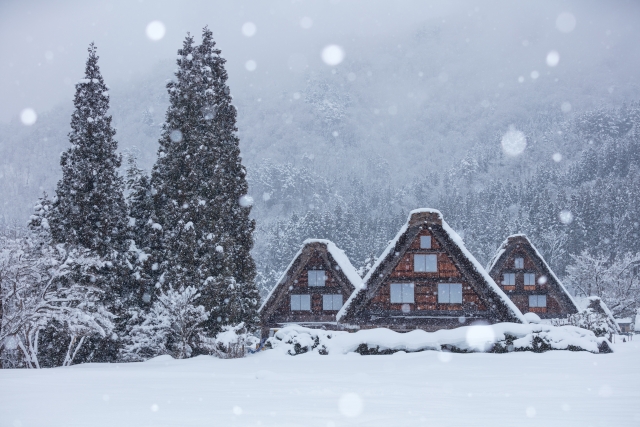
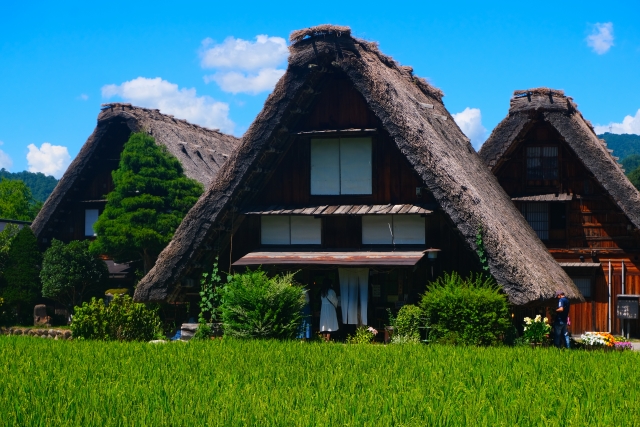
Winter is the most iconic and most photographed season. The sight of heavy snow blankets on the steep, gassho-zukuri roofs is truly magical. In spring, you can enjoy cherry blossoms framing the gassho-zukuri houses, in summer, vivid green rice fields surround the houses and the contrast is beautiful, and in autumn, the combination of autumn foliage and gassho-zukuri rooftops is absolutely breathtaking.
I have visited in summer and autumn, and both times, I know it sounds like a cliché but, I really had a great time. Besides, you can always come back in a different season next time if you fall in love with Shirakawa-go;) I’d like to come back next time maybe during the snow season!
Here are my year-round tips for visiting Shirakawa-go:
Golden Week (a series of national holidays in late April to early May), Obon (the holiday season in mid-August), the fall foliage season, and the winter illumination period* (admission without a reservation is not permitted) are peak seasons and tend to be very crowded. If you can be flexible with your schedule, it might be worth considering these.
*The winter illumination: On specific dates in January and February, the Shirakawa-go Gassho-zukuri Village is illuminated for a limited time. In 2026, the event took place over four days. It is operated on a strictly advance reservation basis; admission without a reservation is not permitted.
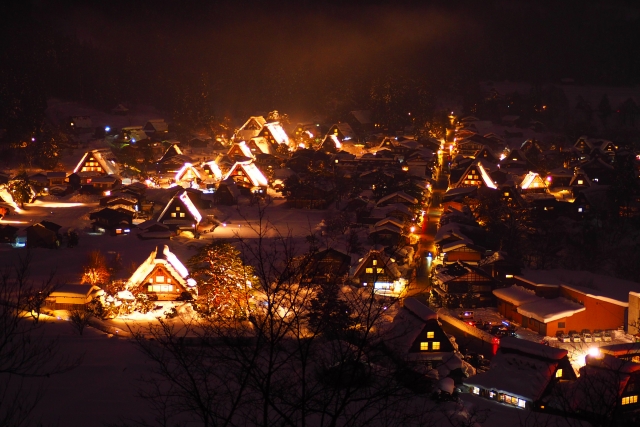
Please check the official website for the latest details and the official schedule for 2027 (no announcement yet for 2027 at this moment).
If you’d like to explore more of Gifu, I highly recommend Gujo Hachiman — a charming castle town famous for its crystal-clear waterways and all-night Bon dance festival. (Read more: Gujo Hachiman Day Trip from Nagoya)
There is a Japanese proverb that says, “思い立ったが吉日”. In English, this translates to “There is no time like the present”. The best time to do something is the moment you decide to do it;) Let’s take the first action to visit Shirakawa-go right away, shall we?
📍 How to get there: Direct highway buses run from Meitetsu Bus Center (next to Nagoya Station) and take about 2.5–3 hours one way (¥3,600–4,700 depending on the day). There’s no direct train — the highway bus is the simplest option.
⏱ Time needed: A full day. Leave Nagoya on an early bus and you’ll have 4–5 hours in the village, which is plenty for the viewpoint, a farmhouse visit, and lunch.
💰 Budget: Around ¥10,000 per person — round-trip bus, lunch, and entry to one or two gassho-zukuri houses.
🗓 Best time to visit: All year round, winter for the famous snow-covered roofs. Weekdays are much quieter year-round.
🎟 Book ahead: Highway buses to Shirakawa-go often sell out, especially on weekends and in winter — reserve your seat as early as you can. If you’d rather skip the logistics, this guided day tour from Nagoya covers transport and Takayama in one trip.


Comments