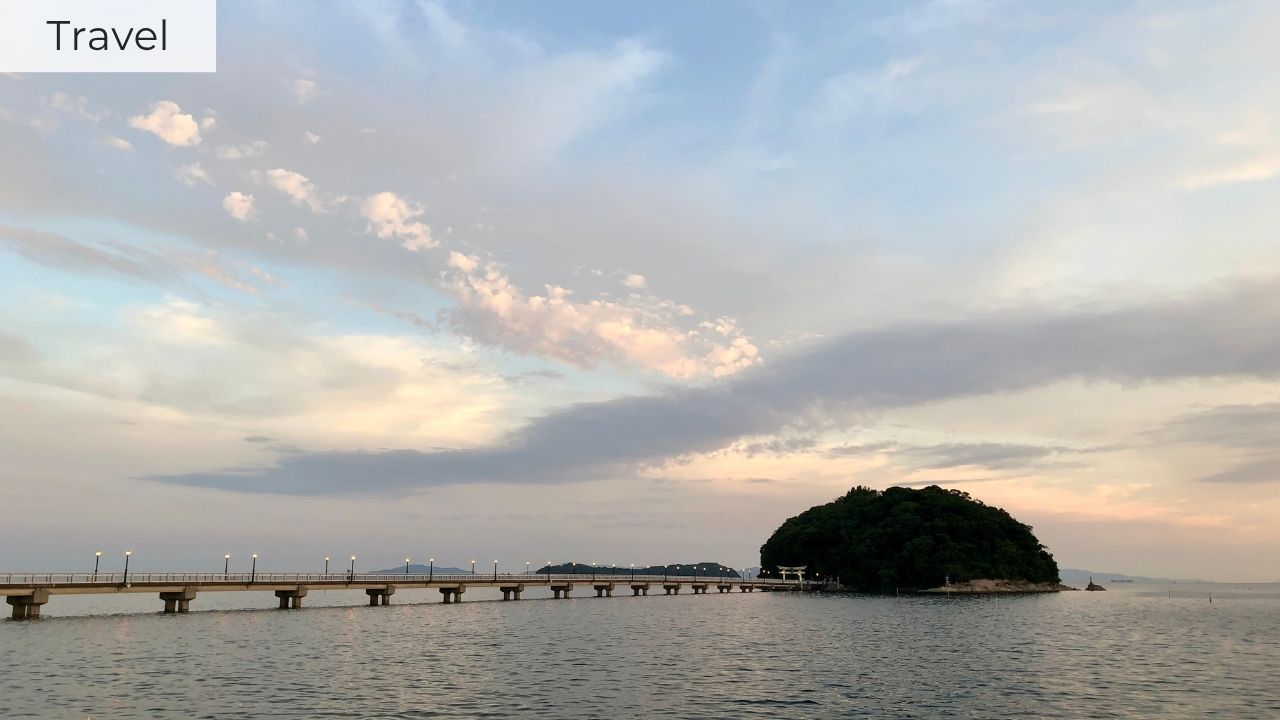
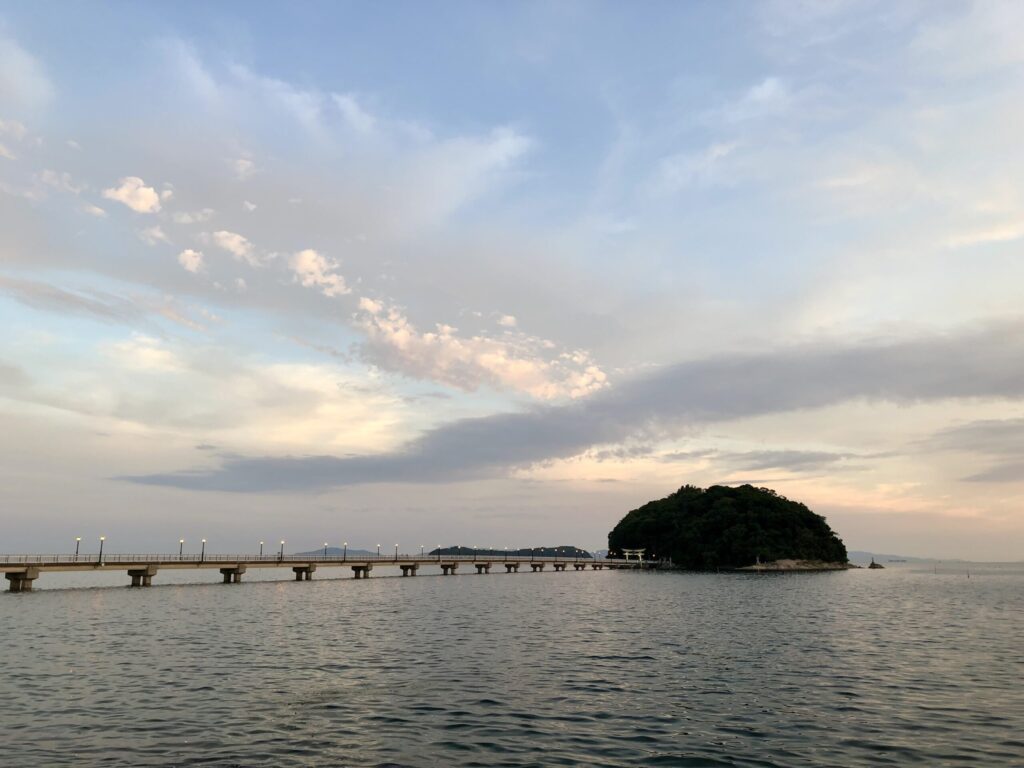
Do you know this cute looking island? A dome-shaped cake?, Manju? Or something that looks like it’s straight out of a Ghibli film? It’s just 40 minutes from Nagoya by train ― you can visit this mystical small island reached via a bridge passing beneath a torii gate, Takeshima Island (竹島).
If you want to get out of the city, take a breather, and slow down a little in calm atmosphere, but you don’t really have that energy for a long trip right now, this is the place you might be looking for.
Overview — Takeshima Island (竹島)
Takeshima is a tiny island (only 19,000 m², about 600 m around) connected to the shore by a 387-metre pedestrian bridge. It features a rare structure where the bridge passes under the torii gate. Walking the bridge takes about 5–10 minutes ― the view of Mikawa Bay opens in both directions. I visited in the evenings ― the scene was golden, warm, and beautiful.
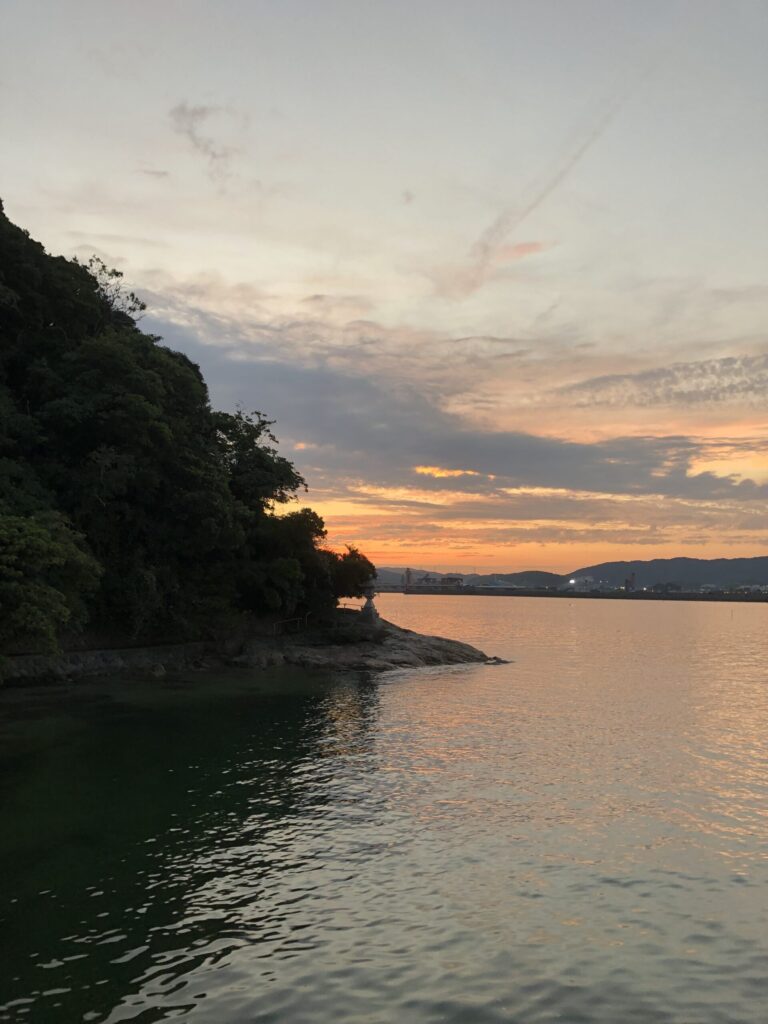
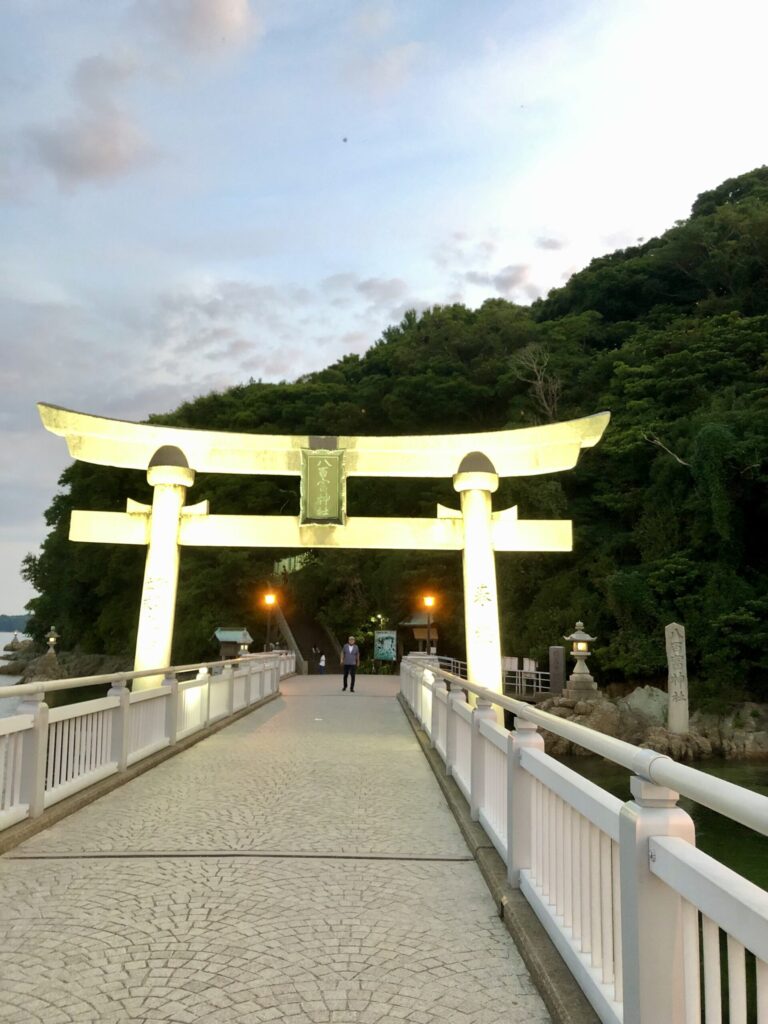
The Island was designated a National Natural Monument in 1930, Takeshima is remarkable for an island of its size. It supports 230+ species of plants and trees, including rare warm-temperate evergreens and a bamboo species called suhouchiku ― which gave the island its name (“take” means bamboo).
The full circuit takes approximately 30 minutes at a leisurely pace. The path leads to Yaotomi Shrine at the island’s centre.
Takeshima Island (竹島)
Admission to the island: Free
Open: At all hours
Yaotomi Shrine (八百富神社) — The Island Shrine
Yaotomi Shrine sits at the heart of Takeshima Island, reached by following the island circuit path from the bridge. It is one of Japan’s seven major Benten shrines (弁天の七弁天), enshrining Ichikishima Hime no Mikoto ― a sea goddess associated with beauty, music, good fortune, and above all, en-musubi (縁結び): the binding of fated relationships.
A popular local tradition holds that couples who walk the bridge to the island without looking back will be blessed with good fortune in their relationship;)
The shrine attracts visitors praying for:
• En-musubi (縁結び): forming or strengthening a romantic bond
• Kaiun (開運): general good luck and fortune
• Anzan (安産): safe childbirth
What to do:
① Walk the island circuit path to reach the shrine
② Wash hands at the temizuya (purification fountain) before approaching
③ Bow twice, clap twice, pray, bow once (二拝二拍手一拝)
*Pick up omamori if you’d like
In the case of Takeshima, every corner of the island is considered a sacred realm, and simply stepping foot on it is believed to bring blessings. The natural monument plants overlap with the sacred grounds, making it a popular spot renowned for its strong spiritual energy.
Access from Nagoya & Duration of the visit
By Train
Nagoya Station → Gamagori Station
• Train: JR Tokaido Main Line (bound for Toyohashi)
• Type: Rapid (快速) or Special Rapid (新快速) ― both stop at Gamagori
• Travel time: Approx. 40–45 minutes
• Fare: ¥1000 (one way)
• Frequency: Regular service throughout the day
From Gamagori Station:
Takeshima bridge entrance: 15 min walk from the south exit of Gamagori Station
Estimated visit time: 30 min to 1 hour (the island walk and Yaotomi Shrine)
Recommended Stop
Seaside Literary Memorial Museum (海辺の文学記念館):
During the Taisho and early Showa eras (roughly 1912–1950s), the Joban-kan ― a prestigious ryokan on the Gamagori coast ― attracted Japan’s greatest writers, poets, and playwrights, who came to rest, think, and create beside the sea. The museum recreates the atmosphere of that era, displaying manuscripts, personal effects, photographs, and reproductions of works by the authors who stayed in Gamagori.
Seaside Literary Memorial Museum celebrates writers who visited or had a significant connection to Gamagori, including:
• Yasunari Kawabata (川端康成) ― Nobel Prize in Literature 1968; author of Snow Country and The Sound of the Mountain
• Junichiro Tanizaki (谷崎潤一郎) ― author of The Makioka Sisters and In Praise of Shadows
Seaside Literary Memorial Museum (海辺の文学記念館)
Location: Approx. 1 min walk from Takeshima bridge entrance
Hours: 9:00 am – 5:00 pm (last entry 4:30 pm) (Matcha and coffee until 3:30 pm, Time Letter until 4:00 pm)
Holidays: Open every day
Admission: Free of charge
What I’d like to recommend you to do here is that matcha tea break in tatami-floored Japanese room. Inside the museum, there is a tatami room and you can sit in this tatami room and enjoy matcha with great view:) Open shoji, a direct view of Takeshima island across the water. I’m sure you will love this quiet and peaceful experience.
• Matcha (green tea) with Japanese sweets/Coffee: ¥300~¥500
• Service hours: 10:00 am – 3:30 pm
Also, this museum offers a unique service: “Toki-tegami (時手紙) ― The Time Letter”. You write a letter at the museum and specify a future delivery date, and the museum stores it and send it on the date you requested. You can write a letter to be delivered 2 months to 10 years in the future! How about writing a letter to yourself, a friend, or someone you love?;)
Fee for “Toki-tegami”:
• 2 months – 5 years: ¥500
• 5 years 1 month – 8 years: ¥700
• 8 years 1 month – 10 years: ¥1,000
Service available until 4:00 pm
To write your Toki-tegami, please use the special letter sets provided there.
Note: Information may vary. Please confirm the latest details with the facility before your visit.
Other highlight — Gamagori City Takeshima Aquarium
If you have more free time and want to explore a bit more around this area, I think Gamagori City Takeshima Aquarium (蒲郡市竹島水族館) is a perfect option. It’s just 10 min walk from Takeshima bridge and by combining this aquarium with Takeshima island visit, you can make a perfect day trip itinerary from Nagoya:)
Gamagori City Takeshima Aquarium is a one-of-a-kind aquarium full of character:)
Takeshima Aquarium is not a big aquarium but it is famous for having a huge variety of deep-sea creatures, over 140 different species ― some of the best in Japan! You might even get the chance to see rare sea life that you won’t see anywhere else in Japan;) At their “Petting Pool (さわりんプール)”, you can actually touch deep-sea creatures like giant isopods, Japanese spider crabs, and king crabs. Where else can you touch a living deep-sea creature?;) If you are into deep-sea life, you absolutely must-visit!
Another thing I must mention about Takeshima Aquarium is its ‘handmade’, personal charm. Hand-drawn explanatory signs, keeper commentary delivered in a warm and often humorous style, all of them create a warm and local atmosphere you must fall in love with;) Your translation app might struggle with the handwritten notes and their unique sense of humor ;p, but I’m sure you’ll enjoy their spirit! We don’t need tech;)
Gamagori City Takeshima Aquarium (蒲郡市竹島水族館)
•Hours: 9:00 am – 5:00 pm (last admission 4:30 pm)
•Holidays: None (Note: May be temporarily closed due to maintenance, etc. in June)
•Fee:
Adults (senior high school ages and older) ¥1,200
Children (4 years old to junior high school ages) ¥500
Children younger than 3 years old, free of charge.
•Access: 5-10 min walk from Takeshima bridge entrance
•Estimated visit time: 1-2 hours
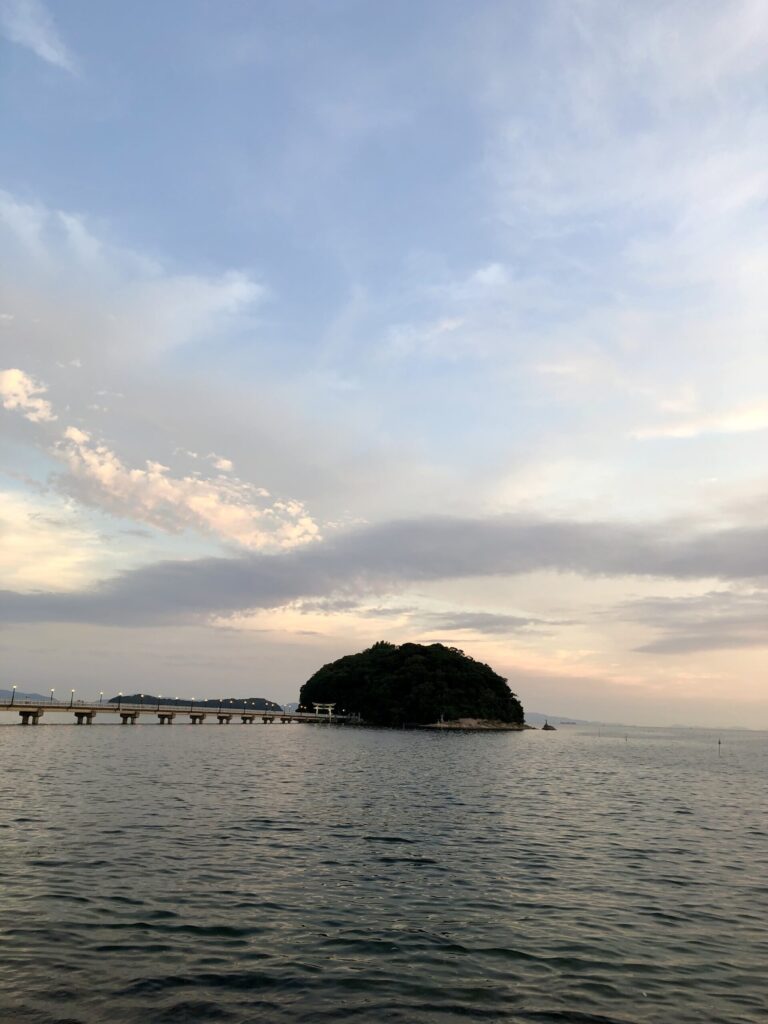
I visited this time in the evening, but Takeshima is also famous for its beautiful sunrise. The sunrise and sunset show completely different sides of the beauty of Takeshima. Which side of Takeshima are you in the mood for now?
If you have the energy for a bit more adventure and are looking for more day trips from the Nagoya area, Gujo Hachiman in Gifu is worth the two-hour journey, particularly during the summer festival season!
Enjoy a peaceful slow walk through Takeshima’s rich nature, and let your mind refresh and recharge:)
📍 How to get there: About 40–45 minutes from Nagoya Station to Gamagori on the JR Tokaido Line rapid trains (¥1,000 one way), then a 15-minute walk from the south exit to the Takeshima bridge.
⏱ Time needed: Half a day is plenty — the island and Yaotomi Shrine take 30 minutes to an hour; add 1–2 hours if you stop by Takeshima Aquarium.
💰 Budget: Around ¥2,000 per person — mostly the round-trip train, since the island and the bridge are free. Add ¥1,200 if you visit the aquarium.
🗓 Best time to visit: I went in the evening, and the golden sunset light over the bay was beautiful. Takeshima is also famous for its sunrise.


Comments