What are you planning to eat in Nagoya? Let me guess… Hitsumabushi?
If you’re holding back because it’s a bit pricey and wondering if it’s truly worth it, let me give you that gentle push you need;) Hitsumabushi isn’t just a meal — it’s an interactive dining experience unique to Nagoya. Let me share with you my recommended restaurants for hitsumabushi and how to fit it smoothly into your travel plans.
Hitsumabushi – Nagoya’s Eel Specialty
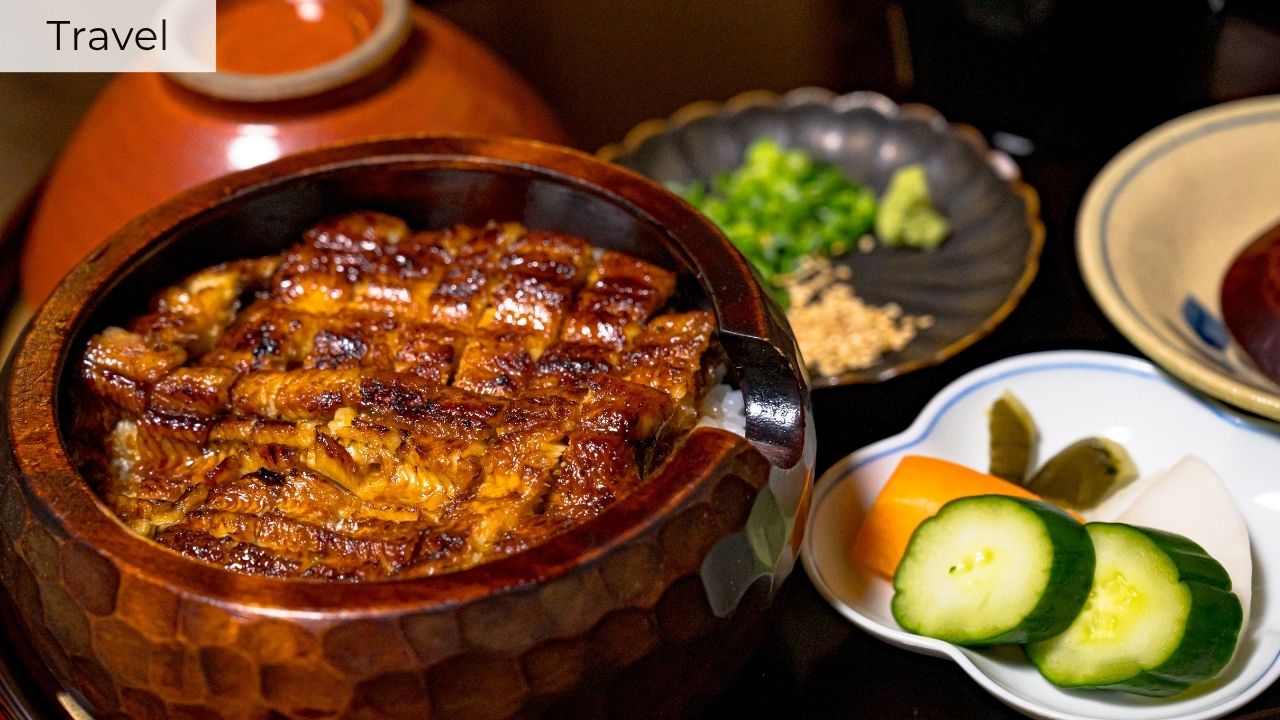
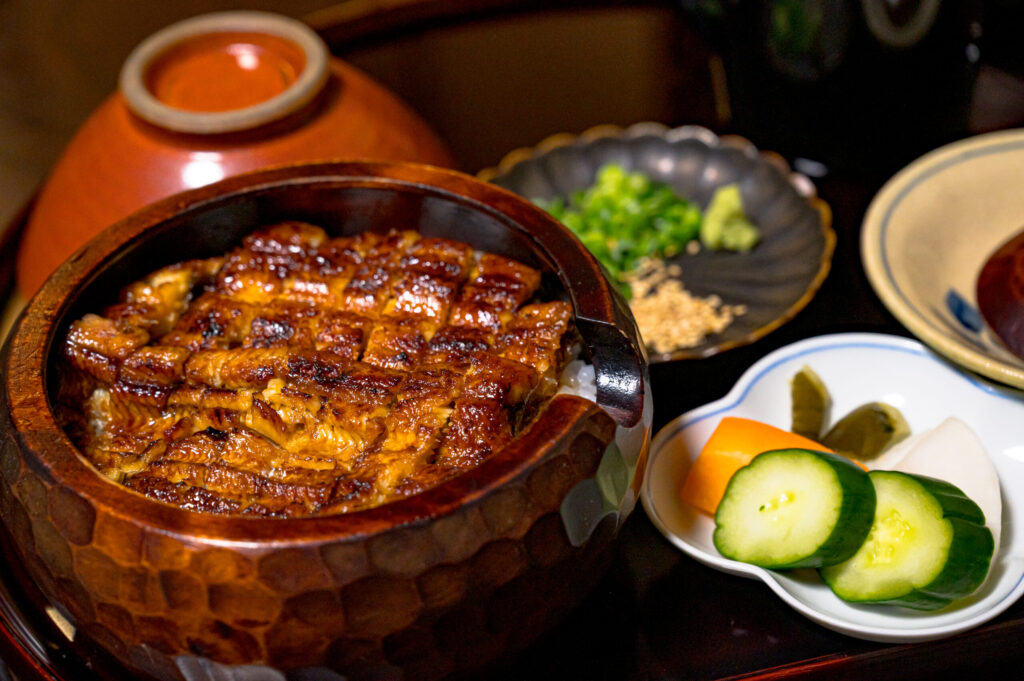
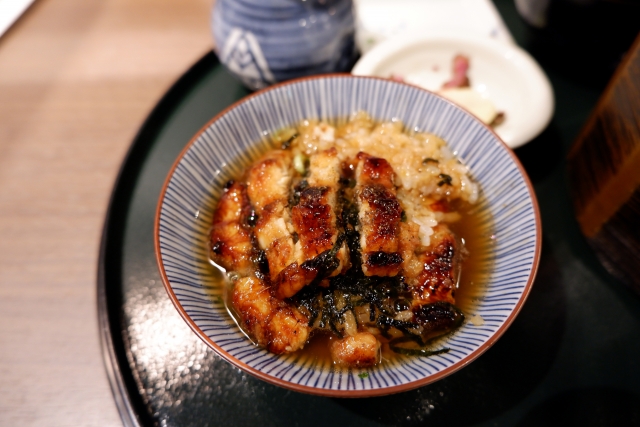
Hitsumabushi is grilled unagi (eel) sliced into small pieces and served over rice in a wooden tub (ohitsu). It is one of Nagoya’s famous local foods (‘Nagoya meshi’).
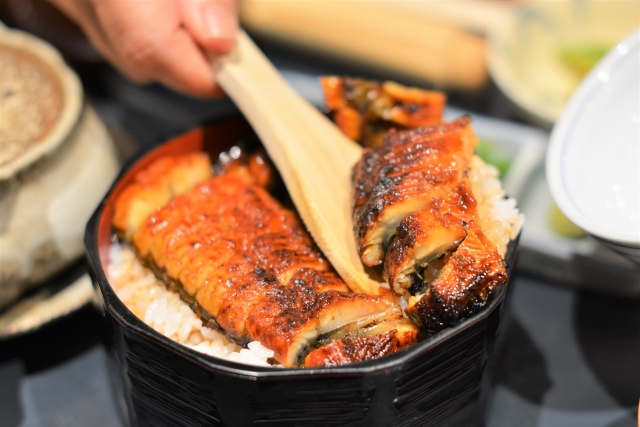
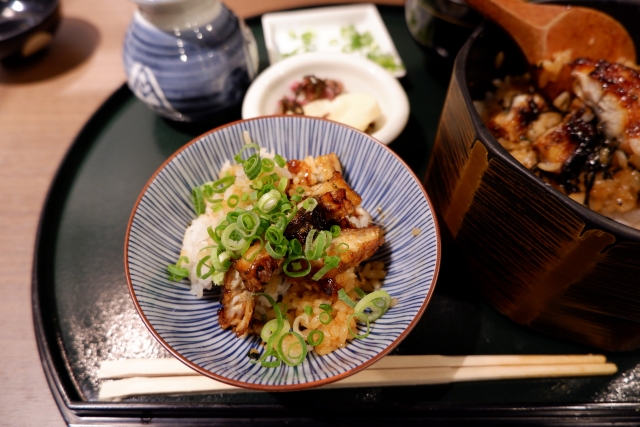
The most distinctive feature and the fun of hitsumabushi is in the ‘three ways to eat’:
- plain, to taste the unagi and rice
- with condiments such as nori, wasabi and spring onion
- as ochazuke, with dashi broth poured over
And, for the final quarter bowl, enjoy it whichever way you liked best;)
The Origins of Hitsumabushi
While there are various theories regarding when hitsumabushi was first created, it is generally believed to have originated in Nagoya around the middle of the Meiji era. The dish is most often traced to Atsuta Horaiken (あつた蓬莱軒), although there are also a few other theories.
Here’s the story behind it. At Atsuta Horaiken, deliveries were a big part of the business, but staff kept breaking the ceramic bowls when collecting empties. So the ceramic bowls were switched to sturdy wooden tubs (ohitsu) and served several portions in one tub. But a new problem appeared: people ate the unagi first and left the rice behind. The fix was to chop the unagi finely and mix (‘mabusu’) it through the rice in advance, so every bite had both. It proved hugely popular.
The name ‘Hitsumabushi’ comes from mixing unagi through rice in the wooden tub – ‘hitsu’ (wooden tub) + ‘mabusu’ (to mix/coat) – gives ‘hitsumabushi’.
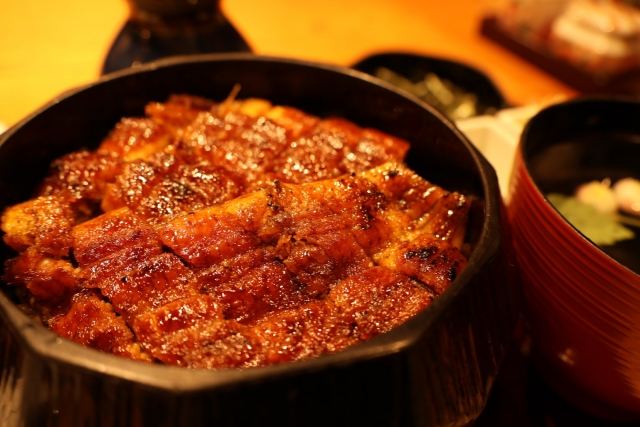
Nagoya is close to Ise Bay and Mikawa Bay, and blessed with the Kiso, Nagara, and Ibi rivers — which is said to be why unagi food culture developed here.
Hitsumabushi vs. Other Eel Dishes
Unadon/うな丼 (unagi donburi)
Whole kabayaki (grilled and glazed with sweet soy tare) eel fillets laid over rice in a bowl, eaten as-is. The everyday, nationwide form of unagi-on-rice. It is relatively affordable.
Unaju/うな重
The same idea served in a lacquered box (ju) – usually considered the more formal, premium presentation.
Hitsumabushi/ひつまぶし
Chopped unagi (kabayaki) laid over rice in a wooden tub, eaten ‘three ways’. This is the Nagoya specialty and the interactive one.
Actually, did you know the grilling style varies depending on the region? Kanto (Tokyo) steams the eel before grilling for a soft texture; Kansai and Nagoya grill it directly (‘ji-yaki’) for a crisper finish. This is why Nagoya eel is often known for being fragrant and crisp. If you are an unagi lover, it might be interesting to try both in Tokyo and Nagoya and see the difference:)
Japan even has a special day in summer just for eating unagi — I wrote about it in my Doyo no Ushi no Hi post.
Where to Eat Hitsumabushi in Nagoya
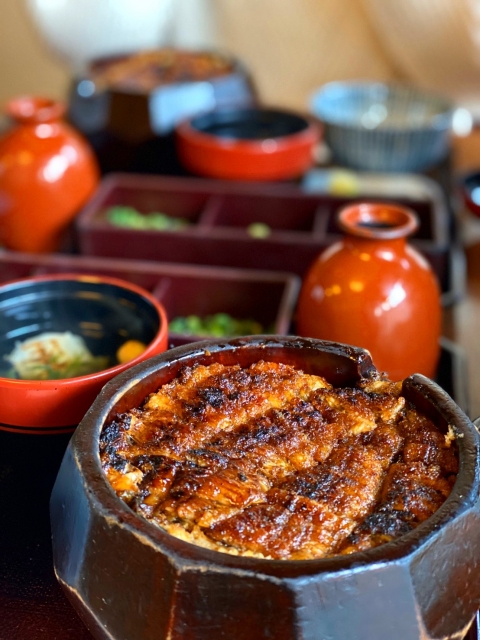
Atsuta Horaiken/あつた蓬莱軒
- A long-established unagi restaurant (ryotei) founded in 1873 (Meiji 6). Widely credited as the originator of hitsumabushi.
- Four locations: Honten (main), Jingu, Matsuzakaya (Sakae, dept. store 10F), and a takeout-only Matsuzakaya basement counter.
- Approx. price: hitsumabushi around ¥5,000 (price may vary)
- Walk-in only for hitsumabushi; kaiseki courses require a phone reservation at least 3 days ahead. Busy seasons may not accept bookings. For details, please check their website.
- Please check the restaurant’s website for opening days and hours.
If you are completely open to suggestions, my top recommendation is Atsuta Horaiken, specifically its Honten (本店). The Honten is characterized by its authentic Japanese architecture and traditional Japanese garden. Here, you can dine in the refined atmosphere of a prestigious, long-established restaurant. Since you’re here in Japan, I really want you to experience these long-established flavors in a truly Japanese setting. I’m sure it will be a special, unforgettable memory:)
Downside is that you cannot make a reservation and you’ll most likely need some patience with the queues. My suggestion is going right at opening or before opening time. If it is full and you need to wait, they will tell you what time to come back. Until your specified time, you can spend your time visiting Atsuta Shrine. It is right nearby, and 20-30 minutes is enough if you only visit the main shrine — or about 1 to 1.5 hours to stroll through the whole grounds. My recommended route and the worship etiquette are in my Atsuta Shrine guide. Just make sure you’re back for your time slot;)
The same strategy works with Jinguten (神宮店), but it’s closer to Atsuta Jingu Temma-cho Station, the nearest station, and to Atsuta Shrine. Jinguten is also a Japanese-style building, but with a more modern feel. If you’re looking for easy access, the Jinguten is the best choice.
I’ve been to both Honten and Jinguten, and my favorite one is Honten:)
Sumiyaki Unafuji/炭焼うな富士
- A charcoal-grilled unagi specialist founded in 1995 in Showa Ward, Nagoya.
- Awarded the Michelin Bib Gourmand in the Michelin Guide Aichi-Gifu-Mie 2019 (special edition).
- Main store (Honten) in Showa Ward, Nagoya (about 8 min walk from Subway Tsurumai Station (Subway Tsurumai Line / JR Chuo Line). There are several other branches in Nagoya.
- Approx. prices: hitsumabushi around ¥5,700 (price may vary)
- Online reservations are available (minimum party size is 2–3 people, depending on the location). Solo diners will need to walk in.
- Please check the restaurant’s website for opening days and hours.
Unfortunately, I haven’t been to Unafuji yet but having the option to make a reservation online is definitely a huge plus, especially when you want to do everything on your travel bucket list. Also, I heard that Unafuji is so delicious — well, it’s in the Michelin Guid;)
Of course, there are many other places in Nagoya that serve hitsumabushi other than the above two. Whichever restaurant you choose, please enjoy Nagoya meshi! After all, food is one of the best parts of traveling:)
📍 How to get there: About 30 minutes door to door from Nagoya Station — take the subway to Atsuta Jingu Temmacho Station (¥270, changing from the Higashiyama Line to the Meijo Line at Sakae), then a 7-minute walk to the Honten. The Jingu branch is even closer, just 3 minutes from the same station.
⏱ Time needed: About an hour for the meal itself — but the wait can add 1–2 hours or more depending on the day and time, so build in a buffer (Atsuta Shrine is a perfect way to fill it).
💰 Budget: Around ¥5,000 per person for the hitsumabushi itself (price may vary) — more if you add sides.
🗓 Best time to visit: Weekdays and dinner time tend to be smoother, while weekends and lunchtime get crowded. Arrive at opening time or earlier, get your spot in line — and if there’s a wait, spend it at Atsuta Shrine.
🎟 Reservations: Not available for hitsumabushi — it’s walk-in only. Kaiseki courses can be booked by phone at least 3 days ahead (see the official website for details).
Comments